What causes dry scalp in babies?
A baby dry scalp is genuinely common, and it's rarely anything to worry about. A few everyday things tend to be behind it: washing more often than the scalp actually needs, water on the hot side, dry indoor air in winter, or a formula that strips more than it cleans.
Here's the good news: for most babies, changing how often you wash does more than changing what you wash with. Start with warm water instead of hot and a rinse that's actually thorough rather than rushed. That's a small shift, and it's usually enough on its own.
When you are choosing a shampoo or wash, look for a few specific things: no sulfates, a formula that rinses fully clean, and nothing left behind to dry things out further. Hair + Body Wash is a gentle, sulfate-free cleanser that rinses away completely. Available in fragrance-free or our signature lavender + rosemary scent, it’s hypoallergenic, dermatologist tested, clinically tested. We also release seasonal scents throughout the year, if you like to switch things up.
After the wash, moisture matters just as much. Our Everyday Lotion is a good everyday step for skin, and scalp edges, that need a little extra help. It’s also hypoallergenic and clinically tested.
What’s the best shampoo for a baby’s dry scalp?
Every aspect of the routine matters, starting with the shampoo. A baby shampoo for dry scalp should be as non-aggressive as possible. That’s why our Hair + Body Wash is sulfate-free and free of SLS and SLES, built around sodium lauroyl methyl isethionate, a gentle cleanser, derived from coconut and chosen for how cleanly it rinses away.
The baby dry scalp routine in the bathtub should be simple. The American Academy of Pediatrics suggests washing baby’s hair two or three times a week with a mild shampoo or body wash. Use warm water, and rinse thoroughly before moving on. Over-washing tends to do more harm here than under-washing.
Once your baby grows into a toddler, you may need to add new products into the routine while maintaining the core principle of not over-stripping the scalp.
How do you help dry scalp in toddlers and kids?
Past the baby years, a few things change: there's more hair to manage, more product build-up, swim season enters the picture, hats come and go, and plenty of kids insist on washing their own hair with enormous enthusiasm and zero technique.
This is roughly when conditioner starts to earn its place in the routine, smoothing strands and making the whole process easier for a kid’s dry scalp that's dealing with more day-to-day exposure than it used to.
Keep the practical side simple: a few washes a week is still usually plenty, use a reasonable amount rather than a huge pump, and always rinse thoroughly, especially after a swim day when chlorine or salt water can leave hair, and scalp, feeling extra dry. A quick rinse right after swimming, even without a full wash, helps more than people expect.
For more on what’s behind it at this age, our guide covers causes and gentle fixes for older kids.
Is it dry scalp or cradle cap?
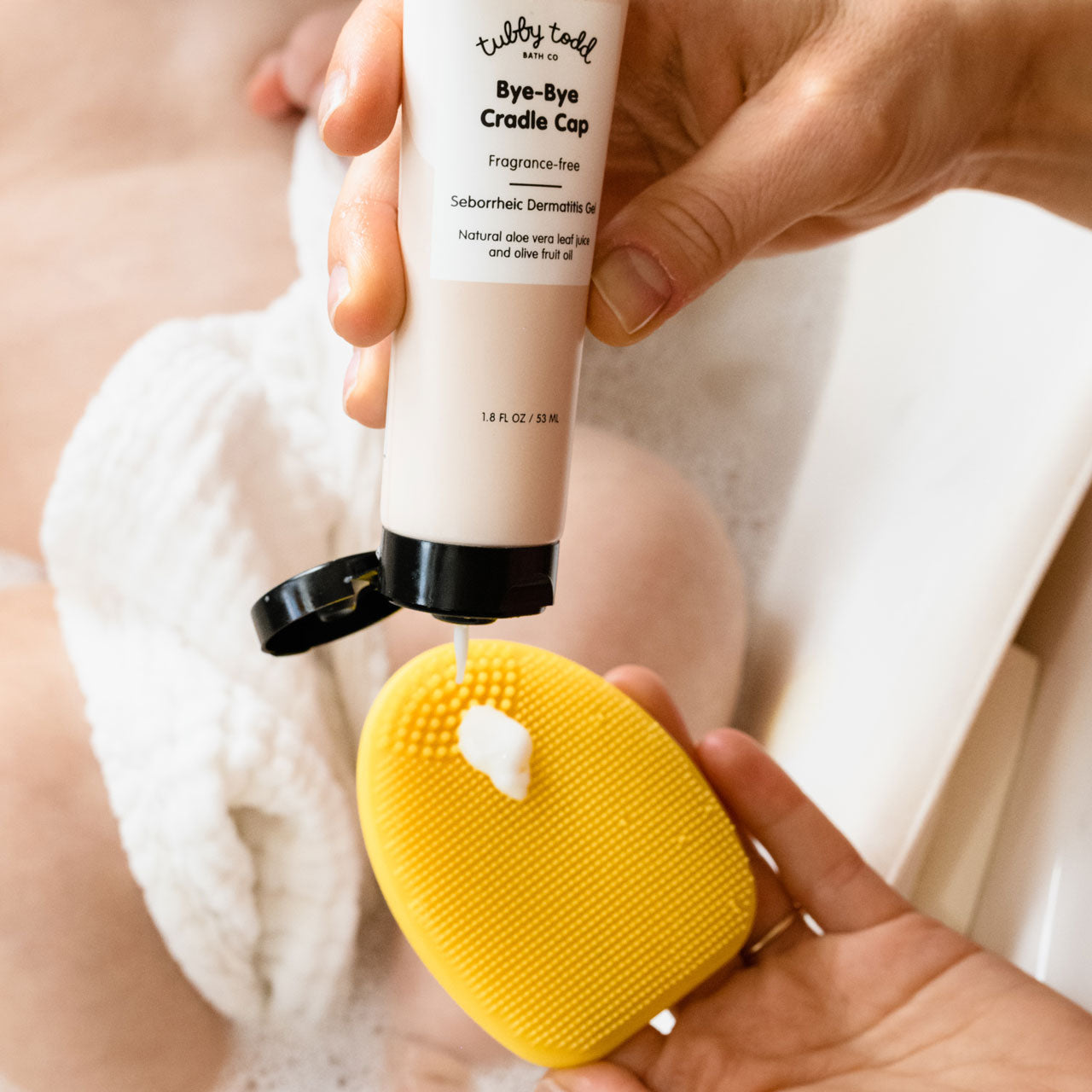
Sometimes what looks like dry scalp is actually something else. If the flakes look greasy or yellowish and seem stuck down rather than loose and dry, that's usually a sign of cradle cap instead, and there's a product made specifically for that. Our Cradle Cap collection is the place to start.
A newborn dry scalp is often cradle cap but could be dry skin. And if anything looks like it's spreading, seems itchy, or just isn't improving, it's always worth a quick check with your pediatrician.
Frequently Asked Questions About Dry Scalp in Babies and Kids
Is dry scalp worse in winter?
Often, yes. Heated indoor air pulls moisture from skin and scalp. Keep baths warm, not hot, and add a little moisture after washing.
When should I call the pediatrician about dry scalp?
If it’s spreading, itchy, red, oozing, or not improving after a few weeks of gentler washing.
Should I wash my baby’s hair less often?
Usually, yes, and it's the easiest fix available. Two or three times a week is plenty for most babies' scalps. Browse our Baby Shampoo collection for the rest of a gentle, simple routine.
Can I use Bye-Bye Cradle Cap for regular dry scalp?
Bye-Bye Cradle Cap is made specifically for cradle cap. For plain dry scalp, a gentle wash, warm water and a little moisture are usually all it needs. Dry scalp flakes are usually loose and white, while cradle cap flakes tend to look greasy, yellowish, and stuck down. If it's the second one, our Cradle Cap collection is built for exactly that.
Can I put lotion on their scalp?
Yes, sparingly, worked gently into the scalp rather than through the hair itself. For stubborn dry patches that don't budge, All Over Ointment is formulated as a skin protectant to help soothe and protect the area. For everyday moisture, Everyday Lotion is the easier daily step.
Does it go away on its own?
Usually, yes, especially with a gentler washing routine in place. There's no set timeline, every scalp is a little different, but most dry patches ease up once washing frequency and water temperature are dialed in.
Is dry scalp the same as dandruff in kids?
Not quite. Dry scalp flakes are small, white and loose, and usually ease up with gentler washing and moisture. Dandruff flakes tend to be larger, oilier and keep coming back. In babies, that greasy, stuck-on look is usually cradle cap; in older kids, if flakes stick around or itch, it’s worth checking with your pediatrician.