
You're running a hand over your baby's head and your fingers catch on something that isn't soft skin. You part the hair and there it is: a patch of yellow, waxy crust, maybe just a few flakes near the soft spot, maybe a whole crusty cap across the crown. The first question is almost always the same. What is that, and did I do something wrong?
Take a breath, because the answer is no, it’s not your fault. That's cradle cap. Cradle cap is the yellow, greasy, sometimes crusty patch that shows up on a lot of babies' scalps in the first few months. It's harmless, incredibly common, and it almost always clears up on its own. The official name is infantile seborrheic dermatitis, but you'll mostly hear parents and pediatricians just call it cradle cap in babies. According to the Cleveland Clinic, about half of all babies get it to some degree, usually between two weeks and three months old, and most cases are gone by the first birthday. We’ve heard from so many parents concerned about stubborn, yeast-like flakes on their little one’s scalp, so we created this guide to help make sense of cradle cap and what to try next.
Tubby Todd exists because of sensitive baby skin. Our co-founder Andrea spent years testing ingredients on her son's eczema-prone skin before any "gentle" product on the shelf actually worked, and that same obsession with what's truly safe for a newborn is how we ended up making a cradle cap product at all. The notes below come from her experience, our work alongside pediatric guidance, and a decade of feedback from parents in our community. We aren't a medical team, so be sure to talk to your pediatrician about your baby's specific case.
Quick answers
What is cradle cap?
Cradle cap is a yellow, greasy, crusty patch on a baby's scalp. It's harmless, very common, and almost always clears up on its own.
How long does cradle cap last?
It usually shows up between 2 weeks and 3 months, and most cases are gone by the first birthday.
How do you treat cradle cap at home?
Apply a baby-safe cradle cap product according to its directions, gently loosen the flakes with a soft brush in small circles, then wash the scalp with a mild baby wash.
How do you keep cradle cap from coming back?
You can't always prevent it, but a mild shampoo a few times a week and a quick weekly brush keep flakes from building back up.
When should you call the pediatrician?
Call if it spreads fast, looks bright red, swollen or oozing, seems itchy, smells, or isn't better after a few weeks of gentle care.

What does cradle cap in babies look like?
Cradle cap usually shows up as yellow or light-brown waxy patches that stick to the scalp. The easiest way to know it's cradle cap and not something else is to touch it. It feels a little greasy or waxy, almost like a thin layer of candle wax, and it stays put instead of dusting off. It most often sits on the crown, but you might also spot it on the eyebrows, around the nose, behind the ears, or tucked into the neck folds.
Most parents notice one of these first:
-
Yellow or honey-colored crust: The classic look, and the one most people picture when they hear "cradle cap."
-
Tan or light-brown patches: On babies with deeper skin tones, it often reads more brown than yellow. The waxy, stuck-on feel is the giveaway no matter your baby's skin tone.
-
A little pink underneath: Usually nothing to worry about. But if it turns bright red, spreads fast, gets weepy, or feels warm, that's your sign to call the pediatrician.
How do you tell cradle cap apart from dry scalp, eczema, and dandruff?
This is the part that trips up almost every new parent, because a few different things can look nearly identical at first glance. The quick rule: look at where it is and how it feels. Cradle cap is greasy and mostly lives on the scalp, eczema is dry and itchy and pops up in more places, and a dry scalp is a lighter, flakier thing that brushes right off. Here's a cheat sheet to help you figure out what you’re working with.
What you notice |
Cradle cap |
Dry scalp |
Baby eczema |
Dandruff (toddlers+) |
How it looks |
Yellow, waxy, greasy crust that sticks |
Small white flakes that brush off |
Red, rough, sometimes weepy patches |
White or yellow flakes with a little redness |
Where you see it |
Scalp, brows, behind ears, skin folds |
Scalp only |
Cheeks, scalp, body, behind knees and elbows |
Scalp; rare under age 1 |
Does it itch? |
Usually no |
Sometimes, mildly |
Yes, often |
Sometimes |
How it feels |
Oily, waxy |
Dry |
Dry, rough |
Dry, fine |
Typical age |
2 weeks to 12 months |
Any age |
2 months and up, often ongoing |
Older kids and adults |
If you want to really dig into the cradle-cap-or-dry-scalp question, we wrote a whole post on exactly that: dry scalp or cradle cap, and how to tell the difference. And if it turns out those flakes are just dry skin, it's worth knowing there are a few hidden causes of baby dry skin that are easy to fix once you spot them.
What causes cradle cap?
Nobody knows the exact recipe, and it's nothing you did, but two things are doing most of the work:
-
Leftover pregnancy hormones: Your baby came into the world with some of your hormones still on board, and for a few weeks those hormones tell the oil glands in the scalp to go big. All that extra oil makes the scalp sticky, so dead skin cells that should quietly flake away get stuck and pile up instead. That pile-up is the crust you're looking at, and it's why cradle cap fades on its own once the hormones settle.
-
A normal skin yeast: There's a yeast called Malassezia that lives on just about everyone's skin and causes no trouble at all. In some babies, the combo of extra oil and this yeast kicks off the mild flakiness. The American Academy of Dermatology points to that connection as the reason an anti-yeast shampoo sometimes helps a stubborn case, but only if your pediatrician suggests it.
And since someone in your life will inevitably ask: cradle cap is not from skipping baths, washing too much or too little, anything your baby ate, or the "wrong" shampoo. It's just a normal newborn phase. Knowing that alone tends to make everyone feel a whole lot better.
What are the stages of cradle cap?
Cradle cap usually moves through four loose stages on its way out. These aren't strict medical stages, and not every baby hits each one in order, but they give you a feel for what's normal and roughly when to expect it.
Stage 1: Early flaking (around 2 to 6 weeks)
The first sign is usually subtle, just some light, dry-looking flakes near the crown or along the hairline. It's easy to miss, and plenty of parents only notice it during a feed or while drying off after a bath. This is the best time to start a gentle routine, with regular washing using a mild baby shampoo and a soft brush. Catching it early often keeps it from building into anything thicker.
Stage 2: Peak (around 1 to 3 months)
This is when cradle cap looks its most dramatic, and when most parents go looking for answers. The crust thickens into yellow or brown waxy patches, sometimes in scattered spots and sometimes as one connected sheet across the scalp. It can look like a lot, but remember it almost never bothers your baby. Soften the patches with a little oil before bath time, then loosen them gently with a soft brush. The one rule here is no picking, no matter how satisfying it looks.
Stage 3: Clearing (around 3 to 8 months)
Slowly, the crust starts lifting away in pieces, and the scalp takes on a patchy look as clear skin shows through next to the spots that haven't let go yet. This in-between stage can feel like it's dragging, but it's a good sign. Keep the same routine going, and resist the urge to speed things up by scraping. The flakes will come off on their own schedule.
Stage 4: All clear (usually by 8 to 12 months)
Eventually the scalp is smooth and clear again. You might see a few flakes briefly return, especially during a growth spurt or a season change, but they typically stop for good. At this point you can go back to normal gentle washing with nothing special needed.
If your baby's timeline doesn't match this perfectly, don't sweat it. Some cases clear in a couple of weeks, some hang on closer to the first birthday, and some come and go a few times before they're done. Nationwide Children's Hospital notes that cradle cap can come and go like this, and it doesn't mean anything is wrong.
How to treat cradle cap at home
The American Academy of Pediatrics is clear that you don't actually have to treat cradle cap at all, since it's harmless and clears on its own. Most parents just want to help it along, and the trick is consistency, not elbow grease. A little gentle care, regularly, beats one aggressive scrubbing session every time. Here's the routine we recommend:
-
Soften it up. Fifteen minutes to an hour before bath time, rub a small amount of a baby-safe oil into the flaky spots. This loosens the crust so it lifts instead of pulling.
-
Loosen gently. With a soft baby brush or a clean, soft toothbrush, brush in small, light circles. You're coaxing the flakes, not scrubbing the scalp. Whatever lifts easily is ready to go; whatever doesn't can wait for next time.
-
Wash. Shampoo with a mild, gentle baby wash or cradle cap gel to rinse away the loosened flakes and leftover oil. If you used a heavier oil, you might need to lather twice so the scalp doesn't stay greasy. New to the whole bath thing? Our guide on how to bathe your newborn walks through it step by step.
-
Keep it up. For most babies, washing every other day while there's an active patch hits the sweet spot. Give it a couple of weeks of steady, gentle care and you'll usually see a real difference.

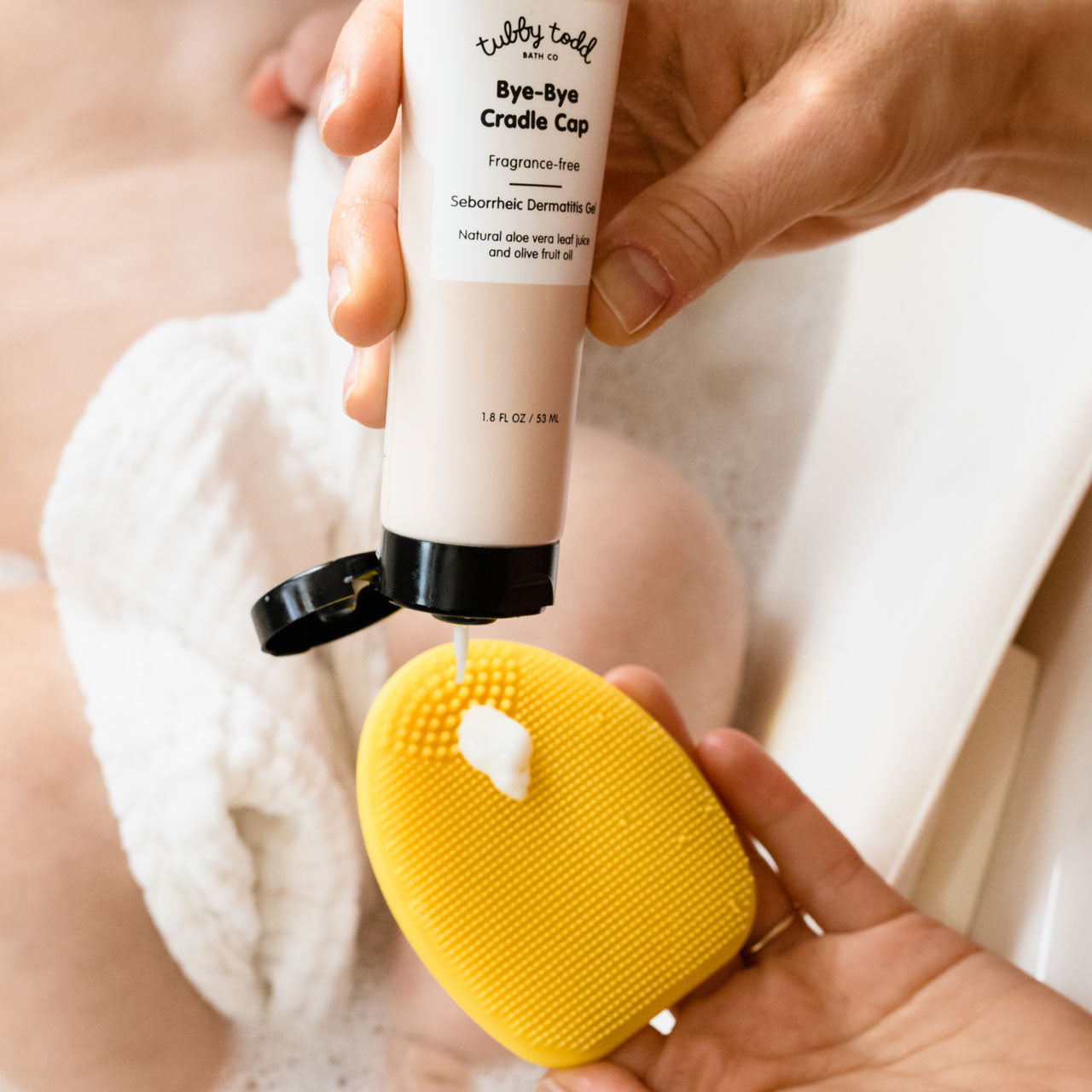
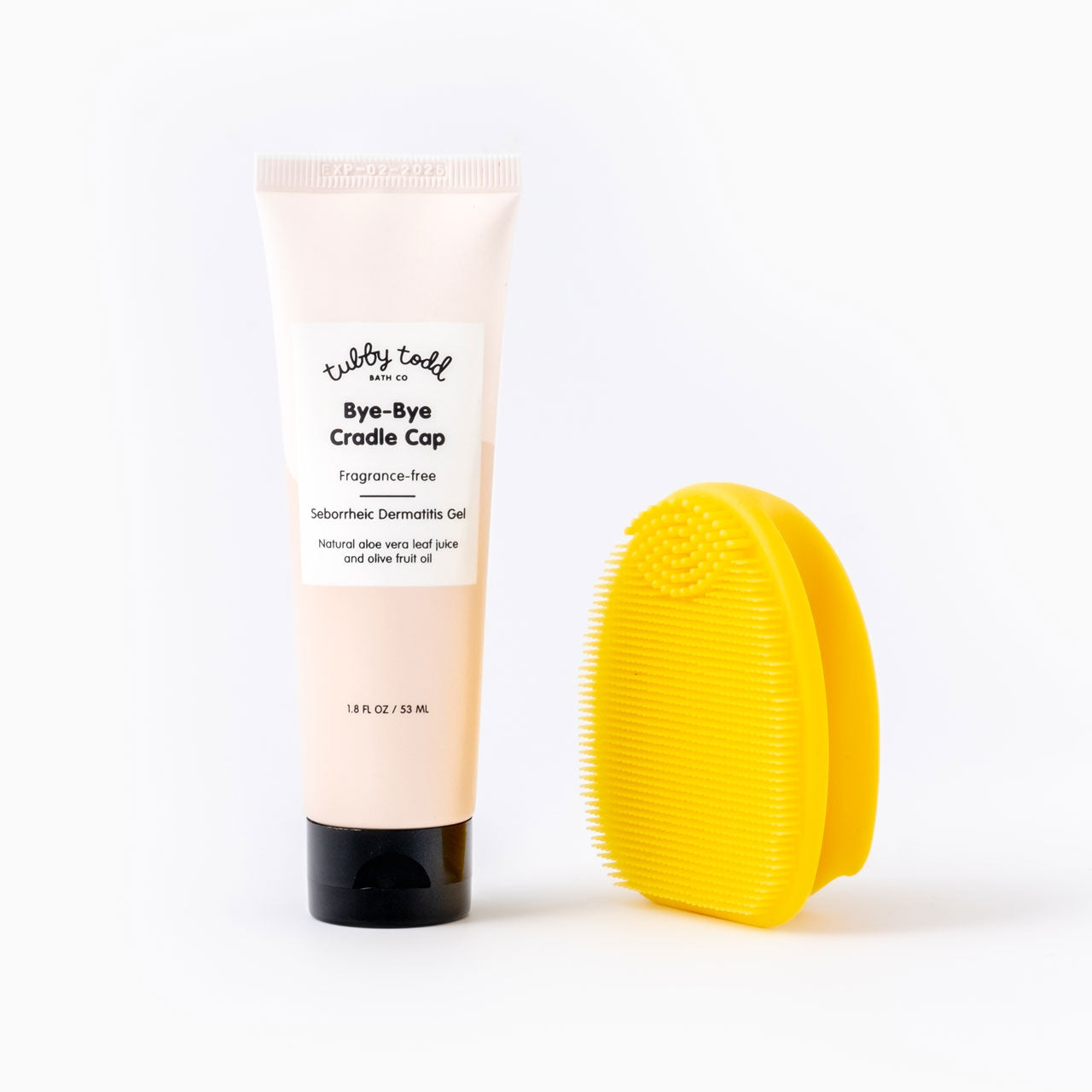
If you've got a stubborn patch that isn't budging, a product made specifically for cradle cap can give you a hand. Our Bye-Bye Cradle Cap gel uses 0.95% pyrithione zinc and is a fragrance-free, steroid-free gel made to treat cradle cap. Plus soothing botanicals like aloe and olive fruit oil to keep that sensitive skin happy. It comes with the option of a soft silicone scrub brush for the loosening step. You can see the whole lineup on our cradle cap collection page.
We also get asked all the time whether a general all-purpose balm does the job. We answered that one in its own post: does Tubby Todd All Over Ointment help with cradle cap. Short answer, a rich ointment can soften and comfort the skin around it, but a gel made for cradle cap is the better tool for the flakes themselves.
Which oil works best for softening cradle cap?
Coconut oil, and a dedicated cradle cap gel all soften the flakes well. The best one is whichever is gentle, fragrance-free, and easy to rinse out. What matters more is using a thin layer, giving it time to work, and washing it all the way out so the scalp isn't left greasy.
Option |
Why parents reach for it |
Good to know |
Coconut oil |
Natural, hydrating, a scent a lot of parents like |
Solid at room temp, so warm a little in your hands first |
Cradle cap gel |
Made for the scalp, rinses clean, made to treat cradle cap |
Pick one that's fragrance-free and steroid-free for sensitive skin |
A few things to skip
-
Don't pick at it with your nails: We know it's tempting. But it can break the skin and open the door to infection. Let the oil and the brush do the work.
-
Don't grab the adult dandruff shampoo unless your pediatrician tells you to. It's stronger than a baby's scalp needs.
-
Don't over-wash: Washing too often can backfire and leave the scalp drier and flakier than before.
-
Don't panic about a slow timeline: Whether it clears in two weeks or hangs on for months, both are completely normal.
Can cradle cap show up on the face or body?
Yes. Cradle cap is most common on the scalp, but the same thing can appear on the eyebrows, eyelids, behind the ears, and in skin folds like the neck, armpits, and diaper area. When it pops up off the scalp, it can look a little different, more like flatter pink or salmon-colored patches with a fine, greasy flake, especially in the creases where skin rubs together.
The good news is you treat it the same gentle way, and it's just as harmless. Keep the folds clean and dry, use a mild fragrance-free wash on affected areas, and dab on a thin layer of gentle moisturizer if the skin looks dry. The one spot to be extra careful is around the eyes, so don't put oils or medicated products near the eyelids without checking with your pediatrician first. And if a patch in the diaper area looks bright red or raw, that might be diaper rash rather than cradle cap, which gets handled differently. A quick photo texted to your pediatrician usually clears it up.
How do you keep cradle cap from coming back?
You can't always prevent cradle cap, since it's driven by hormones and oil you can't control, but a few small habits keep the flakes from building back up while your baby is in the thick of it:
-
Wash a few times a week: A mild shampoo a few times a week keeps oil and dead skin from collecting in the first place.
-
Keep a soft brush in the routine: Even after the crust is gone, a quick weekly brush helps you catch a returning patch early.
-
Go light on moisturizer: A thin layer is fine if the scalp looks dry, but skip heavy oils left sitting for days, which can feed the oily environment cradle cap likes.
-
Stay consistent: If your baby is the type to get it more than once, staying steady through that first year usually keeps each round milder than the last.
One more reassurance: the cradle cap that comes back is still just a cradle cap. A second or third round is really common, and it's not a sign you did anything wrong the first time. Most of this comes down to the same gentle basics we lean on for everything else, so if you want the bigger picture, here are five tips for taking care of newborn skin that apply well beyond cradle cap.
When should you call your pediatrician?
Honestly, sooner than most parents do. Plain cradle cap is harmless, but a few signs are worth a quick call to rule out an infection or something else like eczema. Reach out to your baby's doctor, which lines up with guidance from Johns Hopkins Medicine and the American Academy of Dermatology, if:
-
It spreads off the scalp onto the face or body, or spreads quickly
-
The skin looks bright red, swollen, or warm, or you see oozing, pus, or yellow crusting that could mean infection
-
Your baby seems itchy or uncomfortable, or is losing hair in the patch beyond normal newborn shedding
-
There's a noticeable smell coming from it
-
It's not getting better after a few weeks of gentle care, or it keeps getting worse
You're not bothering them. Cradle cap is one of the most common things they see. For a severe or really stubborn case, your pediatrician might suggest a medicated anti-yeast shampoo or a short course of a mild prescription cream, which are safe when a doctor prescribes them.
Creating a routine your family can actually keep up
The best cradle cap routine isn't the one with the most steps. It's the one you'll actually do, even when you're tired and even when their scalp already looks better. Soften, loosen, wash, repeat, and give it time. It's harmless, it's not your fault, and it almost always clears up on its own with a little gentle help from you. If you're piecing together your baby's whole regimen, cradle cap care slots right into a simple daily lineup, and our guide on how to build a baby skin care routine shows you how it all fits together.
Our cradle cap collection is where we've gathered everything built for exactly this, made to the same "safe enough for the most sensitive skin" standard that started our whole company. If you've found a trick that works in your family, share it in the comments. Every note from another parent makes the next family's search a little easier. Farewell, flakes.

Cradle cap questions parents ask us
Does cradle cap hurt or itch my baby?
Usually not at all. Most babies don't even notice it, which is why it tends to stress out the parents way more than the baby. If your little one does seem itchy or uncomfortable, that can point to eczema or irritation instead, so it's worth mentioning to your pediatrician.
How long does cradle cap last?
Most cases clear within a few weeks to a few months, and the big majority are gone by 8 to 12 months old. Some babies see it come and go more than once in that window, and that's normal too.
Can I just pick or scrape it off?
Please don’t! Even though we know it's tempting, it’s better not to. Picking with your nails can break the skin and lead to infection. Soften it with oil first, loosen gently with a soft brush, and wash the flakes away. Anything that doesn't come off easily can wait for next time.
Will my baby's hair fall out with cradle cap?
A little hair might come loose along with the flakes when you brush or wash, but it grows right back. Cradle cap doesn't cause permanent hair loss. If you do notice patchy or significant hair loss, bring it up with your pediatrician.
Does cradle cap mean my baby will get eczema or dandruff later?
Not necessarily. Cradle cap is its own separate thing, and most babies who get it never go on to have ongoing skin issues. Cradle cap and eczema can both show up in infancy, but having one doesn't mean you'll get the other.
Products in this post