
First hair wash? So exciting, and just a little nerve-wracking. There's the tiny head in one hand, the suds you're trying to keep away from those eyes, and a brand-new person deciding whether bath time is the best thing ever or a total betrayal. Right about there, most of us glance at the bottle and think, wait, is this even the right one? That little question is exactly where the hunt for the best baby shampoo starts. A great baby shampoo really comes down to two things: gentle ingredients and a formula made for a scalp that’s still figuring itself out.
Quick Answers
- What makes a shampoo gentle enough for babies? A mild, non-stripping cleanser that's hypoallergenic and dermatologist tested, with a short ingredient list and no synthetic fragrance.
- What should baby shampoo skip? Harsh sulfates (SLS and SLES), synthetic "fragrance," added dyes and formaldehyde-releasing preservatives.
- How often should you wash a baby's hair? A few times a week is plenty for most babies. Washing more often can dry out delicate skin.
- Do babies need a separate shampoo and body wash? No. One gentle hair and body wash can handle everything from head to toe.
How is baby shampoo different from regular shampoo?
Baby shampoo cleans without stripping. Grown-up shampoos are built for oilier scalps, styling products, and hair that can handle a stronger detergent. Your baby’s scalp is a whole different world. It barely makes any oil, its protective barrier is still under construction, and it needs almost no help to come clean.
Research on infant skin found that the stratum corneum, that outermost protective layer, runs about 18% thinner than an adult’s. So a good baby shampoo leans on mild cleansers and skips the harsh, high-foaming detergents that leave a little scalp tight and flaky. Big dramatic bubbles feel squeaky-clean, but on a baby it means the formula is working harder than it needs to.
What should you look for in baby shampoo?
-
Plant-based cleansing agents. The gentlest washes get your baby clean using plant-derived ingredients instead of the harsh stuff in grown-up shampoo. Instead of searching “best organic baby shampoo,” look for a simple formula with gentle, plant-based ingredients.
-
Hypoallergenic. It just means that formula is made to be less likely to cause a reaction. Exactly what you want for the easily-irritated skin so many little ones have, especially in that first year.
-
Dermatologist tested. This means skin experts looked the formula over with sensitive skin in mind.
-
A short ingredient list. For a baby, a few ingredients you recognize beats a long list of synthetic ingredients. Fewer ingredients means fewer things that could irritate their skin.
-
Fragrance you can account for. Either no added scent at all, or one made from real botanicals or raw materials.
-
Don't fear a science-y name. A hard-to-pronounce ingredient isn't automatically harsh. Some of the gentlest, highest-quality cleansers have long names, like Sodium Lauroyl Methyl Isethionate, a safe, gentle cleanser derived from coconut fatty acids. So rather than only trusting ingredients you can pronounce, it's worth knowing what an ingredient actually does and how gentle it is. And we’re here to help you sort out what’s gentle enough for your little one.
Ingredients worth skipping when looking for baby shampoo
So many parents search for "best baby shampoo without chemicals," and we completely get the instinct. (Little secret: everything's technically a chemical, water included! But we know exactly what you mean, keep the harsh stuff off that sweet skin.) Here's the short list we'd happily skip:
-
Harsh sulfates (SLS and SLES). These are the detergents behind all that big, dramatic foamy texture. Looks satisfying, sure, but it can strip your baby's delicate skin and leave the scalp dry. A gentler wash gets them just as clean, no stripping required.
-
Synthetic "fragrance" or "parfum." That one tiny word can legally hide dozens of mystery ingredients, and it's a top trigger for baby skin fussiness. If you only change one thing, make it this: pick fragrance-free or a naturally scented formula.
-
Added dyes. A pretty color does absolutely nothing to get your baby clean. It's just one more thing a sensitive scalp could get grumpy about.
-
Formaldehyde-releasing preservatives. Yep, really. They hide behind tricky names like DMDM hydantoin and quaternium-15. There are gentler ways to keep a product fresh, so this is an easy one to wave goodbye to.
One more tiny tip: “natural” can be used as a marketing tool. We recommend taking a look at the back label, which is actually regulated.
How often do you have to use baby shampoo?
Less often than you'd think, honestly. For most babies, a few times a week is plenty. The American Academy of Pediatrics says babies don't need a bath every day, and that two to three times a week keeps them clean in that first year, since washing more can dry out that delicate skin. Mayo Clinic agrees, noting three baths a week may be enough until your baby is on the move.
Real life bumps that number around, of course. A few reasons you might wash more:
-
Cradle cap. Washing a little more often can help loosen those flakes, especially paired with a soft brush. Our cradle cap treatment guide walks you through the gentle do's and don'ts.
-
Dinner in the hair. Once solids show up, some baths are just non-negotiable. You know the ones.
-
Pool and beach days. Rinsing off chlorine or salt is always worth an extra wash.
Between full washes, a warm damp cloth or a swipe of no-rinse Micellar Water handles most of what a baby actually gets into.
Our pick for the best baby shampoo: the Hair + Body Wash
Okay, by now you might be wondering what we actually put on the shelf. For the everyday job, it's our Hair + Body Wash, and we built it to clear that whole checklist above.
It's plant-based and hypoallergenic, dermatologist tested, and gentle enough for the tiniest newborn, with no SLS or SLES, no parabens, and no synthetic fragrance. Our fragrance-free version even carries the National Eczema Association's Seal of Acceptance, which is a lovely extra green light if your little one has sensitive or reactive skin. And because it's a true hair and body wash, it covers that head-to-toe job we talked about, so it can be your one bottle on the ledge for a good long while.
On scent, we'll always shoot straight with you. The wash comes in a fragrance-free option for the most sensitive skin, plus lightly scented versions if you love a little something. Our fragrances aren't synthetic. We make them using raw, aromatic materials, and we keep the exact blends proprietary. So you get a scent that comes from real botanicals, not a lab-built "fragrance" line on the label, or you skip scent altogether. Totally your call.
Once your baby grows enough hair to tangle, pair the wash with our Hair Conditioner for a little slip on detangling days. You can see the whole lineup in our hair collection, and round out the routine with our baby and toddler must-haves.

Choosing the best baby shampoo for specific scalp concerns
Every baby's different, and some show up with a little something extra. If that's yours, take a breath, these are all really common, and none of them mean you're doing anything wrong.
Eczema-prone skin. If those dry, angry little patches look familiar, you already know how fast the wrong product can set them off. Keep it simple: a fragrance-free (or natural, gentle fragrance), low-irritation wash, and loop in your pediatrician when it’s flaring. We’ve pulled our gentlest, most eczema-friendly picks into one eczema collection so you're not guessing in the aisle.
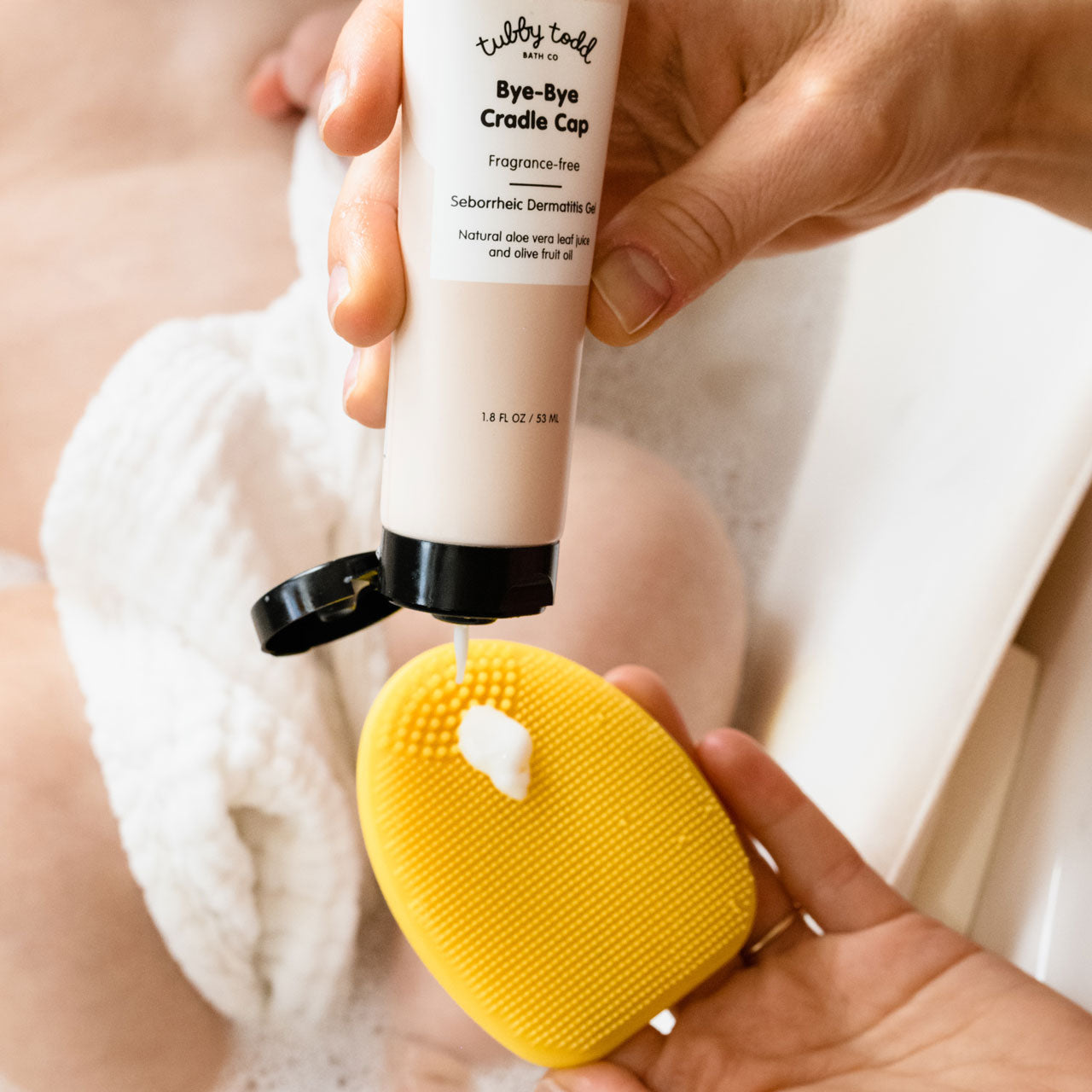
Cradle cap. Those yellowy, flaky patches look a little alarming the first time you spot them, but they’re incredibly common and almost never bother your baby one bit. A gentle wash and a soft brush handle a lot of it, and for stubborn stretches, our Bye-Bye Cradle Cap was made for exactly that. Everything for it lives in the cradle cap collection.
Dry, flaky scalp. Here’s what nobody warns you about: not every flake is cradle cap. Sometimes it’s just a dry scalp asking for a gentler, more hydrating wash. If you’re squinting at your baby’s head trying to figure out which one you’re looking at, our guide on dry scalp versus cradle cap lays out the tells for each.
And once your baby graduates into a toddler with a real head of hair, the rules shift a bit. We cover that whole stage in how to choose the right children's shampoo. For now, this one stays all about the baby days.
Finding the best baby shampoo your baby likes
The best baby shampoo isn't one specific or well-known product. It's the gentle, honestly-made bottle that fits your baby's skin and your family's routine, ideally one that washes hair and body without a cabinet full of extras. Look for plant-based cleansers, a hypoallergenic and dermatologist-tested formula, a short ingredient list, and fragrance you can account for. Skip the harsh sulfates, synthetic fragrance, and mystery dyes. Wash a few times a week, rinse gently, and roll with the messy days.
And if you'd rather not decode a label from scratch, our Hair + Body Wash was built to clear that list for you, with the whole hair collection right there when you're ready. Got a bath-time trick that keeps the suds out of little eyes? Tell us on Instagram @tubbytodd.
Best Baby Shampoo FAQs
Do you need a separate shampoo and body wash?
For a baby, you typically don’t need separate shampoo and body wash. Your baby’s hair and skin both want the exact same thing, a gentle non-stripping cleanser, so one good bottle can absolutely handle head to toe. That's exactly why a single baby shampoo and body wash (some folks call it a baby soap and shampoo, or a wash and shampoo combo) is such a parent favorite.
How soon can I start washing my newborn’s hair?
Right away, gently. Once you're past the sponge-bath stage (usually after the umbilical stump falls off), a soft little hair wash a couple times a week is perfect. Newborns have barely any hair or scalp oil, so you need only the tiniest bit of a mild, fragrance-free formula worked in with your fingertips. Our Hair + Body Wash is gentle enough for the smallest newborn.
How much baby shampoo do I actually need?
A pea-size drop is plenty for a whole little head, sometimes even less. Baby hair is fine and there isn't much of it yet, so a small squeeze lathers up softly and rinses clean fast.
How do I keep shampoo out of my baby’s eyes?
Tip that little head back, rinse from the forehead toward the back of the head, and cup your hand or a washcloth along the hairline to steer water away from the face. No wash is completely sting-proof, so gentle technique is still your best friend here.
What if my baby hates getting their hair washed?
Oh, so many babies do, and it almost always passes. A few things that help: save hair for the very end of the bath, keep the water warm and cozy, cup your hand or a soft washcloth over their forehead so nothing runs down their face, and keep chatting or singing the whole time so it feels like play. Go quick, stay calm, and try not to let it become a standoff.
Do I need a conditioner for my baby's hair?
Not in the early days. Newborn hair is usually too fine and sparse to tangle, so a gentle wash is all you need. Once a real head of hair fills in and you start hitting knots at bath time, that's when a little Hair Conditioner earns its place, adding just enough slip so combing doesn't tug.
Products in this post