

It’s 5 a.m., the diaper comes off, and there it is: a patch of angry red skin that wasn’t there at bedtime. Your little one is squirming, you wince, and you start sorting through the three half-used tubes in the changing basket wondering which will be best to soothe the skin. We’ve been there too! Many of us at Tubby Todd are parents, and hunting for the best diaper rash cream is a search we’ve run into ourselves, at that exact bleary hour, on our own babies. And, finding something that actually works is less about the fanciest tube, and more about matching the right formula to your baby’s skin and your daily routine.
What causes diaper rash in the first place?
Most diaper rash is contact irritation, plain and simple. Your baby's skin is much thinner than yours, so when it sits against wetness, friction, and the acids in pee and poop, it gets inflamed fast. The American Academy of Pediatrics says nearly every baby gets a diaper rash at some point, so if you are dealing with one right now, it’s normal.
The usual troublemakers:
-
Moisture. A wet or dirty diaper left on too long is the number one cause. Trapped humidity breaks down that delicate skin barrier quickly.
-
Friction. A diaper rubbing against soft skin, especially once your little one is on the move, leaves those tell-tale red spots along the thigh creases.
-
New foods. Starting solids or adding a new food changes the makeup of poop and its acidity, which can flare things up. Teething days can bring more rashes too.
-
Antibiotics. A round of antibiotics (for your baby, or for you if you are nursing) can throw off the balance of bacteria and lead to a stubborn, sometimes yeast-related rash.
-
Sensitive skin. Little ones prone to eczema or general sensitivity react more easily, and sensitive skin often runs in the family. If that is your kid, our eczema collection is made for exactly that reactive skin.

What to look for in a Diaper Rash Cream
Zinc oxide, and how much of it
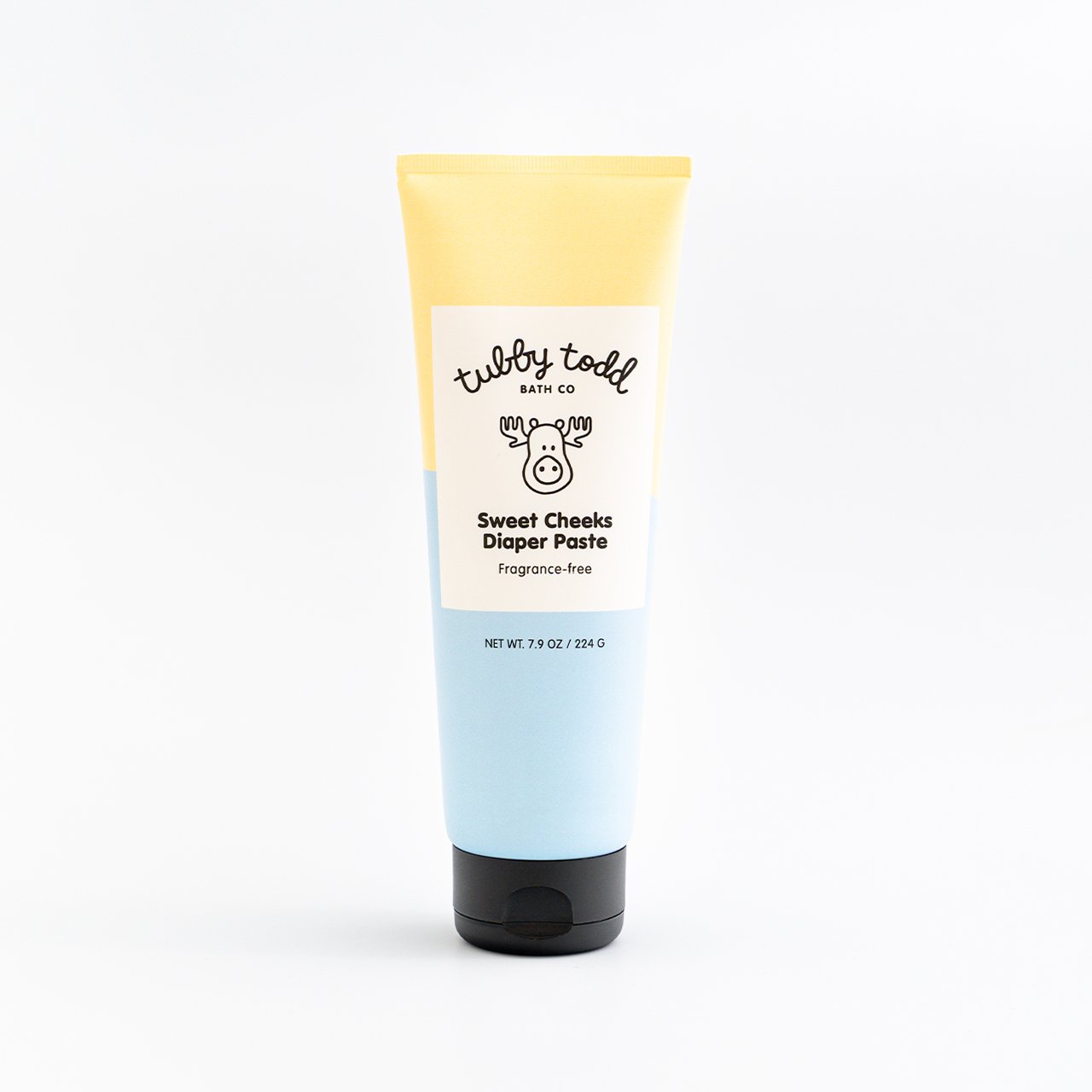
Zinc oxide is the active skin protectant that puts a breathable barrier between the skin and the next wet diaper. The American Academy of Dermatology recommends zinc oxide creams as a first-line treatment for diaper rash. A good zinc oxide diaper cream runs anywhere from about 10% up to 40%. Our Sweet Cheeks Diaper Paste sits at 14%, plenty to protect and heal without feeling like you are troweling on spackle.
Fragrance Free
Added fragrance is a common irritant, and sore skin does not need another reason to react. We recommend skipping it!
A short, gentle ingredient list
The best diaper rash cream does the job with ingredients you can actually recognize, and the good ones pull their weight. Sweet Cheeks pairs its zinc oxide with plant-based helpers: sunflower seed oil, rich in fatty acids and vitamin E, calms irritation while it supports the skin barrier; shea butter softens and soothes without feeling heavy; coconut oil brings a little natural antimicrobial backup, which is handy since a warm, damp diaper is exactly where yeast and bacteria like to move in; and a bit of beeswax thickens everything into a barrier that breathes but still repels moisture, so it stays put through the wiggles. When the list is short and organic like this, there is simply less on there to irritate already-sore skin.
No parabens, phthalates, or dyes
Here is why these are worth skipping. Diaper cream goes on broken, irritated skin and then sits in a warm, moist environment several times a day, which is the exact setup for ingredients to absorb and to aggravate. Parabens and phthalates are synthetic preservatives and plasticizers that have been linked to hormone disruption, and a baby's endocrine system is still developing, so it is the most vulnerable to that kind of exposure. Synthetic dyes and fragrances are among the most common triggers for irritation and allergic reactions, and repeated contact can actually sensitize the skin over time, meaning your little one reacts more, not less, with each use. None of these help the rash heal. They just add risk to something you are applying to the most delicate spot on your baby, over and over. Leaving them out is the easy call.
Paste vs. Cream vs. Spray: which type is right for you?
Whether the tube says diaper rash cream, ointment, paste, or spray, they are all chasing the same goal: a protective barrier. The difference is texture, and the one you reach for usually comes down to how bad the rash is and how wiggly your baby gets mid-change.
Paste is the thickest and most protective. It clings, resists wiping away, and is what you want for an active rash or overnight. Cream is lighter and rubs in more, which some parents like for mild redness or everyday prevention, though the barrier is thinner. Spray is the newest option and the hero of the squirmy, no-touch dilemma, since you can apply it without rubbing sore skin at all.
|
Feature |
Sweet Cheeks Diaper Paste |
Sweet Cheeks Diaper Paste Spray |
|
Zinc Oxide |
14% |
14.9% |
|
How you apply it |
Scoop and spread (a spatula keeps hands clean) |
Spray 4 to 6 inches from skin, no rubbing |
|
Mess factor |
Higher, thick and sticky by design |
Low, totally touch free |
|
Best for |
Targeted, stubborn rashes and overnight protection |
Quick changes, sore skin, diaper bags and travel |
Plenty of families keep both on hand: the paste for the tough nights and the spray for daytime changes when you are moving quickly throughout the day. You will find both in our Baby + Toddler (0-4) collection alongside the rest of the daily lineup.

Our picks: Sweet Cheeks Diaper Paste & Diaper Rash Spray
We are a little biased, but here is the honest case for each.
Sweet Cheeks Diaper Paste is our workhorse. The 14% zinc oxide sits on top of the skin and seals out the next round of moisture, while sunflower, coconut, and jojoba oils and shea butter keep the barrier from feeling stiff or drying. Some parents think of a thick formula like this as a diaper rash ointment, but the label matters less than what it does: it is thick enough to stay put through a full night, which is exactly when you want a rash left alone to heal. When we call the Sweet Cheeks Diaper Paste the best diaper rash cream in our own bathrooms, it is because it does the boring, reliable thing every single time.
Sweet Cheeks Diaper Paste Spray came straight out of a real parenting headache: how do you protect a raw little bottom without touching it? The Sweet Cheeks Diaper Paste Spray delivers that same zinc oxide protection in a fine mist, so you shake, spray from a few inches away, and close the diaper. No rubbing, no goopy fingers, no wrestling match. It is the one that lives in our diaper bags.
That’s why this Sweet Cheeks duo isn't just another diaper rash solution - it's the result of real mamas (like us!) figuring out what actually works for our own babes because we've been there with the midnight diaper changes and the heartbreaking cries when that sensitive skin is irritated.
How to apply Diaper Rash Cream correctly
Even the best diaper rash cream falls short if the skin underneath is damp or the layer is too thin. Here’s our quick routine that always does the trick:
-
Clean gently. Wipe with a fragrance-free wipe, or for a really sore bottom, plain warm water and a soft cloth. Pat, do not scrub.
-
Let it dry. Give the skin a few seconds to air-dry. Cream traps whatever is underneath, and you want that to be dry skin, not leftover moisture.
-
Match the layer to the rash. For prevention or light redness, a thin layer is plenty. For an angry, active rash, go thick, like frosting a cake. You should not be able to see the skin through it.
-
Reapply at every change. Zinc oxide is gentle enough to use at each change, and that consistency is what shortens a flare. Fam tip: with the paste, leave the bottom layer be and just add on top. With the spray, a quick mist does it.
When is it time to call your pediatrician?
While most rashes clear up at home, sometimes there are tricky instances and a few signs that mean it’s time to call your pediatrician instead of reaching for another tube.
-
Bleeding, blistering, or open sores on the skin.
-
A rash that spreads past the diaper area, or bright red patches with little dots around the edges, which can point to a yeast infection that needs a different treatment.
-
Fever alongside the rash, or a baby who just seems unwell.
-
No improvement after a few days of steady care, or a rash that keeps coming back.
Cleveland Clinic uses a similar rule of thumb: if a rash is severe, painful, or not budging with over-the-counter care, get it looked at. You know your baby best, and a quick call is always worth it. One honest note, since parents ask us all the time: we make skincare, not medical advice, so when something feels off, your pediatrician is your person.

What goes in your changing basket next?
The best diaper rash cream is simply the one you will actually reach for at 5 a.m., that protects sore skin, and that you trust using on your baby. For most families that is a good zinc oxide paste for the tough spells and a mess-free spray for everything else. Keep both stocked, apply on clean dry skin, and you will handle most rashes before they wreck anyone's morning.
Ready to restock? Grab the Sweet Cheeks Diaper Paste and Diaper Rash Spray, see the full diaper rash collection, or browse the Baby + Toddler (0-4) collection to round out your routine. And if you have a diaper rash trick that saved your sanity, tell us in the comments. We read every one.
FAQs
How often should I change a diaper to prevent rash?
Aim for every two to three hours during the day, and right away after a poop. Newborns usually need changing more often, closer to every two hours, since their skin is the most delicate and they go through the most diapers.
Can I use diaper rash cream at every change?
Definitely, yes. Zinc oxide creams and pastes are gentle enough for every-change use, and a thin protective layer each time is one of the best ways to stop a rash before it starts.
Is zinc oxide safe for newborns?
Zinc oxide is widely used and considered safe for newborns as a topical skin protectant. Go for a fragrance-free formula with a short ingredient list, and if your newborn's skin is especially reactive, check with your pediatrician before starting anything new. New to newborn skincare in general? Here is our take on when you can start using lotion on a newborn.
Can I use diaper rash cream on other skin irritations?
Zinc oxide barrier creams are made for the diaper area, but the same protective idea could be helpful for other types of rash or chafing. For eczema-prone or broadly sensitive skin, a targeted formula works better, and our eczema collection is a good place to start.
Products in this post