
Having an itchy scalp might be the most annoying thing in the world. Itch, itch, itch…scratch, scratch, scratch.
You can’t complete a task without needing to relieve the itch with your hand…a comb…or a rake maybe (you know, drastic times).
And when your kiddo or little babe has an itchy scalp, it’s hard to watch. They want to be comfortable, you want them to be comfortable, and your mama heart hurts for them. You worry about what could be causing it in the first place, and all you want to do is make it stop.
So, what causes an itchy scalp and what are remedies safe for the whole family to use?
“Why is my scalp so itchy?” Common causes of an itchy scalp
There are many potential causes for an itchy scalp:
-
Dandruff - one of the most common causes in older kids and adults. It shows up as dry, flaky skin on the scalp and can be linked to a naturally occurring yeast called Malassezia that can overgrow and irritate the scalp.
-
Dry scalp - different from dandruff, dry scalp happens when the scalp simply doesn't have enough moisture. It's especially common in cold or dry weather.
-
Product buildup - shampoos, conditioners, and styling products that contain sulfates, fragrance, or silicones can build up on the scalp over time and cause irritation and itching.
-
Cradle cap - in babies, this is one of the most common reasons for a flaky, sometimes itchy scalp.
-
Eczema or psoriasis - both can show up on the scalp and cause persistent itching, flaking, and irritation. If your little one has baby eczema elsewhere on their body, it can show up on the scalp too.
Itchy scalp on your little babe: could it be cradle cap?
Medically speaking, cradle cap is the baby version of a seborrheic dermatitis-type scalp condition (i.e. baby dandruff).
It creates crusty, sometimes yellow patches on your baby’s scalp. It’s truly harmless and very common in newborns. And while cradle cap can usually clear up on its own within a few months, that pesky dandruff can stick around for years and recur throughout your life.
Here's how to tell cradle cap apart from dandruff:
-
Age - cradle cap usually appears in newborns and infants, often in the first weeks or months of life. Dandruff typically starts after puberty or in older children and adults.
-
Look and feel - cradle cap tends to cause thicker, greasier, yellow or white scales that stick to the scalp. Dandruff is usually drier, flakier, and lighter in appearance.
-
Location - cradle cap can affect the scalp and sometimes spread to the eyebrows, behind the ears, face, neck, or skin folds. Dandruff is usually limited to the scalp and sometimes the eyebrows.
-
Itchiness - cradle cap is usually harmless and not very itchy. Dandruff often causes noticeable itchiness and irritation.
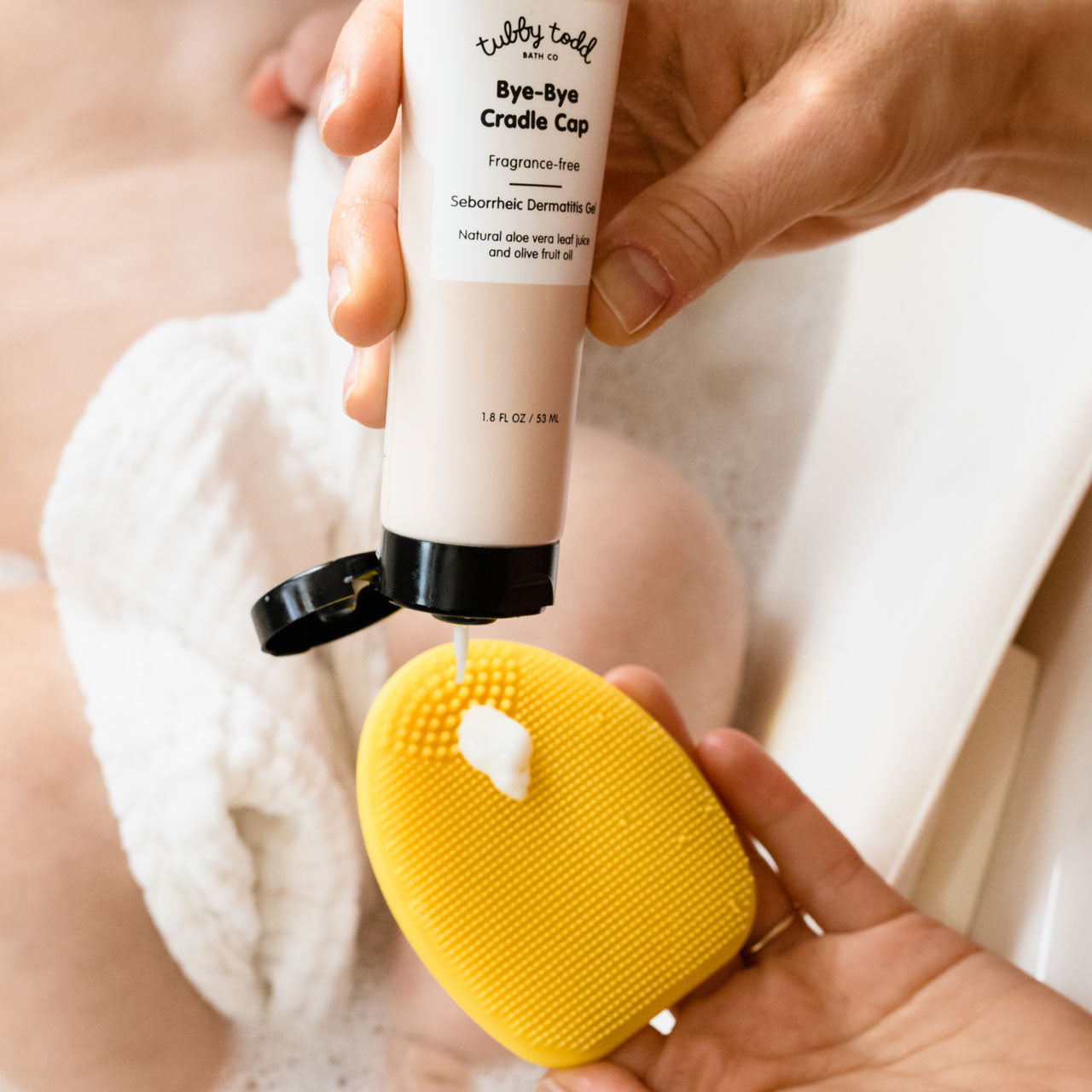
While treating cradle cap at home, it’s important to stay gentle. Our Bye-Bye Cradle Cap Bundle was designed specifically for this, with a step-by-step system that softens and lifts those crusty patches without irritating your baby's sensitive scalp. You can also find more guidance on our cradle cap page if you want to know more about what to expect and how to handle it.
Itchy scalp in older kids and adults
Once cradle cap clears up, most babies enjoy a calm scalp. But as kids get older and hit puberty, the scalp's oil production increases, and that's when dandruff and other scalp conditions tend to appear.
A few causes of an itchy scalp on older kids and adults are:
-
Hormonal shifts - puberty increases sebum production on the scalp, which creates an environment where yeast overgrows and dandruff develops.
-
Product sensitivity - older kids might use more hair products, and many of those products contain fragrance, sulfates, and silicones that can irritate a sensitive scalp over time.
-
Washing frequency - too frequent washing strips natural oils, and not enough lets buildup accumulate.
-
Stress - in adults especially, stress can trigger or worsen scalp sensitivity and flaring.
Itchy scalp treatment: oh-so-gentle remedies
Whether you're dealing with a baby's cradle cap or your own persistent itch try out a few of these tips:
-
Switch to a fragrance-free shampoo for itchy scalp - fragrance is a common scalp irritant and easier to remove from your routine than you think. Our Hair + Body Wash is fragrance-free, sulfate-free, and gentle enough for daily use on babies and kids. You can find it and more options in our hair collection.
-
Wash less frequently - for many people, washing hair every day strips the scalp's natural oils and triggers more itching and dryness as the scalp overcompensates. Pulling back to every other day or a few times a week gives the scalp a chance to rebalance.
-
Avoid harsh sulfates - sulfates are the ingredient in shampoo that creates that satisfying lather, but they can be very drying on a sensitive scalp. Look for sulfate-free formulas instead.
-
Try a gentle scalp massage - using your fingertips (not nails) to gently massage the scalp during washing helps loosen flakes, improve circulation, and feels pretty great too. For cradle cap, use a soft-bristle brush during your baby’s bath routine to gently lift scales after softening them with oil.
-
Be consistent - scalp conditions respond to routine. Build scalp care into your baby’s skin care routine or your own weekly rhythm .

When to see a dermatologist
Gentle home care clears up most itchy scalp issues.
But here’s when it makes sense to get a professional involved:
-
Flaking or itching that hasn't improved after several weeks of consistent gentle care
-
Hair loss or thinning alongside scalp symptoms
-
Open sores or bleeding from scratching
-
Scalp that looks significantly red, inflamed, or weepy
-
Symptoms that spread beyond the scalp to other areas of the face or body
A dermatologist can help identify whether it’s psoriasis, a fungal infection, or another condition.
We soothe all the itchy scalps
You officially have permission to put the rake down (phew). We know an itchy scalp can lead to losing a bit of your sanity.
Which is why we design products to soothe conditions like cradle cap and dandruff, so you don’t have to resort to drastic measures.
So, if your sweet babe has cradle cap, check out our Bye-Bye Cradle Cap Bundle. Or, if you or an older child has an itchy scalp, revamp your bathing routine with a few of our bath products to help soothe the constant itchiness.
Because your sweet babe deserves it (and so do you).
Frequently Asked Questions
Is an itchy scalp a sign of lice?
It can be, but lice are one of many possible causes. When your kiddo has lice, visible nits (eggs) attach to the hair shaft close to the scalp, and the itching is often most intense behind the ears and at the nape of the neck.
If you don't see any nits and the itch is more generalized, dryness, dandruff, or product buildup are more likely.
What causes an itchy scalp with no dandruff?
An itchy scalp without visible flaking is often linked to dryness, contact irritation from a product, or early-stage eczema or psoriasis where the skin changes aren't visible yet.
Switching to a fragrance-free, sulfate-free shampoo and moisturizing the scalp after washing is a good first step. If the itch persists without explanation, a dermatologist visit is reasonable.
Can babies get dandruff?
Not in the traditional sense. What looks like dandruff in babies is almost always cradle cap, which is a different condition.
Overactive oil glands cause cradle cap rather than the yeast-related imbalance that causes dandruff in older kids and adults. It's very common, usually harmless, and often clears on its own within a few months with gentle care.
Can an oily scalp cause itchiness and what products help?
Absolutely, yes. An oily scalp creates an environment where yeast can overgrow and cause irritation and itching. A gentle, sulfate-free shampoo used consistently a few times a week can help keep oils in balance. Avoid heavy conditioners on the scalp itself, and look for lightweight, fragrance-free options.
How do you treat an itchy scalp caused by dandruff?
Consistent use of a gentle, anti-dandruff shampoo is the standard starting point. For milder cases, switch to a fragrance-free, sulfate-free formula and wash a few times a week to keep symptoms under wraps.
For more persistent dandruff, a dermatologist can recommend targeted treatments. In the meantime, avoid fragrance and product buildup. .
Products in this post