
First things first, Mama, because we know you might be reading this at 2 a.m. with a brand-new baby snoozing on your chest: newborn skin peeling is completely normal. Almost every baby goes through it, and it isn’t a sign that anything is wrong with your little one.
Take a breath. That flaky, papery shedding on their hands and ankles is just brand-new skin doing exactly what it is supposed to do. We’re Tubby Todd, and a lot of us are parents who have stood over a bassinet wondering the same thing you are right now.
Why is my newborn’s skin peeling?
Here is the short version: your baby just spent nine months floating in fluid, and now their skin is meeting dry air for the very first time. That transition is what you’re seeing.
-
They shed their vernix. About halfway through pregnancy, babies grow a creamy, protective coating called vernix caseosa. It shields their skin in the womb, a bit like a natural barrier cream. After birth, as that coating wears away, the top layer of skin underneath starts to naturally flake off.
-
They spent a long time in fluid. All that time surrounded by amniotic fluid leaves skin ready to shed once it is out in the open. It is a lot like the way skin molts, trading the outermost layer for the fresh skin waiting underneath.
-
The air is drier than the womb. Your home, especially with late-summer air conditioning humming, is far less humid than where they have been living. New skin adjusts to that change by drying and peeling for a little while.
We want to make sure you know that it’s a healthy, expected reset. So when you notice your newborn’s skin peeling off in those first few days, it usually means everything is going to plan.
When newborn skin starts peeling, how long does it last?
For most babies, the peeling shows up within the first few days home and winds down within a couple of weeks. Newborn skin peeling typically runs its course in the first two weeks of life, then quietly resolves on its own.
Timing does vary, and that’s completely normal too. Babies who arrive a little past their due date often peel more, simply because they had extra time soaking in that fluid before meeting the world. Early arrivals sometimes peel less at first. Either way, you do not need to speed it along or do anything special to make it stop. Left alone, it fades right about the time you are starting to feel like you have a handle on this whole newborn thing.
Where does newborn skin peeling happen most?
Newborn skin peeling tends to show up where skin is thinnest and where it rubs or bends. So keep an eye on:
-
Hands and feet, which are often the flakiest of all
-
Ankles and wrists, where skin creases with every little kick and wave
-
The folds at the elbows, knees, and neck, where skin meets skin
-
Arms, legs, and the belly, in patchier amounts
You may see a little or a lot, and it can look different from one day to the next. A dusting of flakes on the ankles one morning and smoother skin by the weekend is all part of the same normal process.
Does peeling mean my newborn has dry skin?
Not necessarily! That first round of peeling is mostly the shedding we just talked about, not a sign that your baby’s skin is dehydrated. That said, brand-new skin is delicate and can genuinely get dry on top of the normal shedding.
|
Normal newborn shedding |
Signs of dry skin |
|
|
What it looks like |
Thin, papery flakes lifting off on their own |
Rough, tight, or slightly ashy patches |
|
When it happens |
First couple of weeks, then fades |
Can show up anytime, often lingers |
|
How your baby seems |
Comfortable and unbothered |
May feel rough to the tough, occasionally flaky and red |
|
What it needs |
Mostly time and gentle care |
A little fragrance-free moisture |
What can you put on peeling newborn skin?
When parents ask us what to put on peeling newborn skin, our answer is almost always the same: keep it simple, keep it fragrance-free, and moisturize while the skin is still damp. The American Academy of Dermatology recommends applying moisturizer within a few minutes of bathing to seal in water, and the same idea works beautifully for new skin. A thin layer of ointment right after a bath, when skin is barely dry, can also be helpful in trapping in that moisture where needed.
A couple of easy picks for that job:
-
For everyday hydration, a gentle, fragrance-free lotion like our Everyday Lotion is an easy daily habit. Smooth a little over damp skin after bath time and let it soak in. Brand-new skin does best with fragrance-free formulas, which is exactly why we love this one for the newborn stage.
-
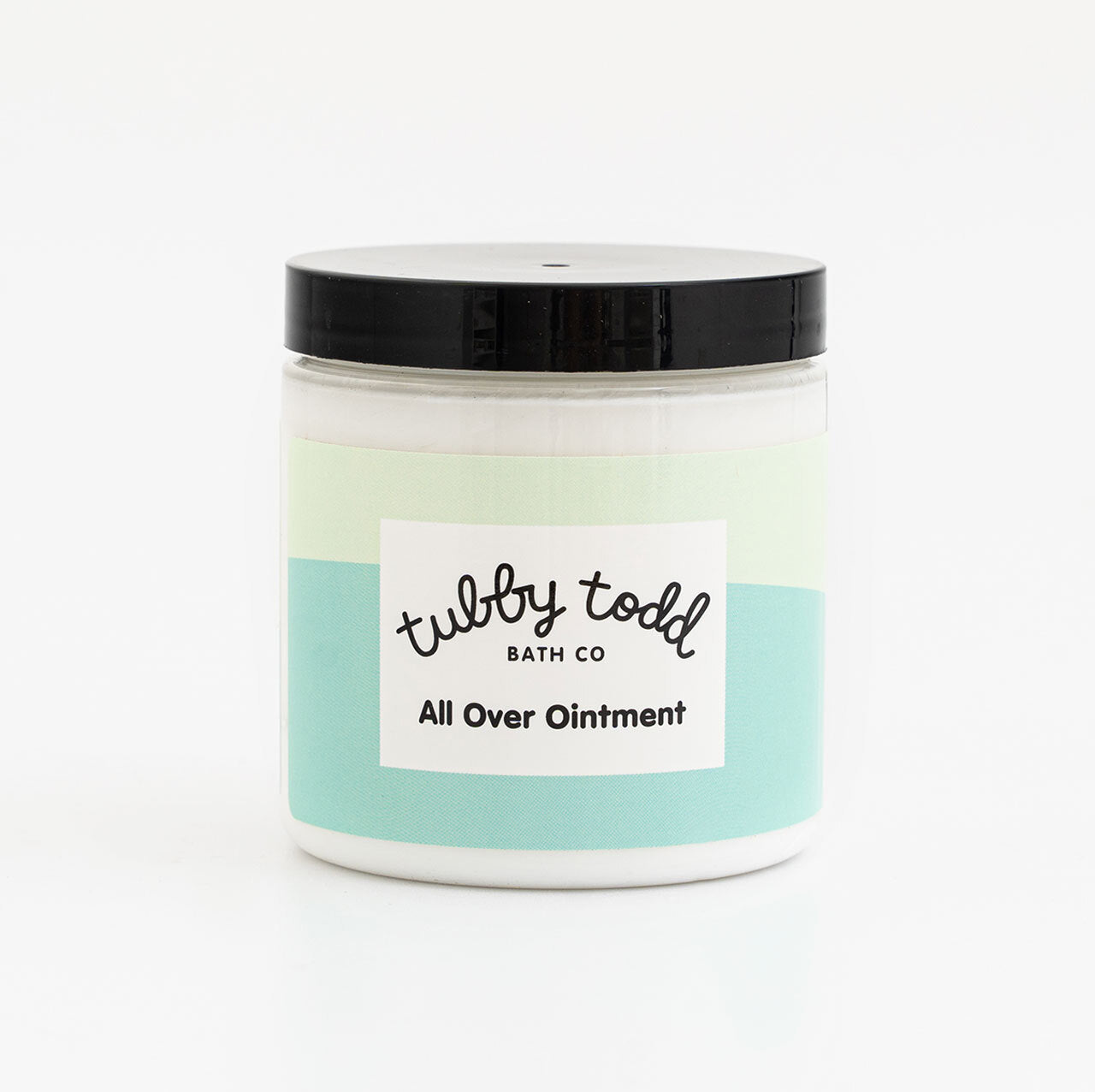
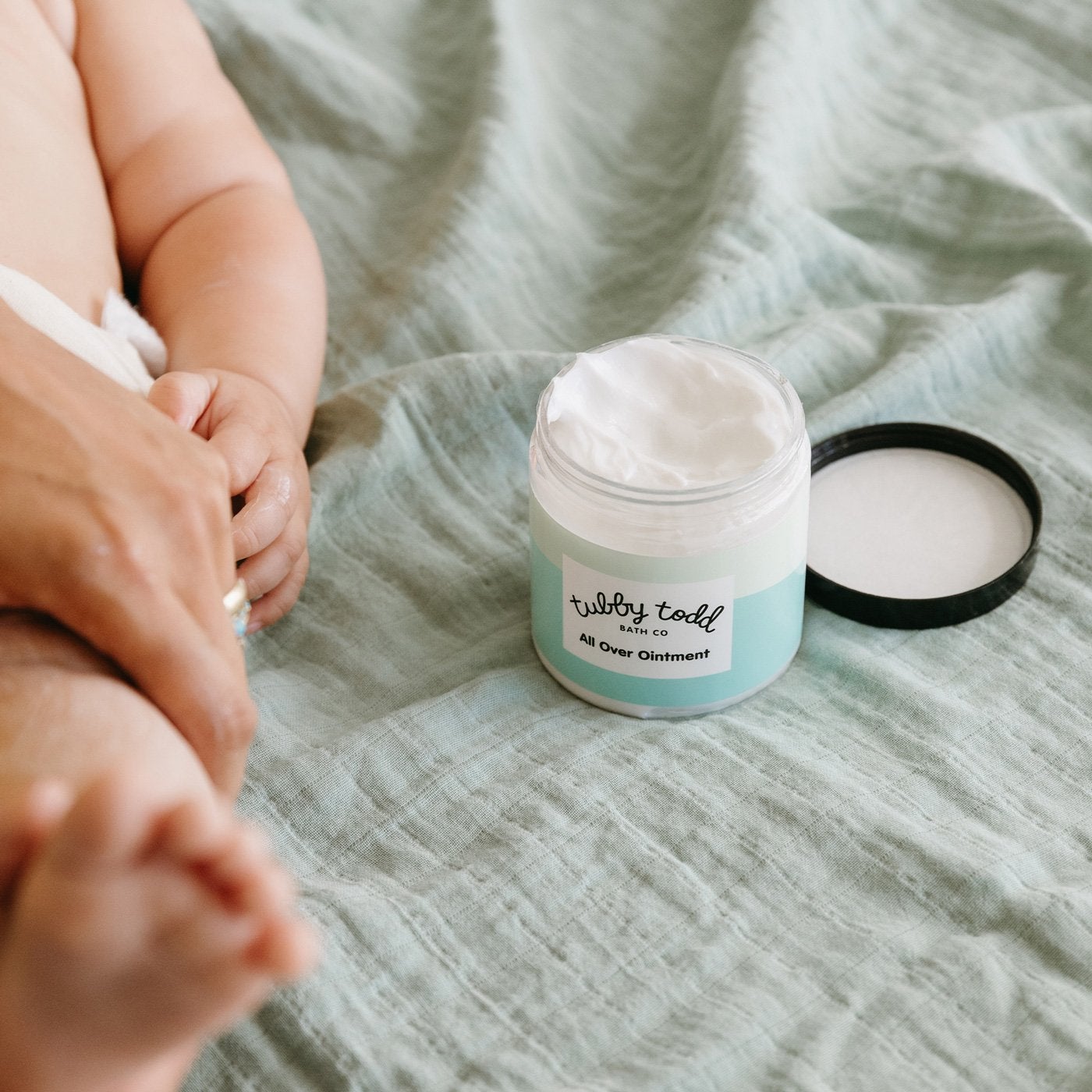
For drier, flakier patches, our All Over Ointment is thicker and more protective, so it is lovely on stubborn spots like ankles, wrists, and the tops of little feet. Dab it on where the skin looks especially papery.
A few gentle things to skip while you are at it:
-
Adult lotions, which often carry fragrance and heavier ingredients that new skin does not need.
-
Fragranced oils and essential oils, which can irritate that delicate barrier on newborns.
-
Anything that exfoliates or scrubs. Newborn skin never needs help peeling.
-
Picking or peeling the flakes off yourself. We know it is tempting, but let them fall away on their own so you do not tug at skin that is not ready.
If you like the idea of having the basics ready before the baby arrives, our Newborn Gift Set bundles a gentle wash and lotion into one simple starter routine with several other daily basics you’ll love to reach for..
Bath habits that help with peeling skin
Bath time is where a lot of the newborn skin peeling story plays out, and a few small tweaks make a real difference. Newborns do not need daily baths, and less time in the water is often kinder to shedding skin. When you do bathe your babe, stick to these easy steps:
-
Keep baths short and lukewarm. Around 10 minutes or less in comfortably warm water is plenty. Long, hot soaks pull moisture out of new skin, which is why the AAP suggests brief baths and a moisturizer afterward for dry, delicate baby skin.
-
Use a gentle, fragrance-free cleanser. Our fragrance-free Hair + Body Wash is a mild, hypoallergenic option made for delicate skin. A little goes a long way.
-
Pat, don't rub, dry. Blot your baby with a soft towel instead of rubbing, which can catch on peeling skin.
-
Moisturize within a few minutes. Skin holds onto water best right after a bath, so that quick layer of lotion or ointment does double duty.

The American Academy of Pediatrics recommends keeping newborn baths gentle and infrequent in those early weeks, which happens to be exactly what peeling skin likes best.
Newborn skin conditions that look similar
Most of the time, flaking in those first weeks is just newborn skin peeling. But a few other common conditions can look similar, so it helps to know the difference.
Baby Acne
Think tiny red or white bumps clustered on the cheeks and nose, not papery flakes lifting off. Baby acne tends to flare and fade on its own schedule in the early weeks, and it usually needs nothing more than some gentle washing and a little patience.
Milia
Milia are those little white pearls you might notice on the nose and chin. Here is the tell: they sit just under the surface instead of flaking off the top the way peeling does, and they clear entirely on their own within a few weeks. They are one of the most common newborn skin variations there is.
Baby Eczema
Eczema is the one worth actually ruling in or out. It shows up as dry, red, rough patches that often feel itchy, and unlike plain peeling, it tends to linger and genuinely bother your babe. If that is closer to what you are seeing, our baby eczema guide lays out the signs and a soothing routine to try.
Cradle Cap
When the flaking is mostly up top on the scalp, cradle cap is the usual culprit. Look for yellowish, greasy, or crusty patches rather than the light, dry flakes of typical peeling. It is harmless and clears with gentle care, and how to tell dry scalp from cradle cap sorts out the difference if you want a closer look.
When is peeling more than just peeling?
Newborn skin peeling is one of those things that looks a little dramatic but almost never is. Still, you know your baby, and it is always okay to check in with your pediatrician if something feels off. Reasons to give them a call include:
-
Skin that is cracking, bleeding, or looks raw rather than gently flaking
-
Redness that is spreading, or patches that feel hot
-
Blisters, oozing, or crusting that looks like it could be irritated or infected
-
Peeling paired with fussiness, poor feeding, or a fever
-
Flaking that is still going strong past about three weeks
None of these mean something is definitely wrong. They are simply good reasons to let your pediatrician take a look, because that is what they are there for. When it comes to a brand-new babe, there is no such thing as a silly question.
You've got this – and we've got their skin covered
Here is the part worth holding onto, Mama: newborn skin peeling is a normal, passing chapter, and mostly your job is to be gentle and patient while their skin finds its footing. Newborn skin peeling almost always sorts itself out with a little time and a lot of love. Short baths, a fragrance-free layer of moisture on damp skin, and a hands-off approach to the flakes will carry you right through it.
If you want a simple place to start, take a peek at our Everyday Lotion and All Over Ointment, both made gentle enough for the tiniest, newest skin. You can find them alongside the rest of our baby and toddler favorites and our full skincare collection. And hey, whether it is your first babe or your fourth, you don't have to figure it all out alone. Tell us in the comments how your little one's skin is settling in.
Newborn skin peeling questions parents frequently ask us
Should I peel the loose skin off my newborn?
Please don't, as tempting as it is. Tugging at flakes that are not ready to come off can pull at the healthy skin underneath and leave it raw. Let the peeling happen on its own timeline and simply keep the skin moisturized. It will shed when it is good and ready.
Is it normal for a newborn's scalp to peel?
Some scalp flaking is normal, but peeling that shows up mainly on the scalp is often cradle cap rather than the usual all-over shedding. It looks yellowish, greasy, or crusty and is very common and harmless. Our dry scalp or cradle cap guide walks you through the difference and what to do.
Do premature or post-term babies peel more?
Often, yes. Babies born a bit past their due date tend to peel more, since they had extra time in the amniotic fluid before birth. Babies born early sometimes peel less at first. Both patterns are normal, and neither one means anything is wrong.
Can I use coconut oil on peeling newborn skin?
A lot of parents ask about it. Coconut oil is generally gentle, but newborn skin is delicate and can react to oils, so it is smart to patch test a small spot first and check with your pediatrician, especially in the first weeks. A simple fragrance-free lotion or ointment made for babies is usually the more predictable choice for peeling skin.
How can I prevent my newborn's skin from drying out?
Keep baths short and lukewarm, use a gentle fragrance-free cleanser, pat skin dry, and moisturize within a few minutes while skin is still damp. Avoiding fragranced products and long hot baths goes a long way. A little fragrance-free lotion after bath time is often all that new skin needs to stay soft.
When should I call a pediatrician about newborn skin peeling?
Most newborn skin peeling improves on its own. Contact your pediatrician if the skin becomes increasingly red, swollen, cracked, bleeding, blistered, or starts oozing or crusting. You should also seek medical advice if the peeling persists longer than expected or your newborn seems unwell.
If you are concerned about a fever or changes in feeding or behavior in a newborn, contact your pediatrician promptly rather than assuming the symptoms are related to normal skin peeling.
Products in this post