
Ah, at last. You finally got your baby sleeping through the night. You see the light at the end of the tunnel:
No more sleepless nights. Right?
Well, all of this was true until recently.
Just when you were starting to remember what a full night’s rest felt like, now, your baby is waking up every few hours. And your typical nurse-them-back-to-sleep maneuver isn’t working how it usually does. And then you find yourself, mid-soothe at midnight, googling, “why isn’t my baby sleeping?”
If this sounds at all familiar, you're probably in the middle of the 3-month sleep regression (or one like it). And, while your sleepy brain is begging for more rest, don’t worry about this being abnormal for your baby to go through. Because, it really isn’t. Babies of this age go through this all the time, and biology and science both support it.
Here's why it happens, how to get through it, and an interesting extra piece: how your baby's skin comfort could be affecting their sleep.
What is the 3-month sleep regression?
Sleep regressions don't happen like clockwork for every baby. Research shows that every child moves through developmental shifts on their own timeline, which means your experience might look a little different from what you read online or hear from other parents.
What's happening at around 3 months is your baby's body starting to establish its own rhythms. Their sleep patterns are shifting and reorganizing, and that reorganization can feel a lot like starting over from the beginning.
The good nights you worked so hard for can suddenly seem far away as you enter a long string of nights that feel like the newborn days all over again.
As frustrating as that is, it's your baby's brain and body doing exactly what they're supposed to do.
Signs your baby is going through it
If you’re unsure if your baby is going through a regression or not, here’s what to look for:
-
More fussiness than usual, especially in the evenings
-
Shorter daytime naps or more resistance to napping
-
Taking much longer to fall asleep than they used to
-
Waking up frequently after previously sleeping longer stretches
-
Seeming tired but unable to settle
Why it happens: what's going on developmentally
Your baby at 3 months old is still in the early stages of building their circadian rhythm (the internal clock that tells our bodies when to sleep and when to wake). And building this internal clock takes intentional time.
According to research, here’s how that development typically happens:
-
At 2 weeks old, babies sleep in roughly 4-hour intervals with no real day-night distinction
-
By about 5 weeks, the first hints of a circadian rhythm start to emerge
-
Around 15 weeks, sleep and wake episodes begin to consolidate into more predictable patterns
-
By 6 to 9 months, most babies can sleep through the night with at least 6-hour stretches
-
Total sleep across the first year stays around 14 hours a day, but it gradually shifts from being spread out randomly to happening more at night
Your baby's body is learning to sleep better every single night. Even if it doesn’t seem like it. But, you’re right there with them, helping teach and support them through it.
How to support your baby through it
There's no magic fix for a sleep regression, but there are a few things that can help:
-
Keep a consistent bedtime routine - predictability is your friend right now. A consistent sequence of events before sleep, bath, feed, cuddle, down, signals to your baby's developing brain that sleep is coming. The more consistent the routine, the more their body learns to prepare for it.
-
Watch wake windows - at 3 months, most babies can stay awake for 60 to 90 minutes at a time. An overtired baby is much harder to settle. Keeping an eye on wake windows can help them get to bed before you have an overtired babe on your hands.
-
Feed responsively - growth and developmental spurts drive hunger. If your baby seems to be feeding more frequently right now, that's probably why. Follow their cues rather than the clock during this stretch.
-
Give it time - most 3-month regressions last anywhere from 2 to 6 weeks. It feels endless in the middle of it, but eventually, it does end.
The skin comfort connection: why it matters at night
Here's something that often gets overlooked in conversations about baby sleep: uncomfortable skin can keep babies awake.
Here are a few reasons why your baby’s skin might be irritated (and results in them waking up at night):
-
Baby eczema: the itching gets worse at night as body temperature rises during sleep.
-
Baby heat rash: this can happen especially during summer, and it causes a prickling and discomfort which can interrupt sleep just as much as hunger.
-
Baby dry skin: if your little babe’s skin hasn’t been moisturized before bed, it can become itchy and irritating through the night.
So, if your baby is waking more often than what seems normal (and you’ve ruled out hunger, wet diapers, or other causes), consider their skin comfort. A consistent skin care routine built into your bedtime routine supports better sleep for babies with sensitive or eczema-prone skin.
Building a bedtime bath routine that supports sleep
Bath time is the dreamiest sleep cue. Warm water raises body temperature slightly, and the cooling that follows signals to the body that it's time to sleep.

Here's how to make bath time part of your wind-down:
-
Keep the water warm - hot water can dry out and irritate sensitive skin. Lukewarm is the sweet spot, especially for babies with eczema-prone or dry skin.
-
Use a gentle, skin-supporting wash - harsh sulfates and fragrances in body wash can strip the skin's natural oils and cause irritation that shows up later at night. A fragrance-free or naturally scented formula is gentler on sensitive skin.
-
Moisturize immediately after - follow the “3-minute rule” and moisturize your babe within that window. Skin is still slightly damp and absorbs moisture more readily. For babies with eczema-prone or dry skin, skipping this step means the skin barrier is working harder overnight.
-
Keep the room cool - a room that's too warm contributes to heat rash and restless sleep. A slightly cool, well-ventilated room is better for sleep than a warm one.
-
Dress your babe in breathable nighttime clothing - clothing that’s 100% cotton breathes easier and allows your baby to be more comfortable as they sleep.
When to talk to your pediatrician
Most sleep regressions are a normal part of development and resolve on their own. But there are a few signs that warrant a call to your pediatrician:
-
Loud snoring or gasping sounds during sleep
-
Fever or other signs of illness alongside the sleep changes
-
The regression seems to be lasting longer than four to six weeks with no improvement
-
Your baby seems in pain or unusually distressed rather than just wakeful
When in doubt, call. Your pediatrician would always rather hear from you.
Tubby Todd products for the bedtime routine
A few of our fav Tubby Todd products that make bathtime easier and help your baby get to sleep:

This bundle includes four everyday essentials for newborn skin:
-
Hair + Body Wash
-
Everyday Lotion
-
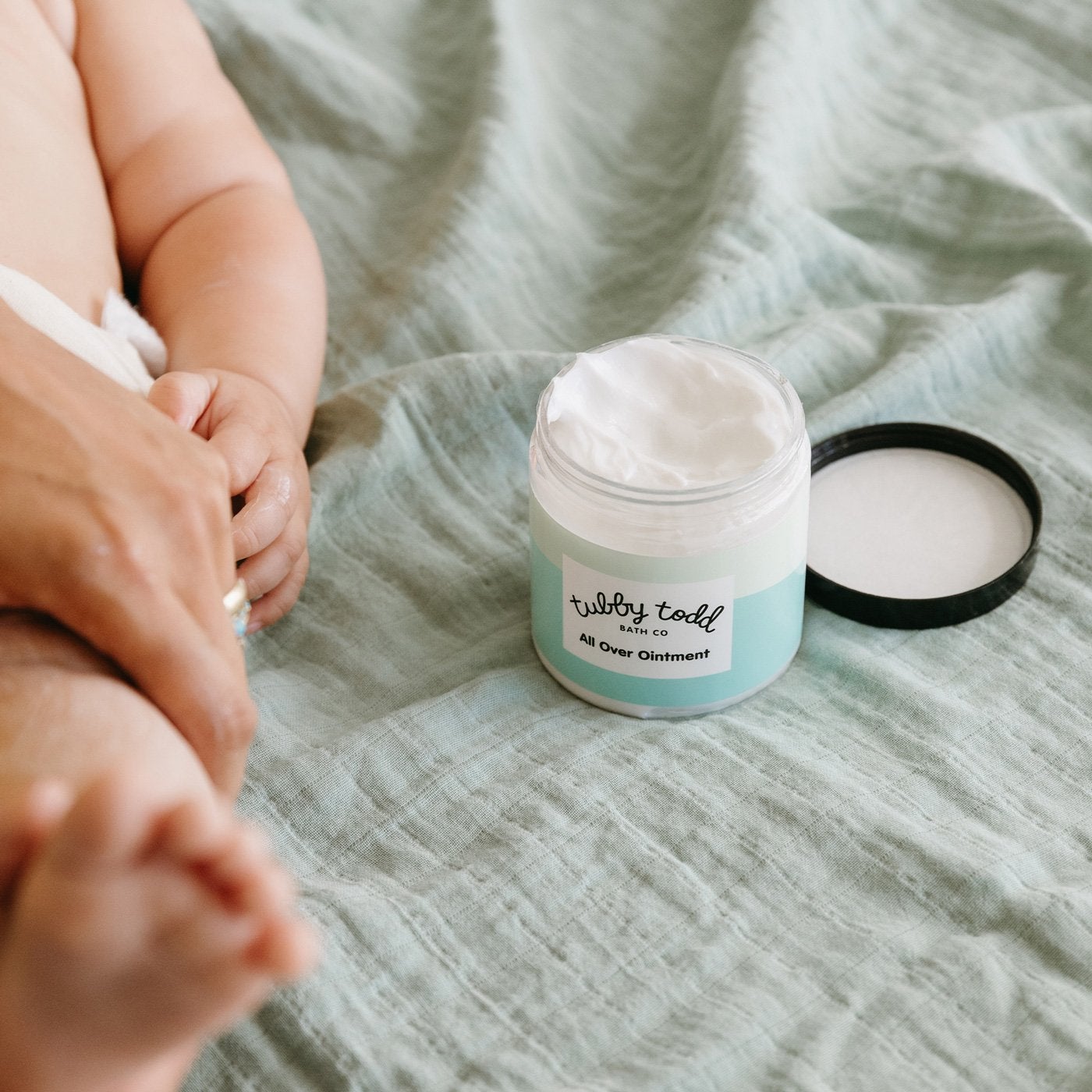
All Over Ointment
-
Sweet Cheeks Diaper Paste
This is everything you need for bath time, diaper changes, and everything in between to keep your babe comfortable.

This is a gentle, plant-based bubble bath packed with honeysuckle, grapefruit, and natural extracts to rehydrate skin from head to toe. Two to three pumps under running water is all you need.

This bundle includes three essentials for your baby’s sensitive skin:
-
Hair + Body Wash
-
Everyday Lotion
-
All Over Ointment
You're going to get through this sleep regression
Your baby will sleep through the night again, your sleepy brain will get the rest it needs, and you will get through these next few weeks.
At Tubby Todd, we’re here to make this phase a little easier. We truly believe a consistent bedtime routine is rooted in gentle, moisturizing skincare for your sweet little babe.
Your baby’s skin comfort lays the foundation for a better rest at night (even during the 3-month sleep regression). Our products are gentle enough for little baby skin, but impressive enough for your entire family. Try out a few of our bath products to see for yourself, and design your baby’s nighttime routine for better sleep.
Frequently asked questions
How long does the 3-month sleep regression last?
Most regressions at this age last anywhere from 2 to 6 weeks. Every baby moves through it on their own timeline, so try not to compare too closely to what other parents report. Consistent routines and responsive feeding help most babies work through it more smoothly.
Is the 3-month sleep regression the same as the 4-month sleep regression?
They're related but slightly different. The 3-month regression is often tied to a growth or developmental spurt, while the 4-month regression involves a more permanent shift in sleep architecture. Some babies experience both, some experience one more than the other. If the disruption continues past 4 months, the 4-month regression framework may be more relevant.
Can skin discomfort cause a baby to wake at night?
Yes. Eczema itching, heat rash, and general skin dryness all tend to worsen at night as body temperature rises during sleep. If your baby is waking frequently and other causes have been ruled out, a consistent bedtime moisturizing routine is worth adding. It won't hurt and it often helps.
Should I start sleep training during a regression?
Most sleep experts suggest waiting until a regression has passed before introducing any significant sleep training. Trying to change sleep habits during a period of developmental disruption is usually harder on everyone. Get through the regression first, then reassess.
What room temperature is best for baby sleep?
Most sleep guidelines suggest keeping a baby's room between 68 and 72 degrees Fahrenheit. A room that's too warm increases the risk of heat rash and restless sleep. A small fan for air circulation (not pointed directly at baby) can also help keep the room comfortable.
Products in this post