

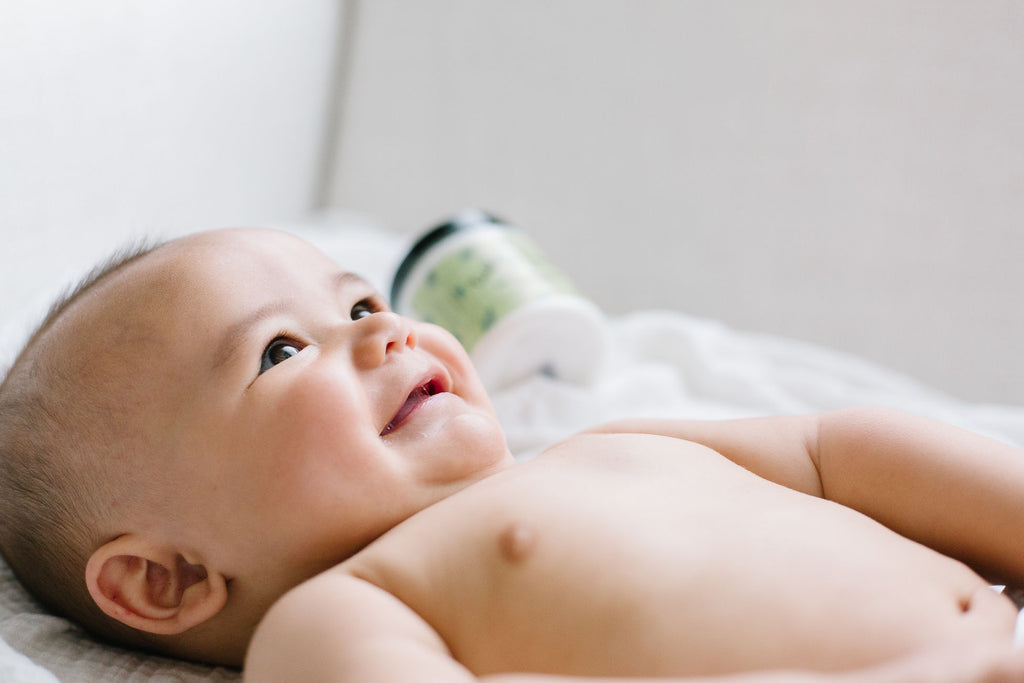
Eczema in Kids: Essential Tips for Parents
If bedtime in your house looks like a small child twisting in the sheets, kicking off blankets, scratching the backs of their knees, and taking forever to actually fall asleep,they could be suffering from dryness, irritation or rash caused by eczema. Nighttime itching is one of the most exhausting parts of pediatric eczema, both for the kid who can't get comfortable and for the parent lying awake listening to them struggle to get comfortable. The trial-and-error required to actually calm it down can wear anyone out. The good news: most cases respond well to a consistent at-home routine. The not-so-fun part is finding it.
Eczema in kids tends to show up early, often before the first birthday, and for some families it sticks around through the school years. According to the American Academy of Pediatrics, atopic dermatitis (the medical name for the most common form) affects roughly 20 to 25 percent of children. The rashy patches, the itch that wrecks bedtime, the constant detective work to find a trigger - every Tubby Todd parent has been there.
Tubby Todd exists because of eczema. Our co-founder Andrea spent years testing ingredients on her son’s eczema-prone skin before any “gentle” product on the shelf actually worked. The notes below come from her experience, our R&D team’s work alongside pediatric dermatologists, and a decade of feedback from parents in our community. We aren’t a medical team (we recommend talking to your pediatrician about your child’s specific case) but this is the routine we’d hand to a new parent on day one.
What does eczema look like on kids?
Eczema in kids usually shows up as red or purplish-brown patches of dry, itchy, sometimes scaly skin. On babies, it tends to appear on the cheeks, scalp, and the outsides of the arms and legs. On older kids, it settles into the creases - behind the knees, inside the elbows, wrists, and ankles. Skin can feel rough, cracked, or even weepy when a flare is at its worst.
The itch is the part that wrecks bedtime. Kids scratch, the barrier breaks down further, more irritants get in, and the cycle repeats. The whole point of every routine below is to interrupt that loop before it starts.
Essential tips for preventing an eczema flare-up
The fastest way to keep eczema in kids manageable is to head off flares before they start. Every kid has their own trigger list, but after a decade of feedback from parents in our community, these are the prevention tips that come up most:
-
Use fragrance-free, dye-free products. Sulfates, synthetic fragrances, dyes, and certain preservatives are the usual suspects. Even “gentle” drugstore lotions can cause a reaction if the ingredient list is too long. The National Eczema Association recommends sticking with fragrance free, dye-free formulas made for sensitive skin.
-
Keep bath water lukewarm, and watch for big temperature swings. Hot water strips the skin barrier fast. So does walking from an over-air-conditioned room into summer humidity. Keep bath water lukewarm and moisturize before any major environment change.
-
Moisturize every single day. Eczema is, at its core, a moisture barrier issue. Even when skin looks calm, missing a day or two of lotion is often enough to bring a flare right back. Daily moisturizing with consistency is key.
-
Mind the everyday environment. Chlorinated pools, scratchy carpet at a friend’s house, a new laundry detergent, a wool blanket from grandma - any of these can show up as a patch a few hours later. Sometimes the cause stays a mystery, and that’s okay.
-
Watch for food triggers. For some kids, eczema is tied to food. The American Academy of Dermatology notes that 33 to 63 percent of young children with moderate-to-severe eczema also have food allergies, most often to dairy or eggs. If you suspect a food link, talk to your pediatrician before cutting anything out of their diet.
How to build a daily eczema routine
The shorthand most dermatologists use is “Soak and Seal.” It’s exactly what it sounds like - a short, lukewarm soak, followed by sealing in moisture before the skin has a chance to dry out. Here’s the four-part rhythm we recommend to eczema-prone families:
-
Bathe smart, not less. It used to be common advice to bathe kids with eczema less often. Current AAP guidance actually leans toward daily or every-other-day baths, as long as they’re short (5 to 10 minutes), lukewarm, and end with a really good moisturizer. The water itself helps hydrate the skin. What happens in the next three minutes is what matters most.
-
Skip the bubble bath and harsh cleansers. Use a gentle, fragrance-free wash only where it’s needed - diaper area, hands, scalp. Our Hair + Body Wash was formulated for sensitive skin and won’t strip moisture. Pat dry with a soft towel - no rubbing.
-
Lock in moisture within three minutes. This is the magic window. Skin still damp, towel still in your hand, slather on a thick lotion or cream. Our Everyday Lotion is a good head-to-toe baseline for most nights.
-
Spot-treat with an ointment. For active patches, a balm with a heavier, occlusive texture works harder than a lotion alone. Our All Over Ointment was originally formulated for Andrea’s son Walker - the kid whose stubborn eczema-prone skin sparked the whole company - and it’s now backed by more than 17,000 five-star reviews from parents in the same trenches. For really stubborn areas, layer the new Barrier Balm on top.
If you want the whole approach in one place, the Regulars Bundle is the three-step routine we recommend most for eczema-prone families: wash, moisturize, spot-treat.
How to control a flare-up
Essential tips for controlling an eczema flare-up Even with the best prevention and daily care, flares still happen. When parents in our community write in mid-flare, this is the playbook we share:
-
Treat rashy spots at every diaper change or hand-wash. It’s easy to forget mid-day moisturizer applications and wonder why progress is stalling. Every diaper change is a chance to swipe ointment over rashy spots. For older kids, every hand-wash is a chance to re-moisturize.
-
Switch to soft cotton everything. During a flare, swap out anything wool, polyester, or scratchy, and re-run the laundry on an extra rinse cycle to clear detergent residue.
-
Add a colloidal oatmeal soak. Colloidal oatmeal is one of the most studied gentle ingredients for itchy skin. An Oat So Soothing Bath Bomb is an easy add when skin is especially reactive.
-
Keep nails trimmed short. Sounds small, but short nails mean less damage when (not if) they scratch in their sleep.
-
Stay consistent, even on the good days. Consistency is key when dealing with eczema-prone skin. Keep up with your routine even on days when skin seems clear to keep the moisture barrier healthy and happy.
When should you talk to your pediatrician?
Honestly, sooner than most parents do. Waiting it out is the default move, and it’s usually a mistake. Call your pediatrician or ask for a pediatric dermatology referral if:
-
The eczema is spreading or not improving with daily moisturizing
-
You see signs of infection: yellow crusting, oozing, fever
-
Your child is losing sleep or scratching until they bleed
-
You suspect a food allergy connection
-
You’re exhausted and need a second opinion (a totally valid reason on its own)
You’re not bothering them. Eczema is one of the most common skin issues they treat, and they will have a plan.
A routine your family can actually keep up
The best eczema routine isn’t the one with the most steps. It’s the one you’ll do every single day, even when you’re tired, even when their skin looks fine. Build something simple, use products that are safe enough to slather on without a second thought, and give it a few weeks before changing anything.
Our eczema care collection is where we’ve gathered every product built specifically for kids with eczema-prone skin - the same lineup we recommend to first-time Tubby Todd parents looking for relief. If you’ve found a trick that works in your family, share it in the comments. Every note from another parent makes the next family’s search a little easier.
Frequently asked questions
1. What’s the difference between eczema and just dry skin in kids?
Dry skin tends to be all over and clears up once you moisturize. Eczema in kids is patchy, persistent, and often itchy enough that kids scratch in their sleep. If a “dry patch” comes back in the same spot after you’ve moisturized for a few days, it could be eczema.
2. Can babies grow out of eczema?
Many do. The American Academy of Dermatology notes that about half of kids with eczema see significant improvement by adolescence. Some keep traces of it into adulthood, especially during stress or seasonal shifts. A solid routine in childhood makes flares easier to manage either way.
3. Is bathing daily okay for a child with eczema?
Yes, current pediatric guidance supports daily or every-other-day baths, as long as they’re short, lukewarm, and followed by moisturizer within three minutes. The water helps hydrate the skin. Hot water and skipping the moisturizer are what can cause trouble.
4. What ingredients should I avoid in products for eczema-prone skin?
Skip fragrance, dyes, sulfates (like sodium lauryl sulfate), drying alcohols, and harsh preservatives like methylisothiazolinone. Look for short ingredient lists, fragrance-free formulas, and brands that publish exactly what’s in the bottle.
5. When should I worry that my child’s eczema is more than eczema?
If you see yellow crusting, pus, fever, fast-spreading rash, or your child is clearly in pain, call your pediatrician right away. Those can be signs of infection. Persistent, untreated eczema can also crack the skin barrier and let bacteria in, which is one more reason to stay on top of moisturizing.
.
