
If you’re looking for gentle deodorant for kids, chances are you lived a canonical event in every parent’s life: leaning in for a hug after pickup and thinking, “wait, when did that smell start?”. It catches you off guard, mostly because parents don’t expect body odor to show up years before the rest of puberty does.
Good news: this is completely normal, and finding deodorants that are safe for your child is easy. You just need to understand what to look for on a label. The next step is introducing the habit in a way that feels ordinary instead of a chore.
When does body odor typically start?
For most kids, body odor starts somewhere between ages 8 and 12. However, it's genuinely common to see it start earlier. According to the American Academy of Pediatrics, the earliest hormonal changes of puberty can begin as young as 8 in girls and 9 in boys, and body odor is frequently one of the first noticeable signs, arriving well before other physical changes.
Body odor is caused by bacteria breaking down sweat on the skin, and it's tied to a specific type of sweat gland called apocrine glands, which are concentrated in hair-bearing areas like the underarms. These glands are present from birth, but they stay mostly dormant until hormone shifts activate them, which is usually in puberty, but it can occur earlier.
The odd timing catches a lot of parents off guard, because it doesn't line up neatly with the puberty conversations most families expect to have around ages 11 to 13. A kid can be years away from other developmental milestones and still need deodorant. That's normal and it doesn't need to be treated as a bigger deal than it is.
Aluminum Free deodorant for kids: why does it matter?
Gentle deodorants with natural ingredients like cornstarch or tapioca starch are the best option for kids because they’re not irritating for the skin, unlike aluminum-based antiperspirants, that can cause redness and itching.
Children's skin is thinner and has a less developed barrier than adult skin, which means anything applied topically, including antiperspirant ingredients, can be absorbed more readily. On top of that, aluminum-based antiperspirants work to stop sweat from reaching the skin's surface, but kids don’t need that yet, because sweat isn't actually the problem at this stage.
What they need is odor control, which a well-formulated aluminum free deodorant handles without interfering with a healthy, still-developing body's ability to regulate its own temperature, especially during recess, sports, and hot afternoons.
None of this means adult antiperspirants are unsafe in some alarming way. It just means that for a first deodorant, gentler and simpler is the easier place to start, and it's usually all a kid's skin actually needs.
How to pick a gentle deodorant for your kids
A safe deodorant for kids should have a short list of recognizable ingredients, free of aluminum compounds, parabens, and synthetic fragrance. You should also avoid baking soda-based formulas, because like aluminum, it can be irritating.
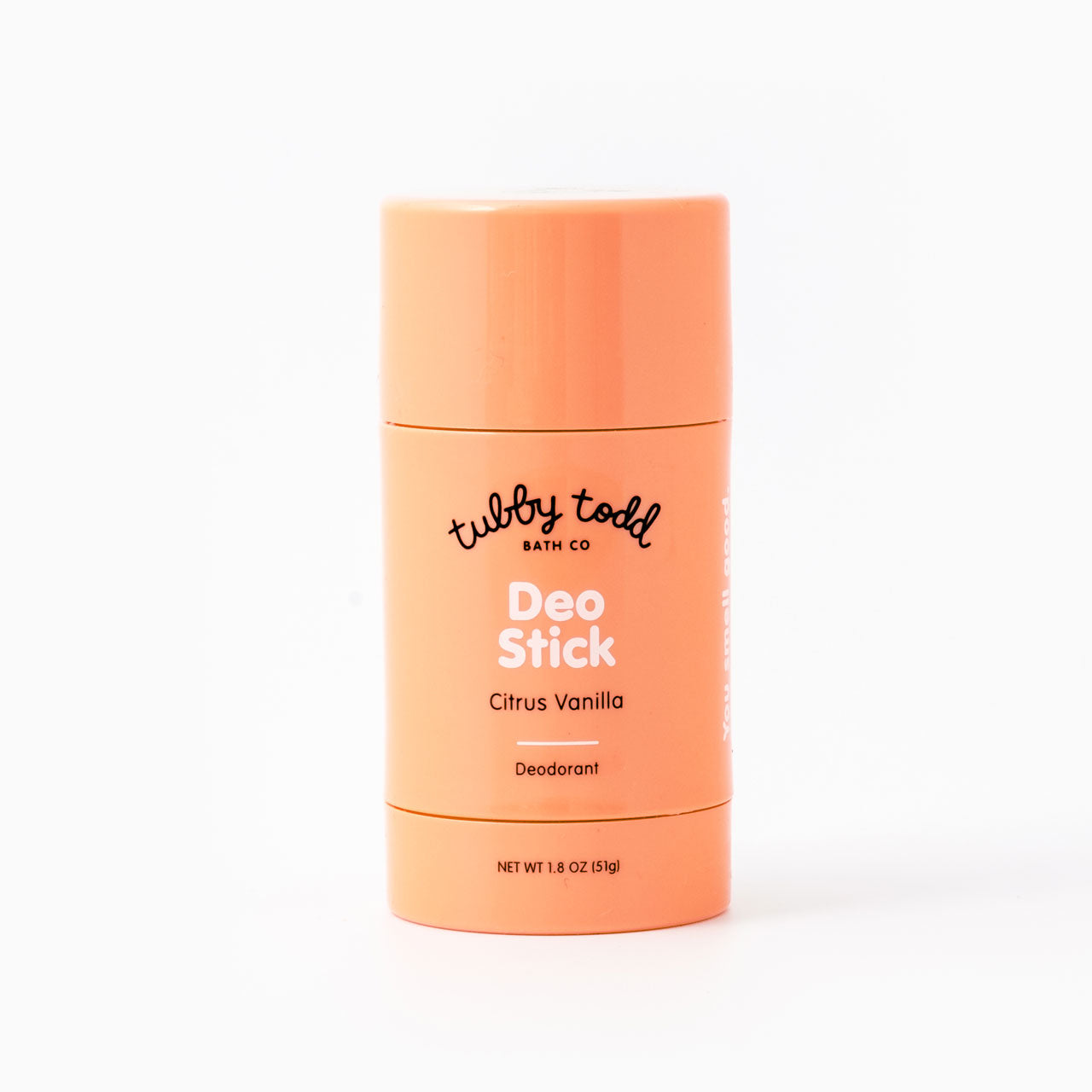
Our Deo Stick is the best deodorant for kids age 6+. It was created with children’s sensitive underarms in mind. It’s aluminum and baking soda free, has no parabens, silicons, or synthetic fragrances.
Our hero ingredients are tapioca starch, which helps absorb wetness, and magnesium hydroxide, which helps minimize the bacteria that causes odor.

How to introduce deodorant without drama
Introducing the deodorant is often the part parents tend to overthink the most, but it can be totally drama-free. Here’s a few things to keep in mind:
Dos:
-
Bring it up casually, not as a big announcement. Something as simple as, “hey, I picked this up for you, it's for after you shower,” works better than a sit-down conversation. Kids pick up on tone fast, and a non-dramatic introduction signals that this is just another part of getting ready, not evidence that something is wrong.
-
Build it into a routine that already exists. Deodorant sticks best as a habit when it's attached to something your child already does daily, like right after a morning shower or right before getting dressed. Trying to introduce it as a standalone reminder is where most of the forgetting happens.

Don’ts:
-
Don't wait for a comment from someone else. If you've noticed it, it's worth introducing before someone else notices it first. Getting ahead of it protects your kid from an embarrassing moment and keeps the whole thing framed as your idea, not damage control.
-
Don't make it conditional on odor already being noticeable. Waiting until it's a clear problem tends to make the introduction feel more loaded than it needs to be. Introducing it proactively, even a little early, keeps the whole thing low-stakes.
-
Don't overexplain the biology unless they ask. A simple, “everyone starts needing this at some point, it's just part of growing up” is usually enough. Kids who are curious will ask follow-up questions, and kids who aren't will tune out a longer explanation anyway.
A simple application routine that actually sticks
If you want a version of this that doesn't rely on you having to talk about body odor and remind your child of the deodorant every day, build it into three quick steps attached to an existing habit:
-
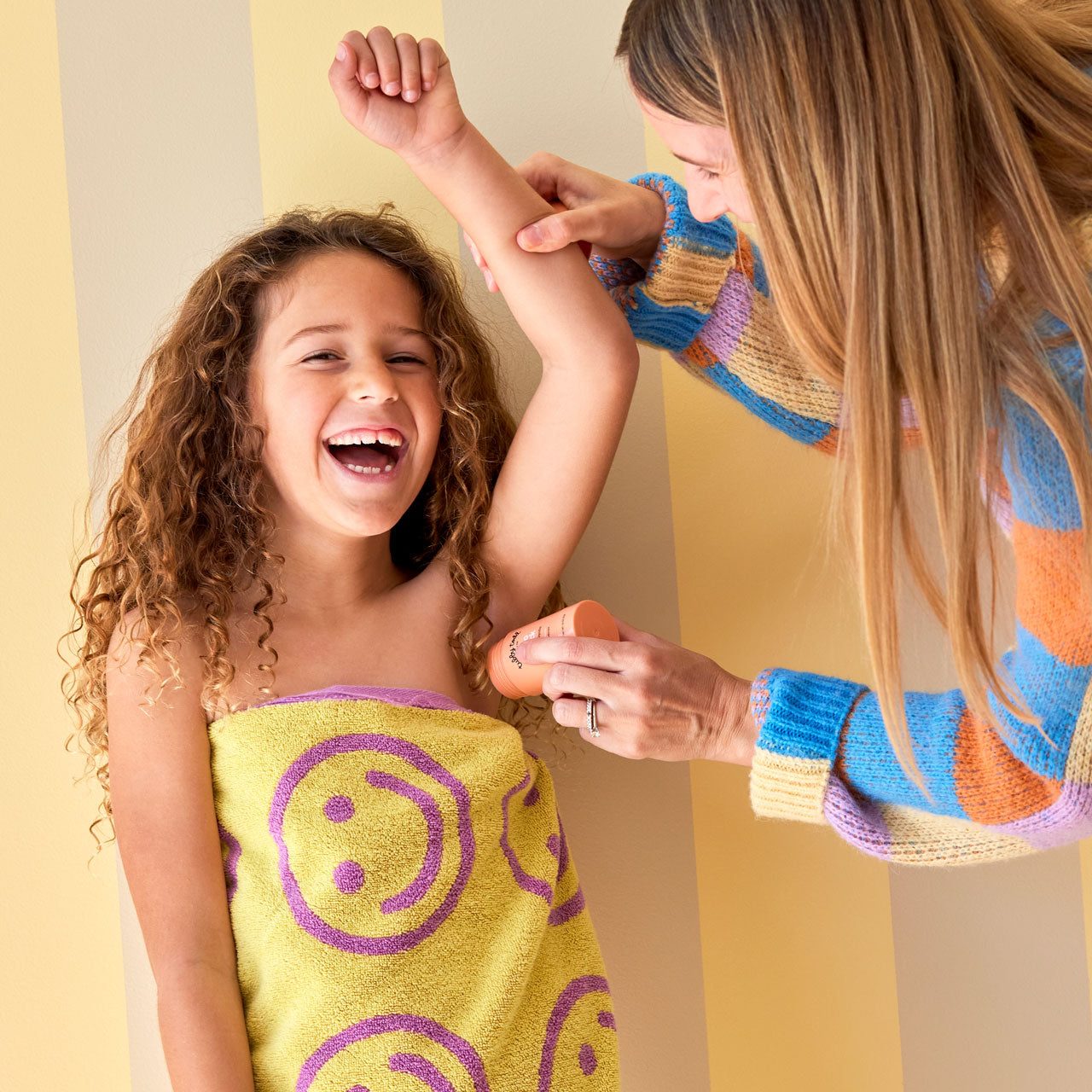
Apply right after the morning shower. Underarm skin should be clean and completely dry before applying deodorant. Damp skin doesn't just reduce effectiveness, it can also make some formulas feel sticky or uncomfortable, which is often the actual reason kids stop using something after a few days.
-
One swipe per side is enough. Kids often either underapply out of unfamiliarity or overapply because more feels like it should work better. A single, even application on clean, dry skin is all that’s needed to last through a school day.
-
Keep a backup in the school locker. For kids who are active after school, having a second stick somewhere accessible, like their gym bag or locker, removes the “I forgot” excuse without turning it into a parental follow-up task.
The goal isn't a complicated system. It's a habit repeated in the same spot, at the same moment, often enough that it stops requiring a reminder at all and becomes automatic.
Give it time and don't overcorrect
If your child forgets a few days here and there, that's normal and not worth turning into a bigger conversation. New habits take a few weeks to become automatic for anyone, and kids are no exception. Gentle and consistent reminders work better than frustration.
If odor seems unusually strong, appearing alongside other symptoms like unusual body hair growth or breast development well before age 8, it's worth having an appointment with your child's pediatrician. Otherwise, this is one of those parenting milestones that mostly needs guidance, not medical intervention.
Frequently Asked Questions
When do kids start wearing deodorant?
Most kids can start wearing deodorant as soon as body odor becomes noticeable, which is typically between ages 8 and 12, but it's not unusual for it to start earlier. Rather than waiting for a set age, it's best to introduce deodorant proactively once you notice the first signs, using a gentle, aluminum free formula suited for young skin.
Can I give my 7 year old deodorant?
Yes, a 7-year-old child can use deodorant. Look for gentle, aluminum-free formula. Aluminum-based products are acceptable for adults, but can irritate the skin of small children, potentially causing redness and itching.
What ingredients should I avoid in a kid's deodorant?
Aluminum, parabens, baking soda, and synthetic fragrances are the main ones worth skipping for young, sensitive skin. Instead look for natural ingredients that you can recognize like corn starch.
Should boys and girls use different deodorants?
No, because the biology behind body odor is the same regardless of gender and the ingredients that prevent odor on boys will work the same on girls and vice-versa.
What’s the best deodorant for kids?
The best deodorants for kids are aluminum-free, baking-soda free, and gentle for the skin. We recommend Tubby Todd’s Deo Stick: it’s a kid safe deodorant, with an aluminum free formula, created for sensitive skin of children age 6+.
Products in this post