
Here's a reminder we can't give enough, Mama: your face needs sunscreen just as much as your kids' do. You've probably got their SPF routine down to a science by now, but somewhere between the second reapply and packing the beach bag, your own face is the thing that always gets skipped. We're Tubby Todd, and a lot of us are parents too, so we say this with love: the best sunscreen for face care starts with remembering that yours counts.
The skin on your face is thinner, more exposed, and more reactive than almost anywhere else on your body, and it's out in the sun every single day. That's why a good face sunscreen matters all year, not just at the pool. The American Academy of Dermatology notes that everyday sun exposure adds up over time to fine lines, dark spots, and uneven tone, not just the sunburns you actually notice. So if you're already buying gentle mineral SPF for your littles, your skin is worth the very same care. Choosing the best sunscreen for face protection is one of the easiest ways to protect your skin every day.

Why Does Facial Skin Need Different Sun Protection?
-
The skin is thinner and more delicate. Facial skin, especially around the eyes, is some of the thinnest on your body. It reacts faster to irritation and shows sun damage sooner.
-
It gets sun all year. Your legs spend most of the year covered. Your face doesn't. Even a school pickup or a walk to the car counts, and UV damage is cumulative.
-
You're layering other products on it. Moisturizer, makeup, maybe a serum. A face sunscreen has to play nicely with all of that instead of pilling or clogging pores.
-
It's more prone to breakouts and sensitivity. A heavy, greasy formula that's fine on shoulders can trigger congestion on your face.
That last one matters more than you'd think. If your face sunscreen breaks you out or leaves a chalky cast, you'll quietly stop using it. The best daily sunscreen for the face is simply the one that feels good enough to become a habit.
Mineral vs. Chemical Sunscreen: Which Is Better for Your Face?
Both protect you, but they work differently, and the difference really shows up on your face. If you're looking for the best sunscreen for face use, mineral formulas are often the preferred choice for people with sensitive skin because they're gentle and begin protecting immediately.
|
Mineral |
Chemical |
|
|
How it Works |
Zinc oxide and titanium dioxide sit on top of skin and deflect UV |
Absorbs into skin and converts UV to heat |
|
Sensitive Skin |
Gentler, less likely to sting or trigger reactions |
More likely to irritate reactive skin and eyes |
|
When it works |
Protects the moment it's on |
Needs about 15 minutes to activate |
|
The catch |
Can leave a white cast if not formulated well |
Some filters can feel irritating around the eyes |
For a lot of us, mineral sunscreen wins on the face for one simple reason: it's less likely to sting your eyes or set off sensitive skin. The old knock against mineral sunscreen was that ghostly white cast in photos, but newer formulas have mostly solved it with finer zinc particles and smarter blends. You get the gentleness without the mask. If reactive skin runs in your family, our guide to the best sunscreen for kids with eczema walks through why mineral tends to be the safer pick for everyone.
What Should You Look for in a Face-Safe Sunscreen?
-
Broad-spectrum protection. This guards against both UVA (aging) and UVB (burning) rays. The AAD recommends SPF 30 or higher, which filters about 97% of UVB.
-
Non-comedogenic. A fancy way of saying it won't clog your pores. Important if your face is breakout-prone.
-
Fragrance-free. Added fragrance is one of the most common culprits behind facial redness and irritation.
-
A blendable finish. You want something that melts into skin and wears well under makeup, not a thick paste you have to fight.
-
Skin-loving extras. Ingredients like hyaluronic acid and glycerin add hydration, so your sunscreen doubles as a light moisturizer.
Check those boxes and you've got a strong pick for daily wear. The best face sunscreen for sensitive skin usually keeps the ingredient list short and the actives mineral.
How Do You Fit Face Sunscreen Into Your Routine?
Good news, Mama: it's simpler than the ten-step routines you see online. Here's the order that works:
-
Cleanse. Start with a clean face.
-
Moisturize. Let it soak in for a minute. (We find sunscreen glides on so much easier over soft, hydrated skin.)
-
Sunscreen last (in skincare). Your SPF goes on top of skincare and under makeup. It's the final skincare step and your barrier against the sun.
-
Makeup, if you wear it. Foundation and the rest go on after your sunscreen has set.
The step everyone skips is the reapply. Sunscreen wears off, and the SPF you put on at 7 a.m. isn't doing much by lunch. The AAD recommends reapplying every two hours when you're outside. Rubbing lotion over a full face of makeup? Not happening. That's exactly why a sunstick earns its spot in your bag: you can swipe it right over makeup, no mirror needed, one hand while the other's holding a snack cup.
Our Picks: Mineral Sunscreen, Mineral Sunstick and Sundercover Sunscreen Serum
We build our sun care the same way we build everything: gentle enough for a baby, which means it's gentle enough for you. Two products cover just about every situation summer throws at you.
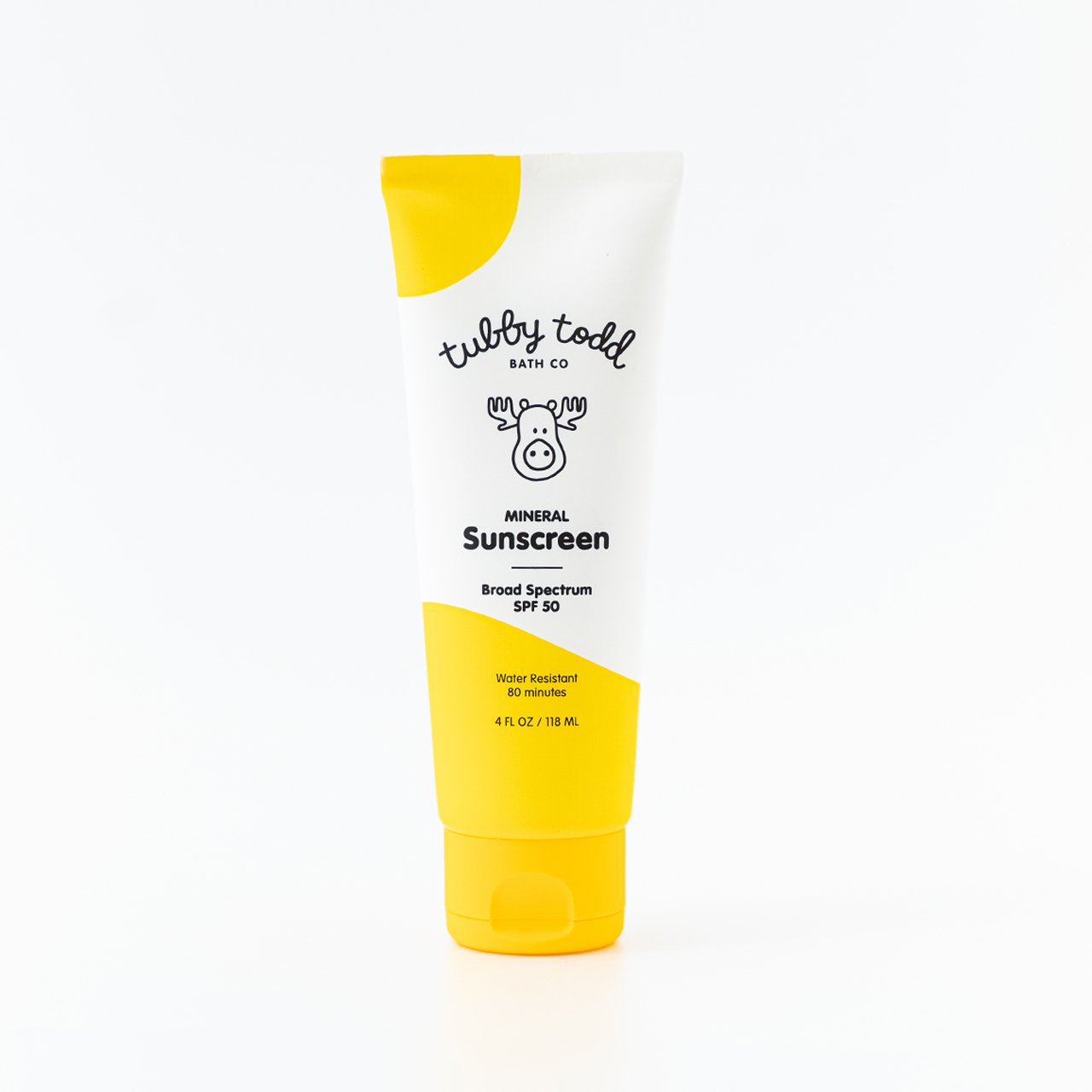
Mineral Sunscreen SPF 50 — your daily base layer. This is the one that goes on every morning. It's a broad-spectrum mineral formula with zinc oxide and titanium dioxide, plus hyaluronic acid and glycerin so it hydrates while it protects. It blends in without a heavy white cast, so it wears beautifully under makeup and never feels like a mask. Fragrance-free and made for sensitive skin, which is why it works for the whole family, not just the kids.
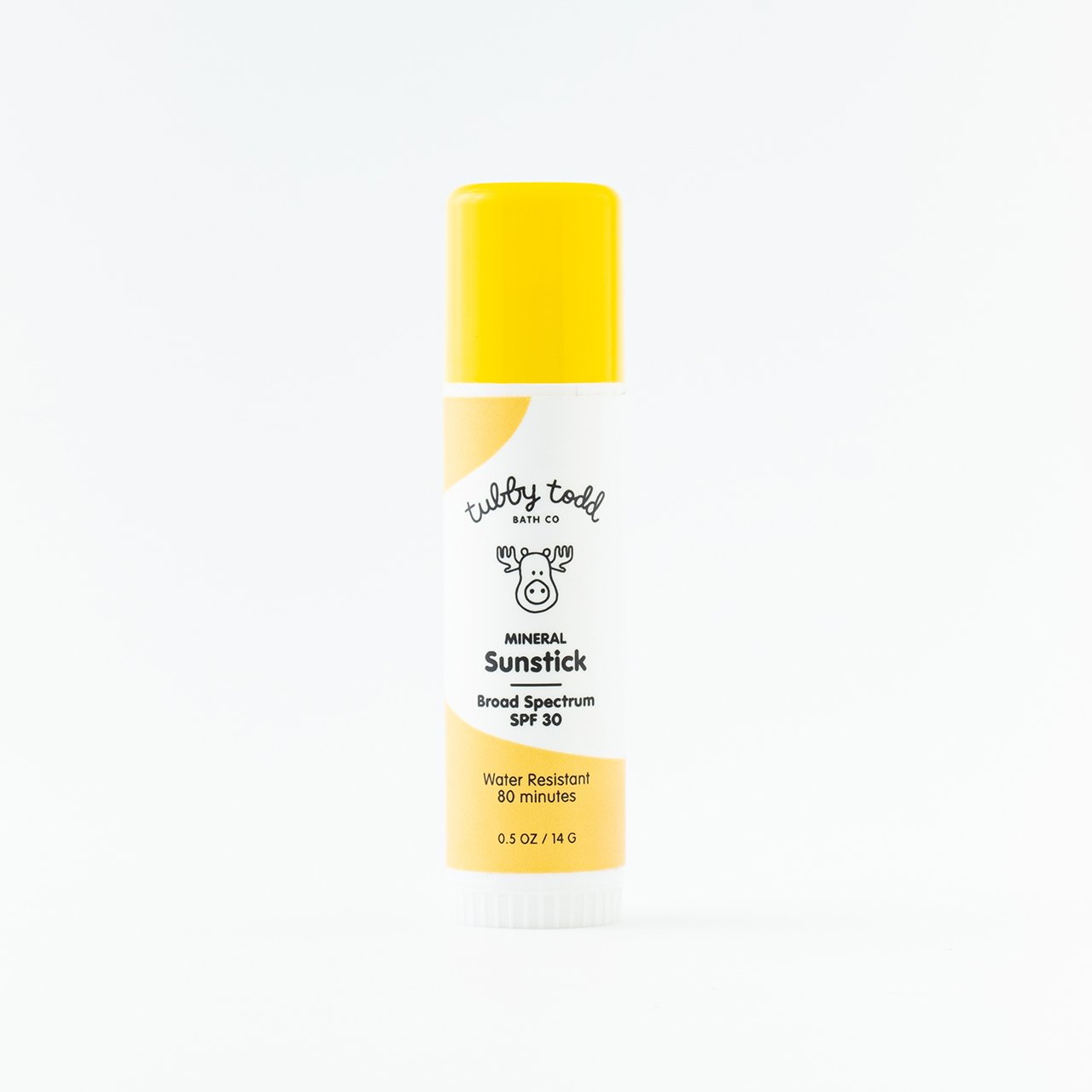
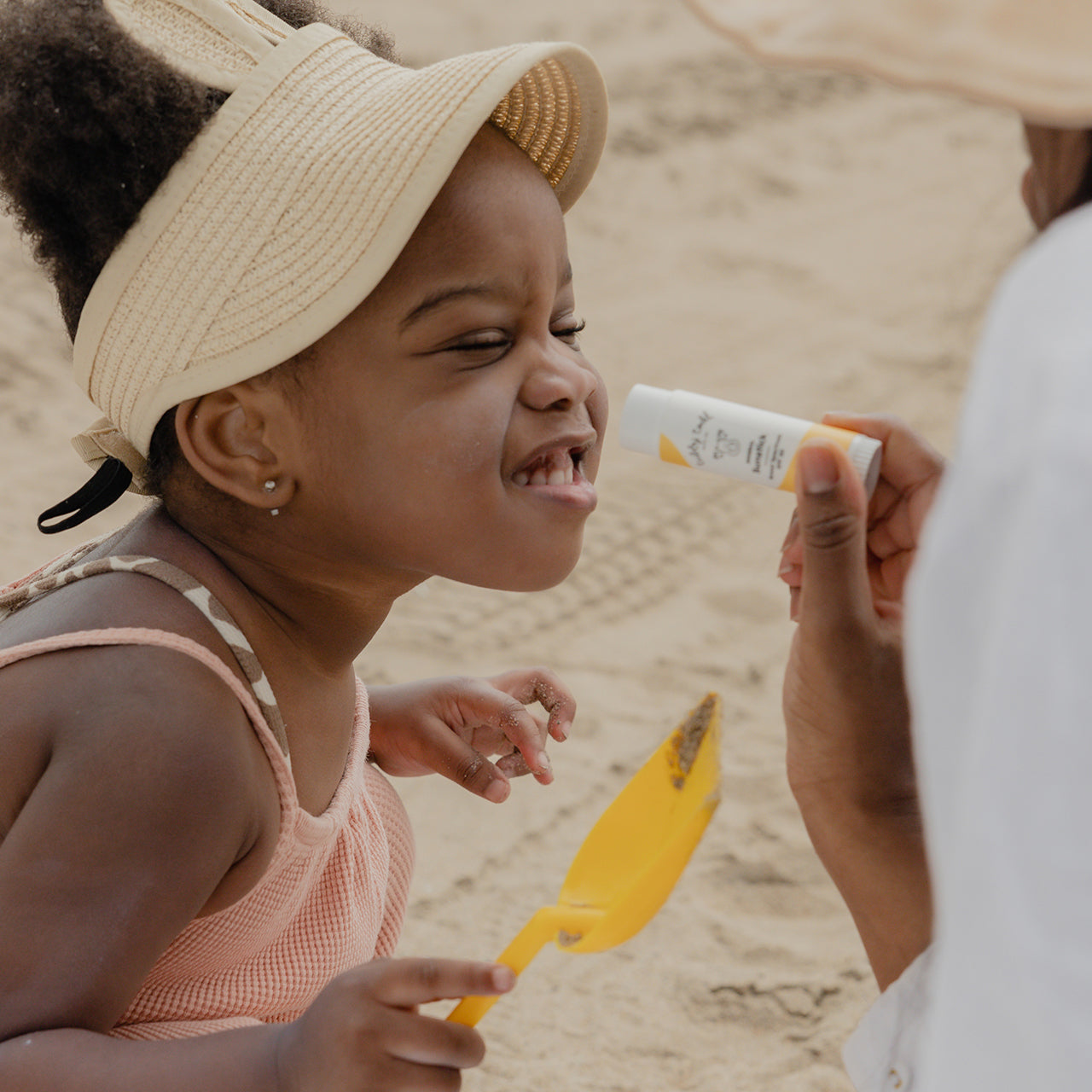
Mineral Sunstick SPF 30 — your on-the-go reapply. Zinc-based, water-resistant for 80 minutes, and small enough to live in your bag or the car door. It glides on clear with no greasy streaks, so you can swipe it over your makeup at the park and across your little one's nose and cheeks in the same two minutes. This is the product that makes the every-two-hours rule actually doable.
Use them together and you've got the whole picture covered: SPF 50 as your morning base, the sunstick for touch-ups once you're out the door. Both live in our Sun Kit collection if you want to see the full lineup.
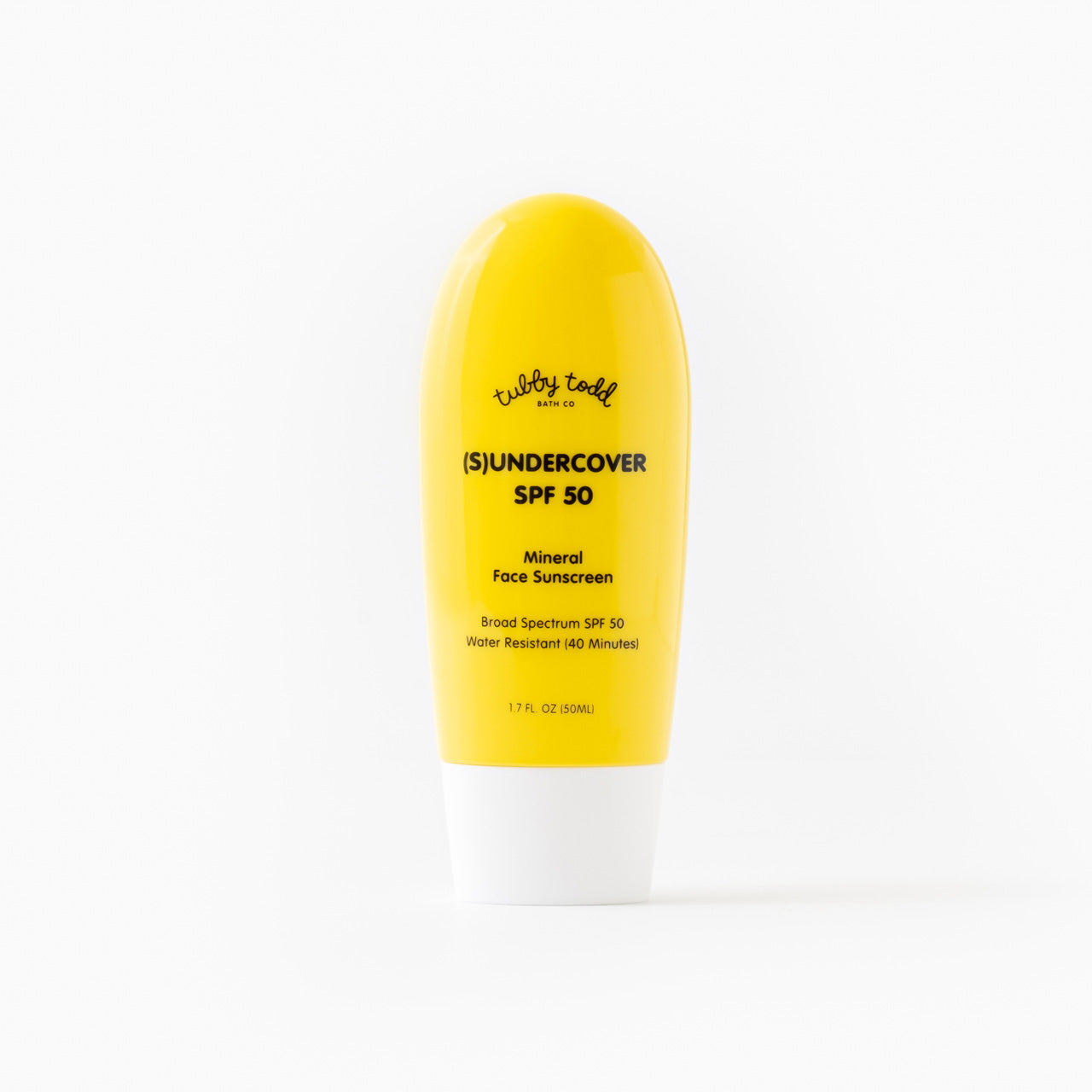
Mineral (S)uncerdover Sunscreen Serum — skincare meets sunscreen. This lightweight mineral sunscreen serum absorbs easily with a velvety smooth application, perfect for wearing under makeup. The broad spectrum SPF 50 formula protects from UVA/UVB rays, blue light, free radicals and anything else the day throws your way. Keep sensitive skin protected any time, anywhere from screens, sun and everything in between.

Sunscreen for the Whole Family
Somewhere along the way, sun protection became one more thing we do for everyone but ourselves. We get it. But your face is in the sun just as much as your kids' faces are, and skipping your own SPF for a decade adds up in ways you can't undo later.
The best sunscreen routine that you can actually remember starts with a gentle mineral SPF every morning, and then a sunstick for the reapplies that actually happen in real life. Start with your daily base layer, tuck the stick in your bag, and let it become as automatic as slathering up your littles.
The lovely part about mineral sun care is that it doesn't have to be two separate products. A formula gentle enough for a baby's cheeks is gentle enough for yours, so one tube covers the whole family. That's the heart of our Mama collection and our broader skincare lineup: clean, gentle care that treats your skin as worth protecting, not an afterthought. So next time you're already reaching for the sunscreen, put a little on your own face first. Future-you will be so glad you did.
Ready to give your face the same care you give theirs? Take a peek at our Mineral Sunscreen SPF 50 and Mineral Sunstick SPF 30 and (S)undercover SPF 50, and tell us in the comments how you keep sunscreen from becoming one more thing that slips your mind.
FAQs
Can I use my kid's sunscreen on my face?
Yes! A gentle mineral sunscreen made for babies and kids is safe for adult faces too, and it's often a better pick than adult formulas because it skips added fragrance and harsh ingredients. Our Mineral Sunscreen line is made for the whole family for exactly this reason.
Does mineral sunscreen work under makeup?
It does. A well-formulated mineral sunscreen goes on as your last skincare step, then you apply makeup on top once it's set. Look for a blendable formula without a heavy white cast so it wears smoothly under foundation.
How much sunscreen should I use on my face?
About a nickel-sized amount, or the classic "two-finger" rule: a line of sunscreen along your index and middle fingers is roughly right for your face and neck. Most of us use far too little, which cuts down the protection you actually get.
How often do I need to reapply sunscreen on my face?
Every two hours when you're outdoors, and after sweating or swimming. This is where a sunstick really earns its keep, since you can reapply over makeup without a mirror or a mess.
Is mineral or chemical sunscreen better for sensitive skin?
Mineral is usually the gentler choice for sensitive or reactive skin, because zinc oxide and titanium dioxide sit on top of the skin instead of absorbing in. It's also less likely to sting your eyes, which matters a lot for everyday facial use.
Products in this post