
At your baby's two-month check, the pediatrician runs a thumb over those soft yellow flakes on their scalp and says the words every new parent eventually hears: "That's just cradle cap. Totally normal." Normal, sure. But you still go home and start reading every ingredient label in the nursery, wondering which oil is gentle enough to actually help.
If your reading led you to jojoba, you found a good one. The jojoba oil benefits for baby skin come down to a quiet bit of chemistry: jojoba is remarkably close to the oil your baby's own skin already makes. That resemblance is exactly why we reach for it in several Tubby Todd formulas, and why so many parents keep a bottle within arm's reach of the changing table.
What is jojoba oil, and why is it technically a wax?
Jojoba comes from the seeds of Simmondsia chinensis, a hardy desert shrub native to the American Southwest. Press those seeds and you get a clear, golden liquid that everyone calls an oil. Chemically, though, it isn't one. Jojoba is a liquid wax ester, made of long-chain fatty alcohols and fatty acids rather than the triglycerides found in oils like olive or coconut.
Wax esters are the same class of molecule that makes up a meaningful share of your skin's own surface lipids. So when you smooth jojoba onto skin, you're adding something the body already recognizes, not a foreign grease sitting on top. It also means jojoba is shelf-stable and slow to turn rancid, which is part of why it shows up so often in baby-safe formulas.
There's a bit of history here too. Jojoba oil used on babies dates back hundreds of years to the Indigenous peoples of the Sonoran Desert, who first tried, harvested, and applied it as a therapeutic balm. Jojoba then became a mainstream cosmetic ingredient in the 1970s as a plant-based stand-in for sperm whale oil, prized for the same stability and skin-friendly texture. Decades later, it's a staple in dermatology-minded skincare for exactly those reasons: it stays fresh on the shelf, plays well with other ingredients, and rarely causes trouble on sensitive skin.
Is jojoba oil good for baby skin?
In a word, yes. A newborn's skin barrier is thinner than ours and still learning to hold onto moisture, so whatever you put on it has to be gentle and predictable. Jojoba fits that bill on a few counts, which is exactly why it earns a spot in a baby's routine.
First, it closely mirrors sebum, the natural oil skin produces to stay protected and hydrated. Research and formulators often describe jojoba as one of the closest plant-derived matches to human sebum, which helps it absorb cleanly instead of clogging pores. That makes it non-comedogenic and well tolerated, even on sensitive faces and scalps.
Second, jojoba is generally non-allergenic and carries phytosterols, vitamin E and other antioxidants that support the skin barrier rather than strip it. Those same compounds, along with naturally occurring squalene, are part of why jojoba is often described as nourishing rather than merely occlusive. It feeds the barrier a little while it seals in moisture.
As with any new product, you'll still want to patch test and check with your pediatrician first, especially if your little one has extra sensitive or reactive skin. But as plant ingredients go, jojoba has an unusually calm reputation, which is one reason we trust it in formulas meant for the most delicate skin. It's just one of a handful of ingredients we lean on here, and you can see the rest of our sensitive-skin favorites too.
What are the benefits of jojoba oil for babies?
Lightweight moisture that absorbs fast
This is jojoba's headline act. Because it sinks in quickly and reinforces the skin's own lipid layer, it helps slow transepidermal water loss, the slow evaporation that leaves baby skin dry, tight and flaky. Studies measuring water loss from compromised skin have found that jojoba application meaningfully reduces it. The result is soft, hydrated skin that doesn't feel coated or heavy, which matters a lot when you're dressing a squirmy infant.
Support for eczema-prone skin
For eczema-prone skin, the gentlest win is often a stronger barrier, and that's jojoba's strength. Jojoba's anti-inflammatory activity and its role in supporting barrier repair in conditions like atopic dermatitis and seborrheic dermatitis can help calm the redness and dryness that flare-ups bring while helping skin hold its own moisture. While it’s not a medical treatment, and severe eczema requires a pediatrician’s input, as a daily supportive ingredient, it earns its place. And since eczema-prone skin often runs in families, know that if you're dealing with it yourself, jojoba is just as gentle on grown-up skin. We get into that when sensitive skin runs in the family.
A gentle hand with cradle cap
Back to those yellow flakes. Cradle cap, or infantile seborrheic dermatitis, is harmless but it can be stubborn. And what you really need is a light oil to loosen the scales gently. Jojoba works well here precisely because it's light and sebum-like. We recommend massaging a small amount into the scalp, let it sit for ten to fifteen minutes, then lift the softened flakes with a soft brush during bath time before shampooing as usual. Unlike heavier oils, it tends not to leave a thick residue behind, so you're not fighting greasy hair afterward. Be gentle and patient. Cradle cap clears on its own timeline, and picking at stubborn flakes can irritate the skin underneath.

Relief for seasonal dryness and rough patches
Babies feel the weather. Dry winter air, indoor heating and frequent baths all pull moisture from skin that's already learning to hold it. Because jojoba reinforces the barrier and slows water loss, it's a useful answer to the rough, chapped patches that show up on cheeks, knees and the backs of hands when the seasons turn. A thin layer after bath time, while skin is still slightly damp, helps lock that moisture in where it counts.
How to use jojoba oil on a baby safely
Keep it to a few drops, warm it in your hands first, and apply after a bath while skin still holds some moisture. Use the chart below to match the amount and frequency to what your baby needs.
|
Use |
How to do it |
How often |
|---|---|---|
|
Daily moisture |
Warm a few drops between clean hands, smooth over dry spots after a bath |
Once or twice daily |
|
Cradle cap |
Massage a small amount into the scalp, wait 15 minutes, gently brush, then wash |
A few times a week |
|
Baby massage |
Use a small amount as a glide for slow, gentle strokes |
As part of wind-down time |
|
Spot care |
Dab onto rough patches like elbows, knees or cheeks |
As needed |
Typically with infant skin, less is more. Start with a few drops and add only if needed. Warm the oil slightly in your palms first so it isn't a cold surprise for your little one. Choose cold-pressed jojoba when you can, since it keeps more of its natural antioxidants, and look for a short, recognizable ingredient list with no added fragrance. The best window for any moisturizer is right after a bath, while skin is still a little damp, because you're sealing in water that's already there. And always patch test a new product on a small area a day before using it more widely. Remember, jojoba is one step, not the whole plan. If you're still piecing things together, our guide to building a baby skincare routine shows how it all fits.
Which Tubby Todd products contain jojoba?
You don't have to buy a bottle of straight jojoba to get its benefits. We build it into formulas alongside other skin-loving ingredients, balanced for delicate skin.
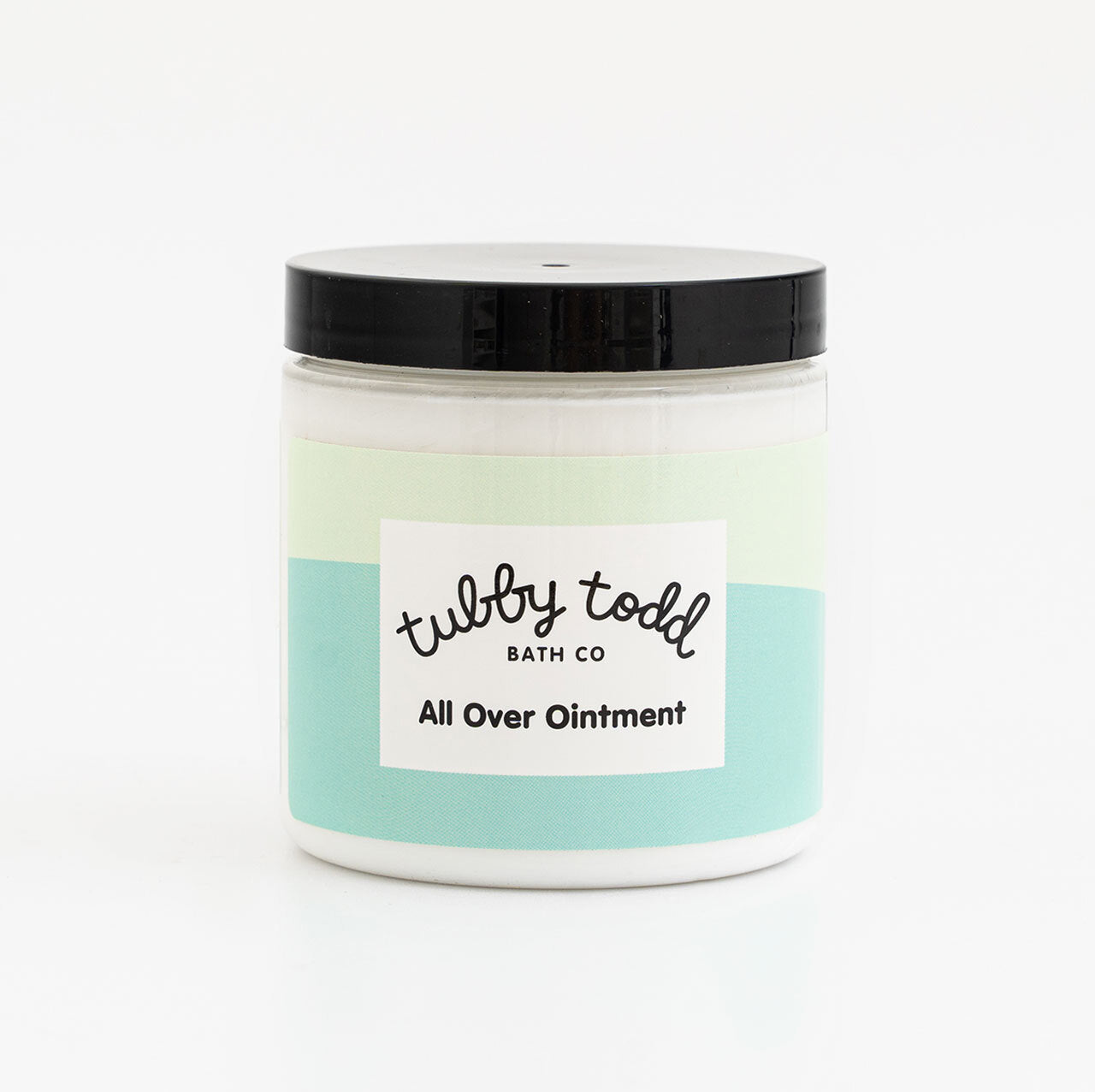
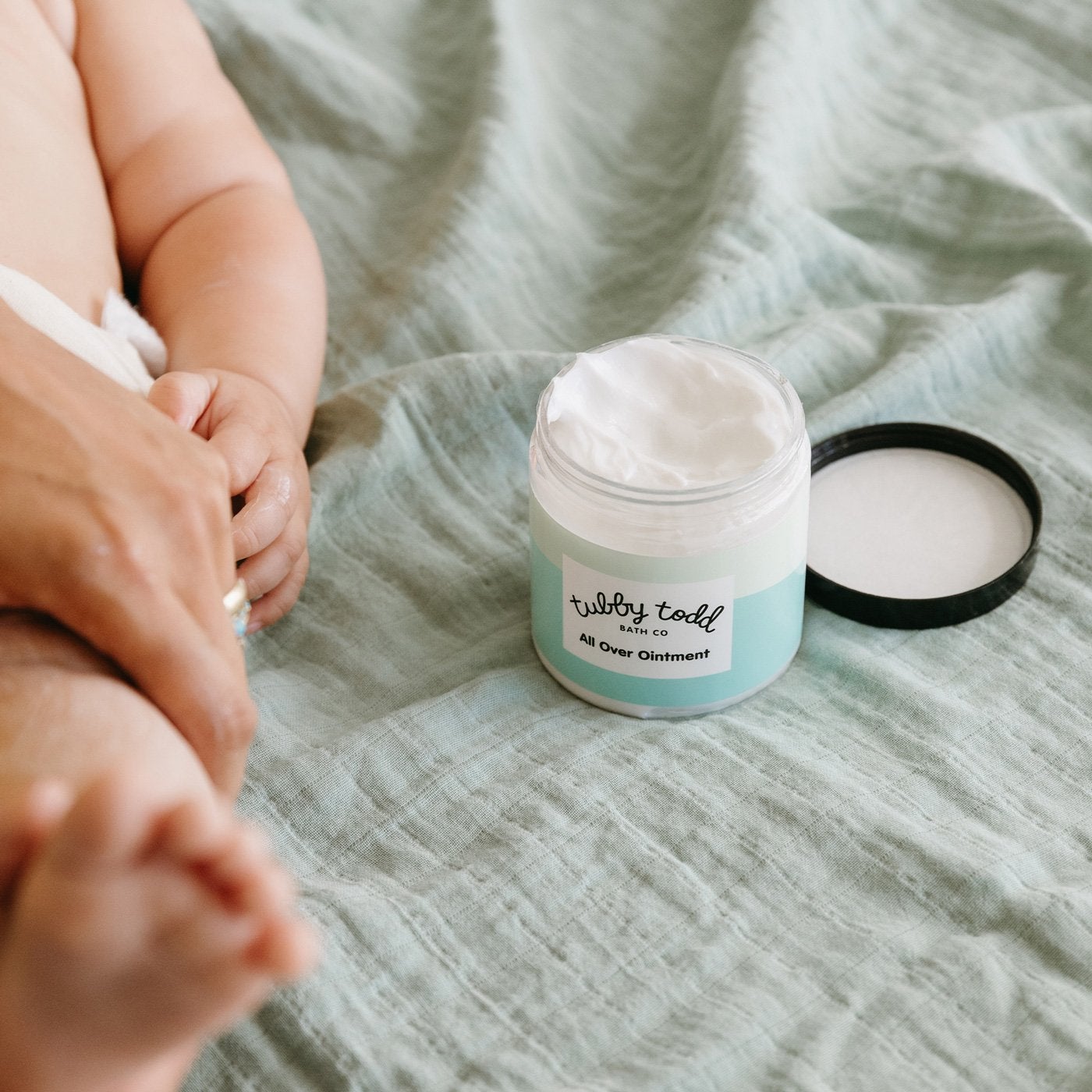
Our All Over Ointment uses jojoba esters together with 1% colloidal oatmeal, beeswax and honeysuckle to help relieve eczema-prone skin, redness and irritation while strengthening the moisture barrier. It's dermatologist and pediatrician tested, and it's the one parents reach for when skin needs a little extra help. If you want the how-to, here's exactly how we use it. Our Everyday Lotion also folds jojoba oil in with shea butter for daily, lightweight hydration that absorbs without feeling heavy.
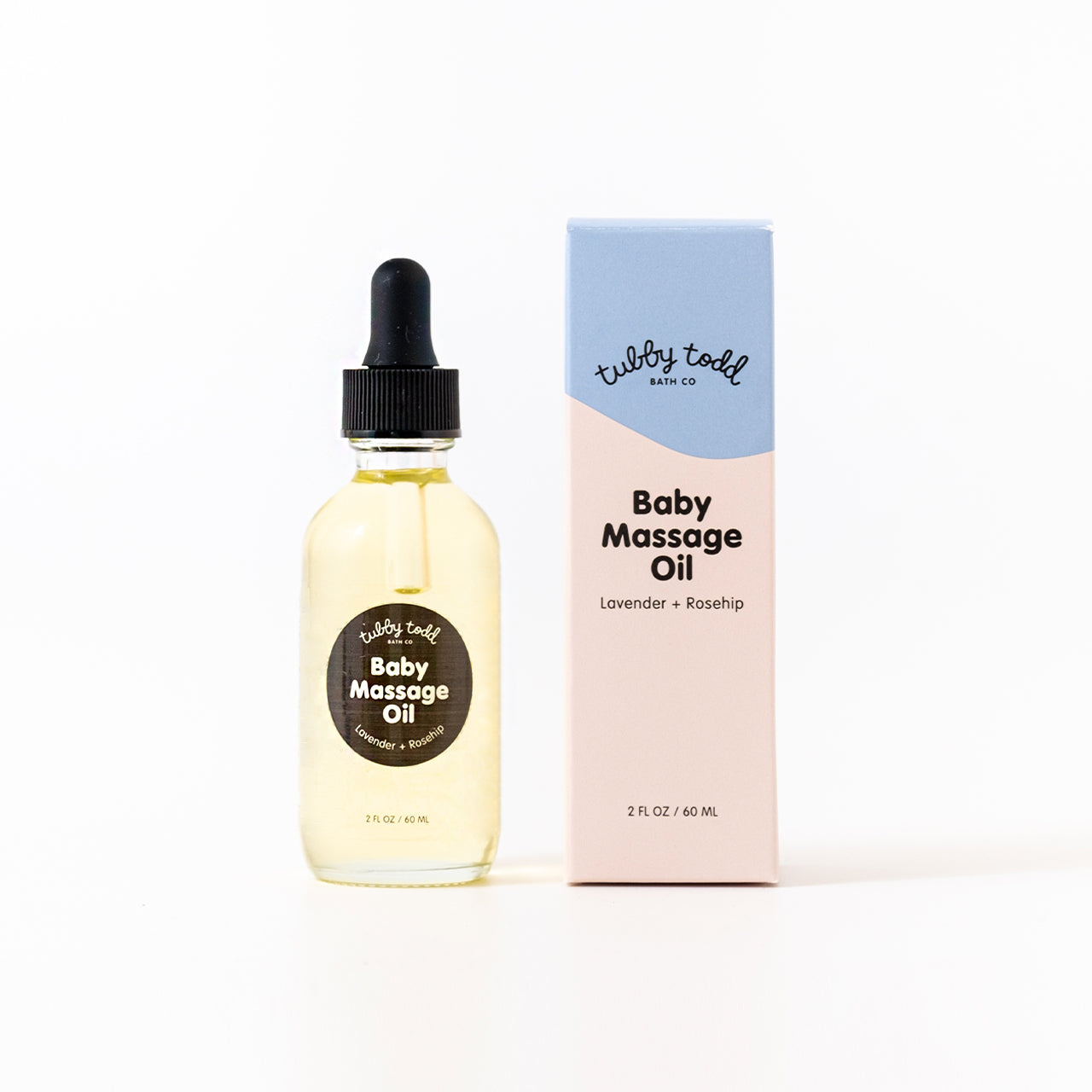
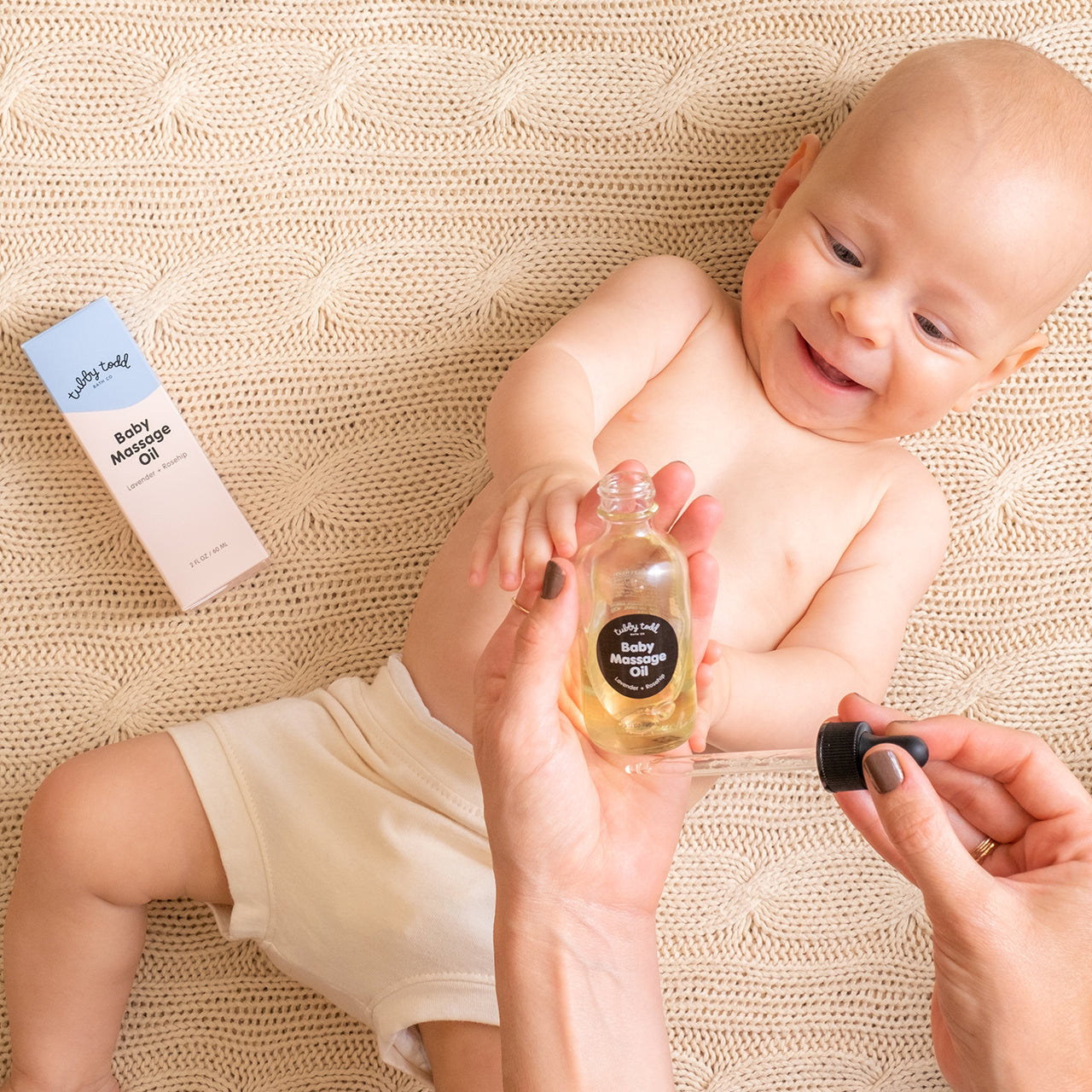
If massage is your main goal, our Baby Massage Oil is a ready-made, USDA Certified Organic blend of sunflower, rosehip and calendula designed for exactly that ritual.
Safety precautions with jojoba oil for babies
Jojoba is gentle, but trust us, a little care goes a long way with that brand-new skin.
We'll say it as often as it takes: patch test first. Dab a small amount on your baby's forearm and give it a full day before you slather it anywhere else. If you see redness or fussiness, stop. Keep the oil well away from eyes and mouth, and never let your little one swallow it. Go light, too. Piling oil onto an already-covered spot can trap moisture in a way that backfires on sensitive skin, so a few drops really is plenty. And if your baby arrived early, is still in those first newborn weeks, or has serious eczema or a known allergy, check with your pediatrician before you try anything new. When you're not sure, do less. You can always add more tomorrow.
Ready to make jojoba part of your baby's routine?
What we love about jojoba is how quietly dependable it is. Because it behaves so much like skin's own oil, it pulls real weight in a baby's routine: it softens dry patches, soothes eczema- and cradle-cap-prone skin, and makes a lovely massage oil, all without the heavy, greasy feel of richer oils. Not bad for one little ingredient.
You don't have to source a bottle of straight jojoba and figure out the rest yourself. Start with a formula that already has it balanced in for delicate skin. Reach for our All Over Ointment first, the one we'd put in any new parent's hands, and let your baby's soft skin take it from there.

Frequently Asked Questions
Is jojoba oil safe for newborns?
Usually, yes. It's gentle and sebum-like, so most babies do beautifully with it. If yours arrived early, is still in those first newborn weeks, or has reactive skin, run it by your pediatrician and patch test before you make it a regular thing.
Can I use jojoba oil on my baby's face?
Go for it. Jojoba is light and non-comedogenic, so it's a favorite for little faces and scalps. Smooth on a thin layer and keep it clear of the eyes and mouth.
How often can I apply jojoba oil to my baby's skin?
Once or twice a day is plenty for everyday moisture, and right after a bath is the sweet spot. For a cradle cap, a few times a week does the trick. Start small and let your baby's skin tell you what it needs.
Is jojoba oil better than coconut oil for babies?
Think of them as different tools. Coconut oil is richer and heavier; jojoba is lighter and closer to skin's own oil, so it soaks in faster without the greasy feel. Many parents reach for jojoba on the face and scalp and save heavier oils for stubborn dry patches.
Products in this post