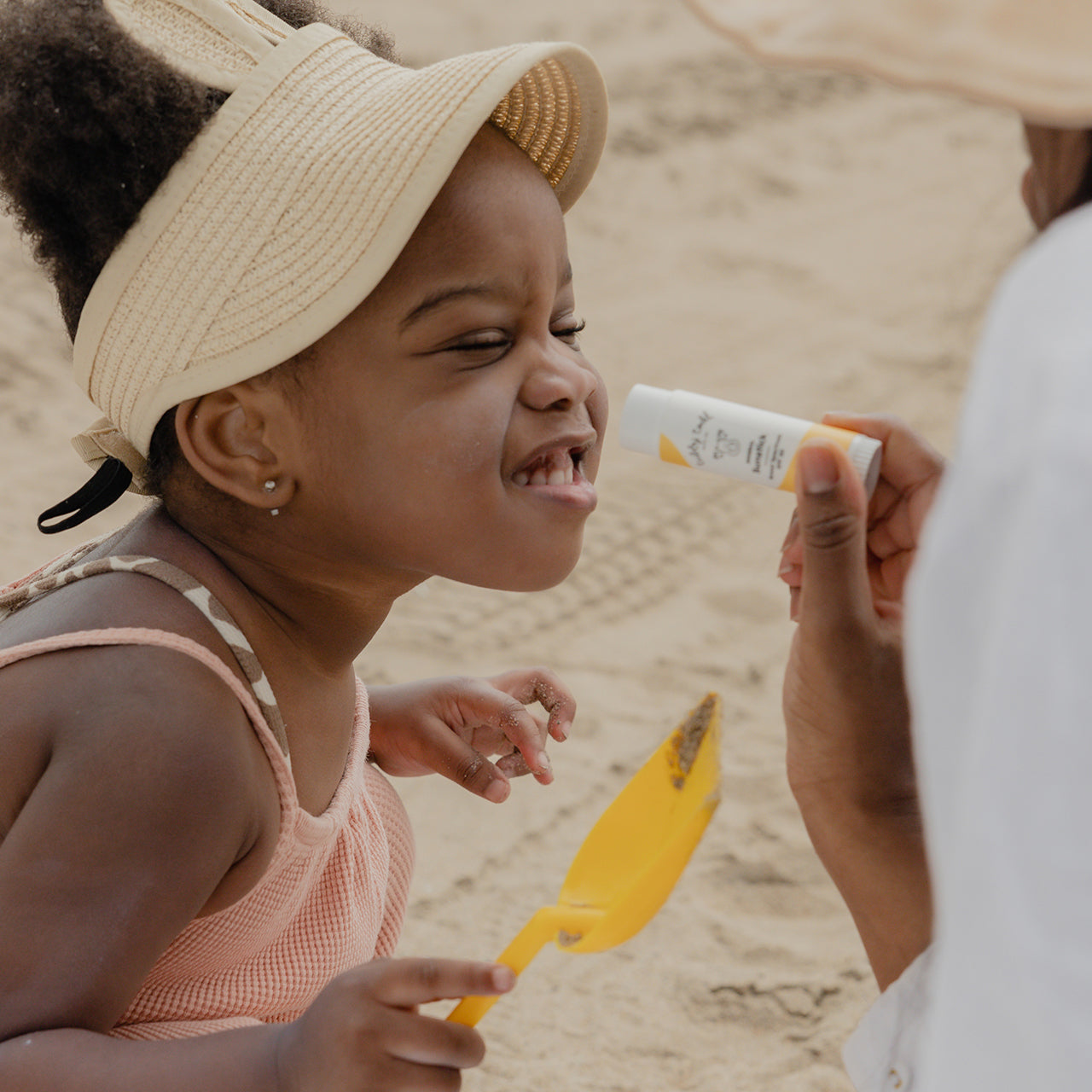

You packed the diaper bag, clipped the stroller shade into place, and made it to the park bench before your two-week-old started fussing. Then the sun moved, the canopy stopped doing its job, and there you were, holding a tube of sunscreen and wondering if a dot on her cheeks would help or hurt. If that is you right now, take a breath. A lot of us have stood in that exact spot, and it is one of the first things new parents end up texting their pediatrician about.
So, is sunscreen safe for newborns? Here is the short version we wish someone had handed us: most pediatricians say skip it before 6 months and protect your baby with shade and clothing instead.
Can you use sunscreen on newborns?
Because we like to cite our sources, both the American Academy of Pediatrics and the FDA recommend keeping babies under 6 months out of direct sunlight and relying on shade and clothing rather than sunscreen. A newborn's skin absorbs ingredients more readily than more mature skin, and babies this young cannot regulate their body temperature well, so shade and coverage are priority number one.
If sun exposure is genuinely unavoidable and your pediatrician gives you the go-ahead, a small amount of mineral-based sunscreen can be applied to exposed areas like the face and the backs of the hands. But keep in mind that it’s an exception, and shouldn’t be a part of a normal routine. At least for now. The guidance is not "never," it is "as little as possible, and only when you have run out of better options."
What is sunscreen and why should you avoid it for newborns?
Sunscreen comes in two types: mineral and chemical. It matters much more for newborns, than it does for you as an adult.
-
Mineral (physical) sunscreens use zinc oxide or titanium dioxide. They sit on top of the skin and bounce UV rays away. These are the ingredients the AAP points parents toward for babies.
-
Chemical sunscreens use filters like oxybenzone, avobenzone, and octinoxate. They soak into the top layers of skin to do their job, which is exactly the part that gives you pause with a newborn.
And that pause is fair. A 2020 FDA study published in JAMA found that several common chemical filters were absorbed into the bloodstream after a single day of use, at levels above the FDA's own threshold for more safety testing. The researchers were clear that this does not prove these products are unsafe, and it is not a reason for grown-ups to toss their sunscreen. But for a baby, whose skin is thinner and whose surface-area-to-weight ratio runs much higher than yours, it is a reasonable argument to keep chemical filters off the list entirely. The AAP suggests steering clear of oxybenzone in particular, since it may act on hormones.
So when a young baby needs sunscreen at all, the answer is always the same: mineral, and always fragrance-free. If you want the fuller picture on why, our guide to mineral sunscreen for babies gets into how it works and what to look for.
When is sunscreen actually necessary on a newborn?
We know that some climates are different from others. And there are moments when shade or UV clothing simply isn't enough, so turning to sunscreen is a sensible choice.
-
Small, exposed patches: The face, the tops of the feet, and the back of the hands. They peek out from clothing and stroller canopies no matter how carefully you try to bundle your little one.
-
Full coverage just isn’t happening: It’s summer, and you’re at the beach. It’s hard to cover your baby’s skin.
-
Reflected light: This one can be tricky. Sand, water, and snow reflect UV rays up, so a canopy on its own doesn’t always cut it.
In each of these examples, though there are many more we could think of, the goal is a thin layer on the smallest area you can manage. Keep in mind that we’re not going for a full-body slather. And it’s always worth a quick check with your pediatrician first, especially in those newborn weeks. If you want to learn more about a warm-weather routine, our guide to sunscreen for infants walks through it season by season.
What kind of sunscreen should you use if you need it?
If your pediatrician signs off and you want something in the diaper bag, here is what the American Academy of Pediatrics and most pediatric dermatologists look for:
-
Mineral only: The active ingredients should be zinc oxide or titanium dioxide, and nothing else.
-
Broad-spectrum, SPF 30 or higher: Broad-spectrum means it covers both UVA and UVB. The AAP accepts SPF 15 as a floor, but a lot of parents and dermatologists prefer 30+ for babies.
-
Fragrance-free: Added fragrance is a common trigger for sensitive and eczema-prone baby skin, so skip it.
-
Water-resistant: Reapply every 80 minutes to two hours, and more often near water.
That is the same checklist we held ourselves to when we made our own baby SPF: mineral, fragrance-free, and gentle enough for the easily-irritated skin so many of our own kids have.
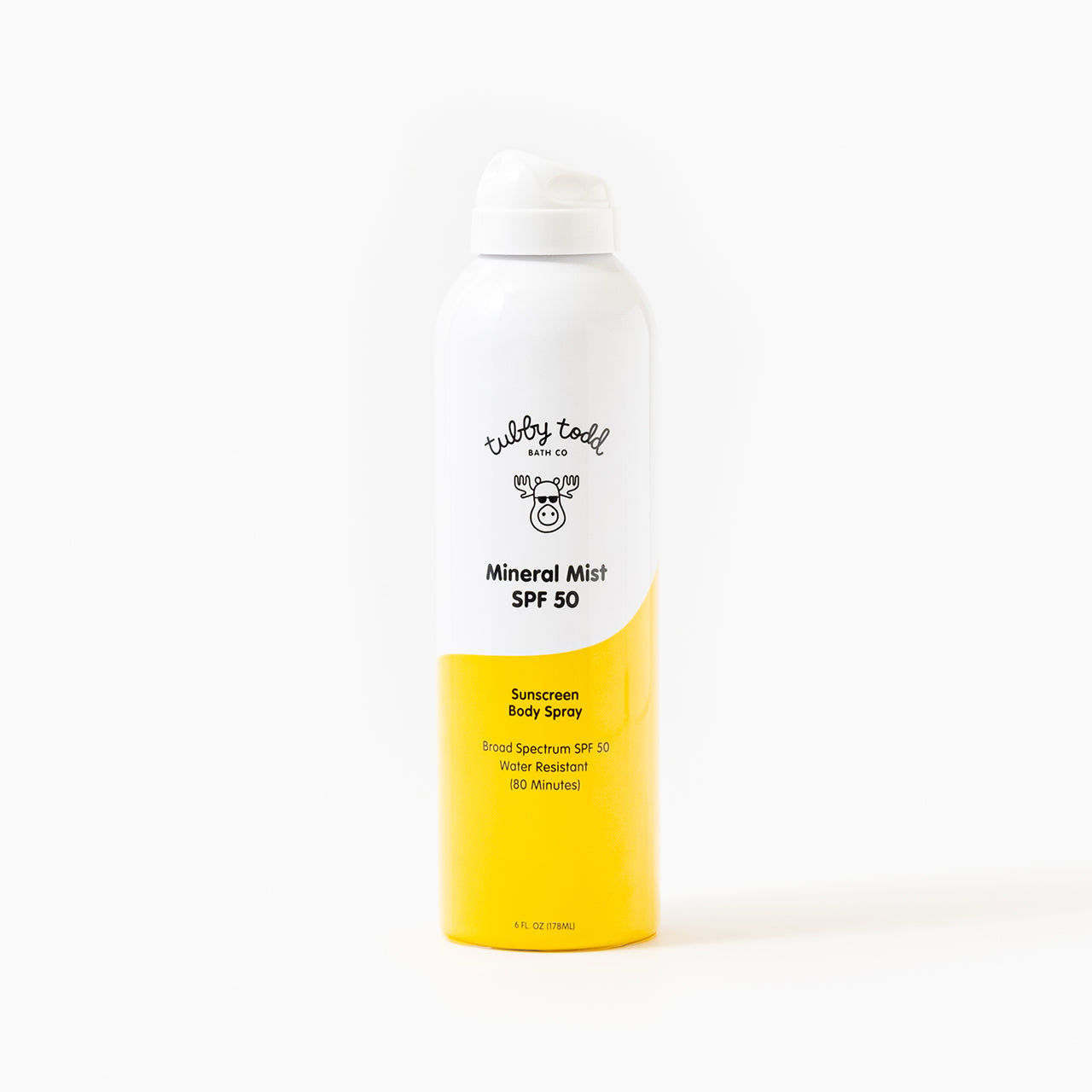
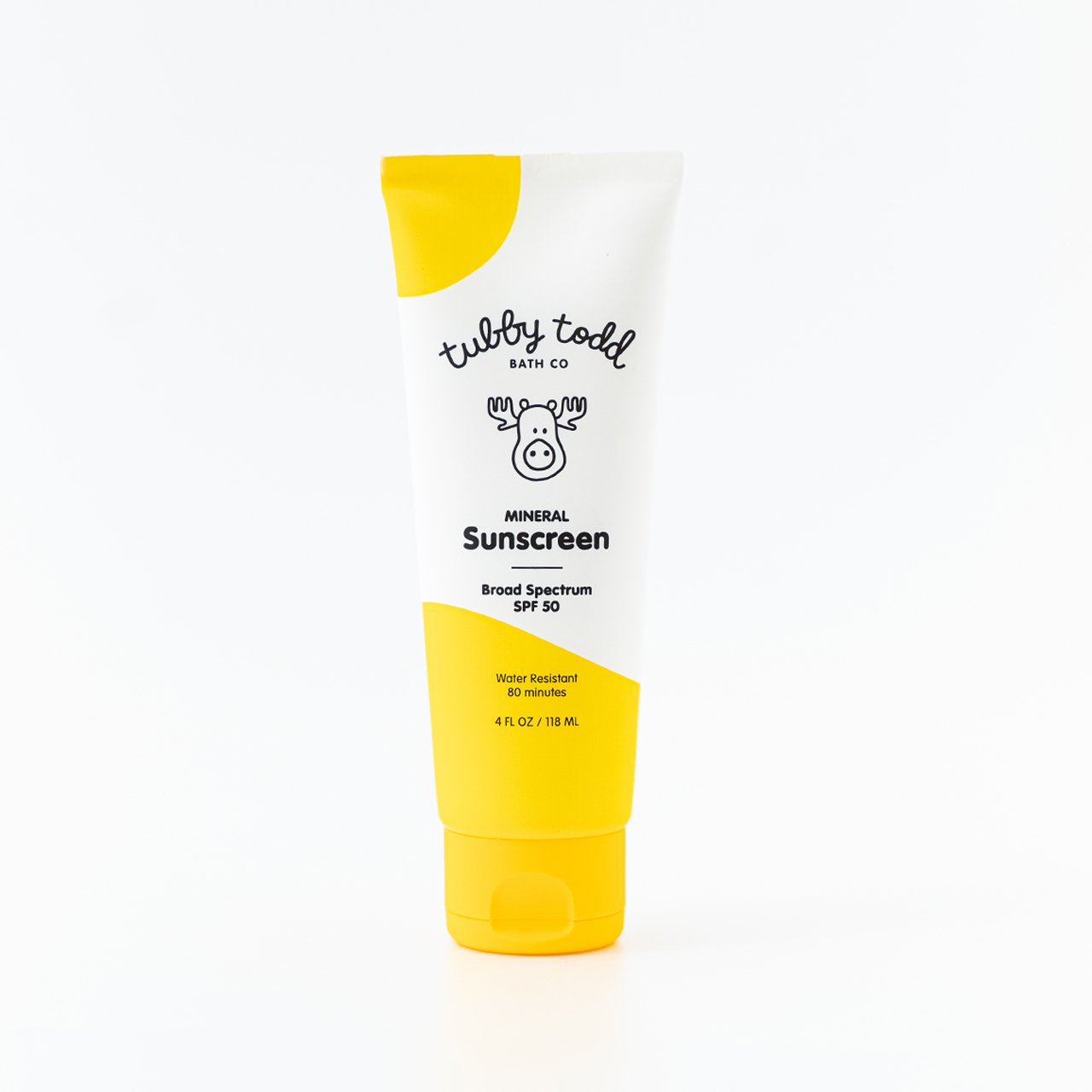
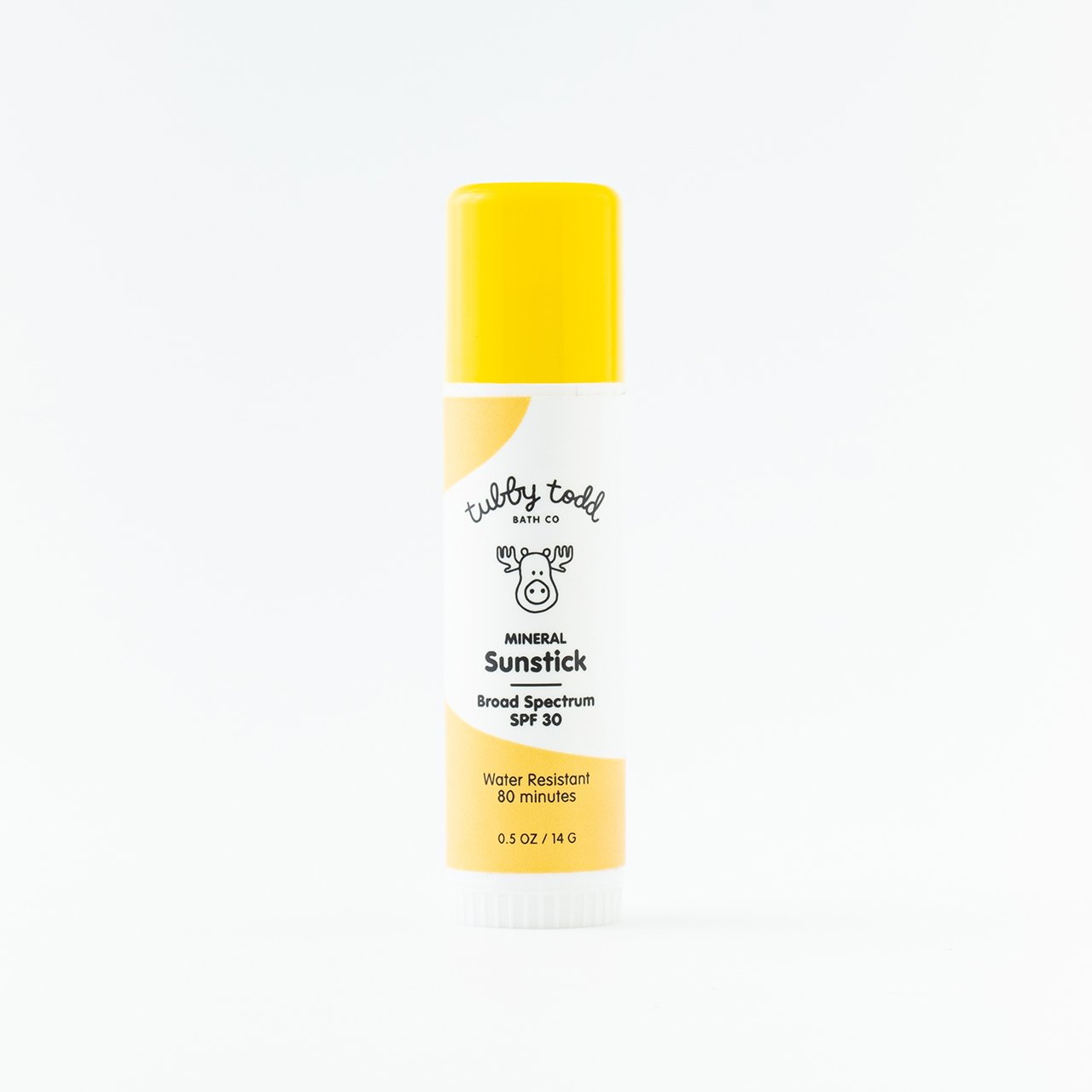
Ours come in a few forms depending on the job. Our Mineral Sunscreen SPF 50 is a zinc-based lotion for arms, legs, and everywhere else, the Mineral Sunstick SPF 30 is easy to swipe on faces, noses, and ears without a wrestling match, and (S)undercover SPF 50 is a sheer face formula for older kids and grown-ups. If you want a side-by-side of what to look for, our roundup of the best baby sunscreen options breaks it down by ingredient.

What protects a newborn better than sunscreen?
For babies under 6 months, pediatricians recommend these options above sunscreen:
-
Shade, first and always: A tree, a beach umbrella, a pop-up tent, a stroller canopy. The AAP's HealthyChildren guidance puts shade right at the top.
-
UPF clothing: Lightweight long sleeves, long pants, and a wide-brimmed hat that shades the neck covers far more skin than you could ever reach with sunscreen.
-
Smart timing: UV rays peak between 10 a.m. and 2 p.m. When you can, aim for outings early in the morning or late afternoon.
-
A little planning: Tuck a muslin blanket, a spare hat, and a clip-on stroller shade in the bag so the moving sun does not catch you off guard.
Stack those four together and most newborns will not need sunscreen at all in their first few months.
A sun routine your family can actually keep up with
Here is the rhythm we would pass along to a friend on day one. Before 6 months, lead with shade, clothing, and timing, and treat mineral sunscreen as a small-area backup you reach for only when those run out and your pediatrician is on board. After 6 months, a broad-spectrum mineral SPF becomes part of the everyday summer routine, still fragrance-free, still topped up every couple of hours.
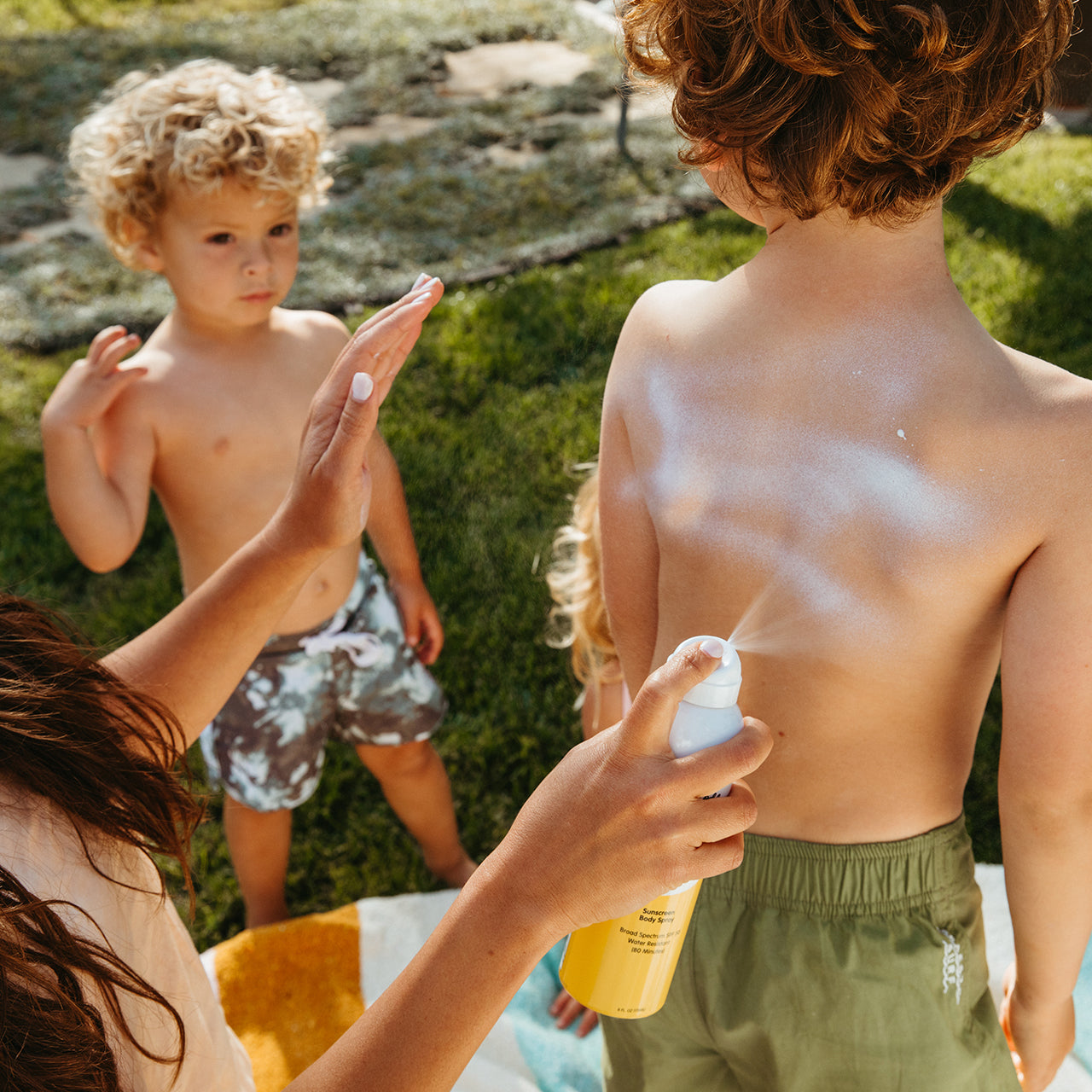
None of it has to be complicated. If you want a head start, take a look at our baby and toddler SPF collection, made mineral-first and fragrance-free for exactly this kind of skin. Curious about our Mineral Mist in particular? We rounded up the most-asked questions about the spray in one place. And if you have a sun trick that has saved your family a sunburn, tell us in the comments. We are always swapping notes around here.
Frequently asked questions
What should I do if my newborn gets a sunburn?
Call your pediatrician. For babies under a year, the AAP treats sunburn as a reason to check in. In the meantime, get your baby out of the sun, cool the skin with a damp cloth or a lukewarm bath, and offer extra feedings to keep them hydrated. Skip lotions or sprays unless your pediatrician recommends one.
What sunscreen ingredients are safest for babies?
Zinc oxide and titanium dioxide. These mineral filters sit on top of the skin instead of soaking in, which is why our Mineral Sunscreen SPF 50 is built on zinc oxide. The AAP suggests avoiding oxybenzone, which may act on hormones.
What SPF should a baby's sunscreen be?
Look for broad-spectrum protection at SPF 15 at minimum, though many parents and dermatologists prefer SPF 30 or higher for babies. Our Mineral Sunstick SPF 30 and Mineral Sunscreen SPF 50 both clear that bar. Reapply every 80 minutes to two hours.
What should I use instead of sunscreen on a newborn?
Shade, UPF or lightweight clothing that covers the arms and legs, and a wide-brimmed hat. Keep outdoor time outside the 10 a.m. to 2 p.m. window when UV rays are strongest.
Can I put sunscreen on my baby's face?
On babies under 6 months, only a little mineral sunscreen on exposed spots like the cheeks when shade is not possible. For babies 6 months and older, the face is a normal place to apply a broad-spectrum mineral SPF.
Products in this post