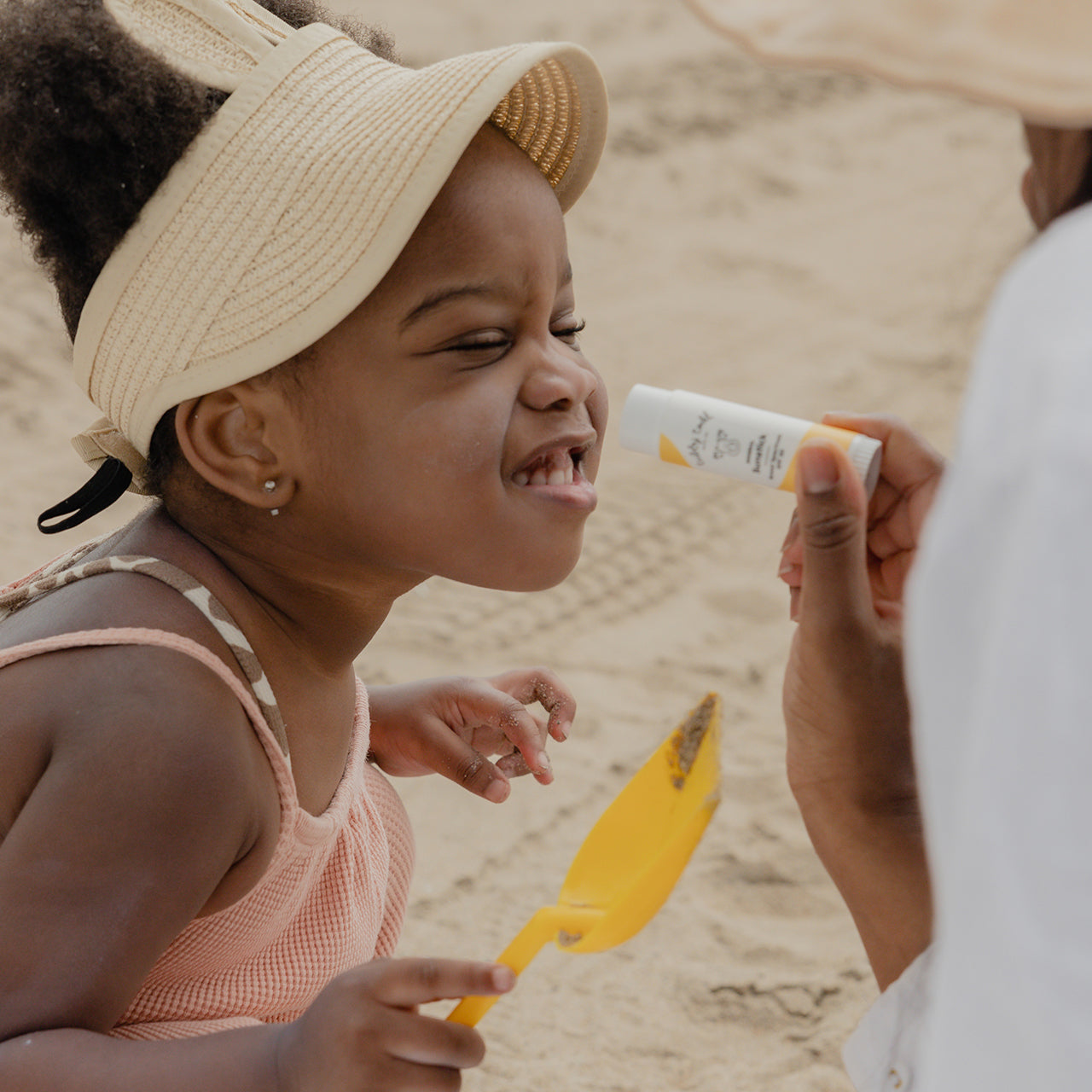

You're exhausted trying to find a sunscreen that actually works for your baby.
And we get it.
So many other moms are tired too.
Many sunscreens out there are too thick, too greasy, too irritating, or packed with unnecessary ingredients. And when it comes to your baby's sensitive skin, it’s not good enough. You need a sunscreen that is safer and actually protects your sweet babe without hurting them in the process.
So before you start panic buying, listen. Mineral sunscreen for babies is widely recommended for sensitive and eczema-prone skin, and for good reason. But not all mineral sunscreens are the same. And you may already feel decision-fatigue tired sifting through all the options online.
That's why we're here to make it a little easier for you. Many sunscreens include unnecessary ingredients that aren't suitable for sensitive or eczema-prone skin, so it's important to know what to look for and how to apply it properly for maximum coverage.
Let's walk through everything you need to choose the right mineral sunscreen for your baby.
Which mineral sunscreen is right for your babies?
|
Product |
Best For |
SPF |
Format |
Water Resistant |
Highlights |
|
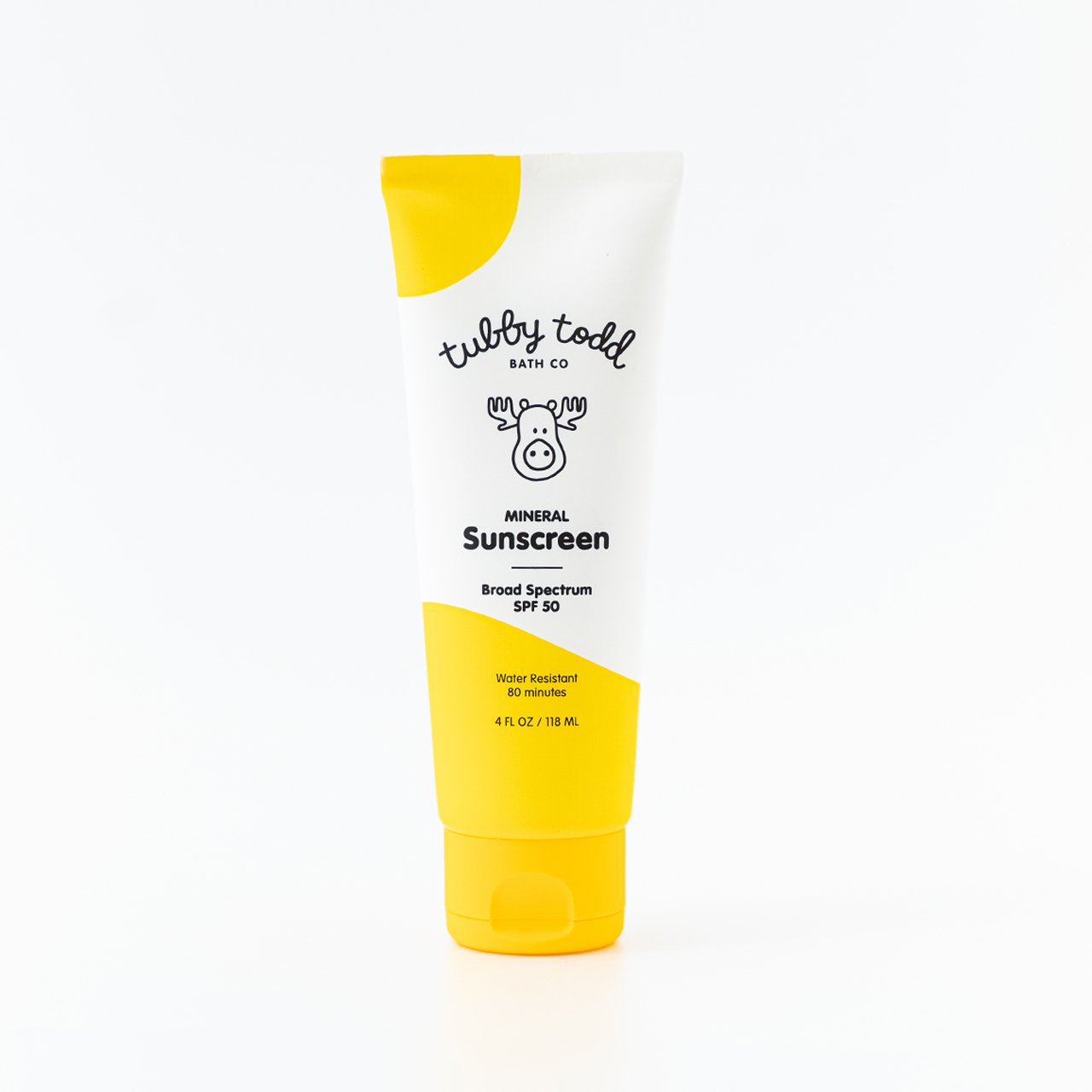
Mineral Sunscreen SPF 50 |
Everyday outdoor adventures |
SPF 50 |
Lotion |
80 minutes |
Full-body protection for sensitive and eczema-prone skin. |
|
The Sun Kit |
Families wanting a complete routine |
SPF 50 |
Kit |
Varies |
Includes everything needed for sun protection depending on your application preference. |
|
Sun Duo |
Dry, sensitive, or eczema-prone skin |
SPF 50 |
Skincare set |
80 minutes |
Combines mineral sunscreen with nourishing skincare. |
|
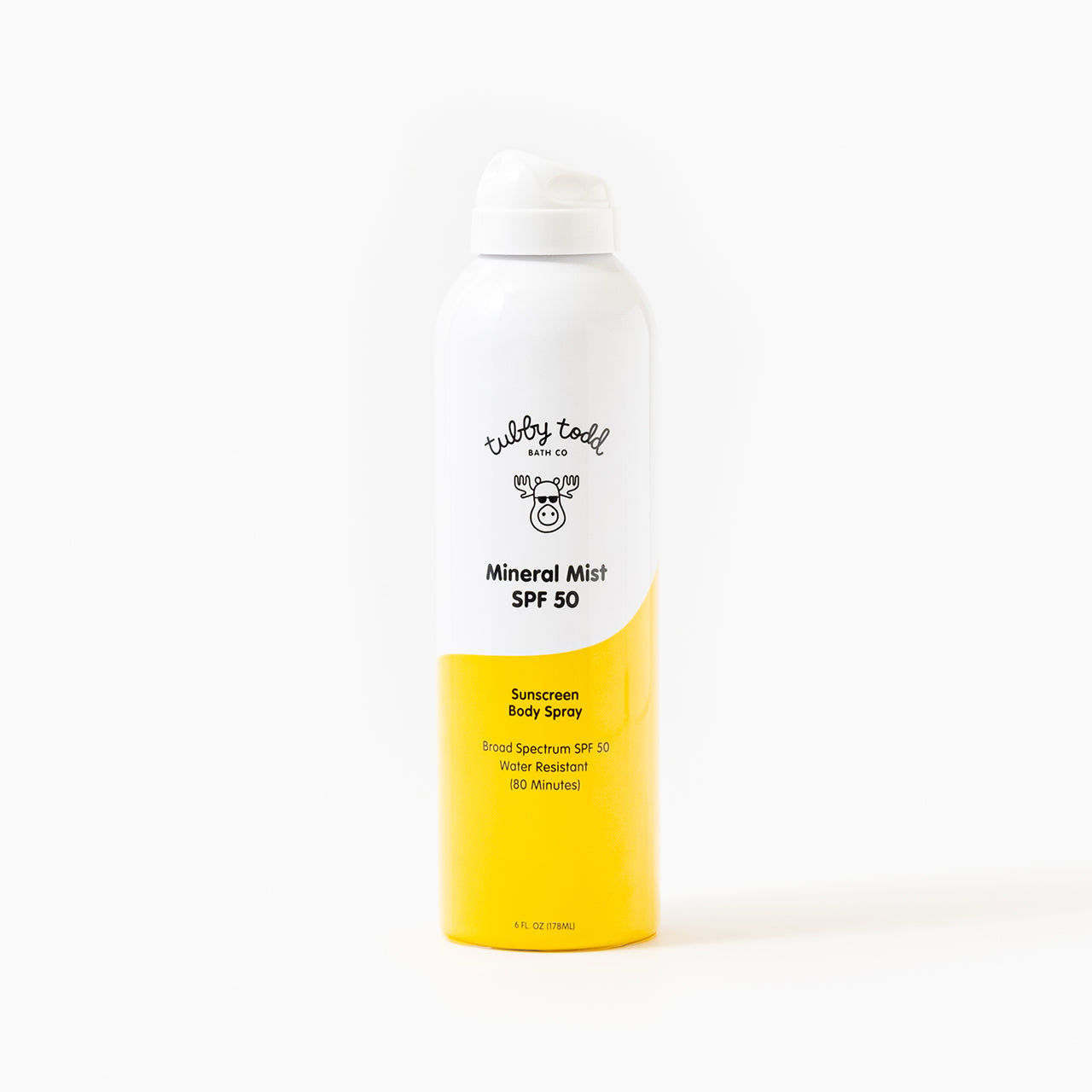
Mineral Mist SPF 50 |
Quick, mess-free application |
SPF 50 |
Non-aerosol spray |
80 minutes |
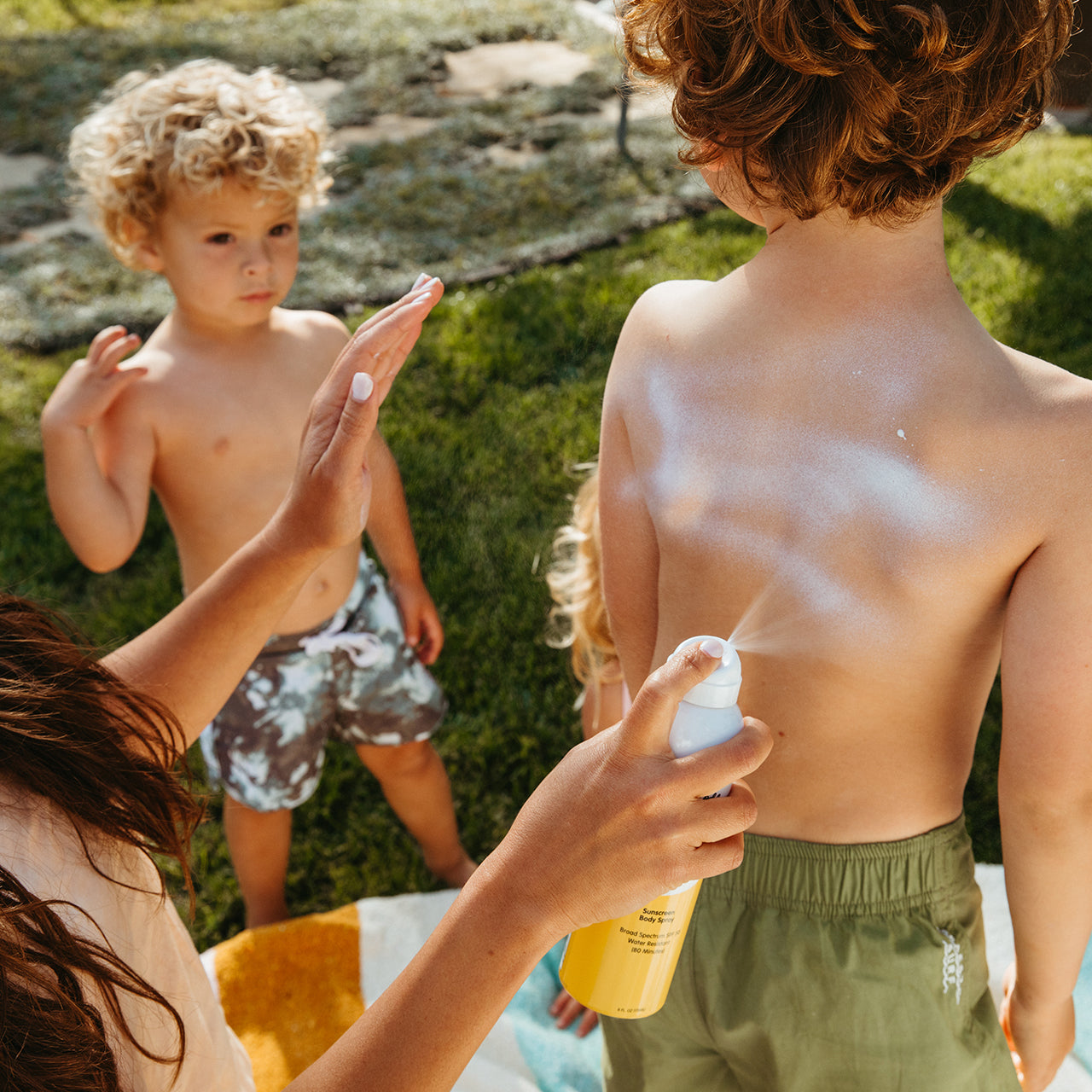
Easy to apply while remaining gentle for sensitive skin. Spray into hands first, then rub in. |
|
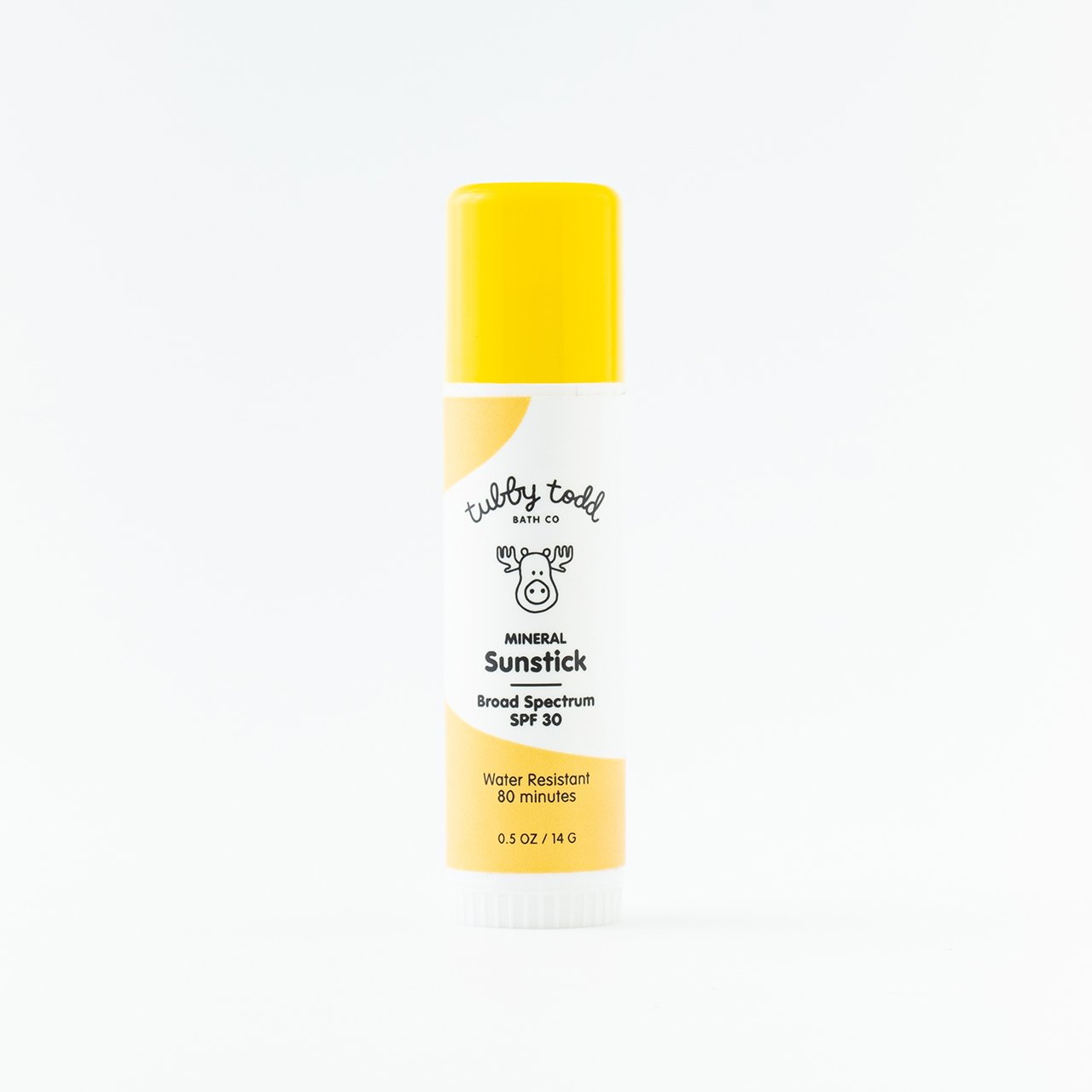
Mineral Sunstick SPF 30 |
Face, ears, nose, and touch-ups |
SPF 30 |
Stick |
80 minutes |
Portable and perfect for smaller areas that need frequent reapplication. |
Mineral vs. chemical sunscreen: what’s the difference?
There are two types of sunscreen you should know about before purchasing one.
Mineral sunscreens use zinc oxide and/or titanium dioxide to protect the skin by absorbing, scattering, and reflecting UV rays.
Chemical sunscreens use organic UV filters that absorb UV rays and convert them into heat before they can damage the skin. Both types are effective at protecting against sun damage when used correctly.
For babies and sensitive skin, the difference comes down less to how they work and more to how skin tends to respond to them.
Why use mineral sunscreen for babies?
Mineral sunscreens are often recommended for babies over 6 months and for sensitive or eczema-prone skin because zinc oxide and titanium dioxide are generally less likely to cause skin irritation than some chemical UV filters.
In short, mineral sunscreen is a popular choice for two reasons:
-
It works well with sensitive and eczema-prone skin (it’s gentle and not there to cause a flare-up)
-
The ingredients zinc oxide and titanium dioxide have a long track record of safe use on delicate skin
That said, for babies under 6 months old, they should be kept out of direct sunlight as much as possible, using shade and protective clothing. And for babies older than 6 months, with those precautions, mineral sunscreen should be your second line of defense and applied to any exposed skin.

A list of what to look for in a mineral sunscreen for babies
Here’s what medical professionals say:
-
Contains zinc oxide or titanium dioxide - these are key ingredients to any mineral sunscreen, ensuring it’s an effective physical barrier against the sun.
-
Broad spectrum - this means it will protect them from both types of sun rays (UVA and UVB). UVB protection is especially important because UVB causes sunburn and is correlated with skin cancer.
-
Choose the right SPF - you should be using at least SPF 15 (up to SPF 50). This level of sun protection (sun protection factor) blocks about 97% of UVA and UVB rays.
-
Water resistant - While no sunscreen will ever stand up to a full day at the pool, a water resistant formula will help keep your baby protected longer. Just make sure to reapply.
-
Find one you can use everyday - look for a mineral sunscreen that feels like a natural part of your baby’s skin routine.
-
Fragrance-free - fragrance is a common irritant for sensitive and eczema-prone skin. Look for a sunscreen that skips it altogether.
What’s the best way to apply mineral sunscreen for babies?
Because mineral sunscreen creates a physical barrier on the skin, you’ll want to make sure every inch of exposed skin is covered.
Here’s how pediatric dermatologists recommend applying it:
-
Apply 15 minutes before heading outside - start by placing small dots of mineral sunscreen on your little babe’s exposed skin.
-
Connect the dots - Use two fingers to blend the dots together into a thick, even coat.
-
Reapply every two hours - mineral sunscreen needs a refresh throughout the day, especially if your baby is sweating or swimming.
And here’s a little sunscreen application hack: Try using a soft makeup brush (a big, chunky flat one works great), or a makeup blending sponge to spread the sunscreen around. It's gentle on your baby's skin, blends the lotion evenly, and keeps most of the mess off your hands. It's also a faster option for babies who aren't exactly thrilled about sitting still for sunscreen application.

Avoid these five common sunscreen application mistakes
Even with the best intentions, slip-ups happen. So, here’s what to watch for while applying sunscreen:
-
Apply too thin a layer - mineral sunscreen needs a thick, evenly distributed coat to form an effective barrier. A light application might result in a sunburn.
-
Skipping easy-to-miss areas - don’t skip out on their ears, back of the neck, hairlines, tops of feets, and hands.
-
Not reapplying soon enough - this is where most sunburns happen. Because any sunscreen tends to wear off, make sure to reapply every two hours.
-
Using last year’s bottle - any mineral sunscreen for babies contains active ingredients that degrade over time. So, using a bottle over a year old might not be as effective.
-
Relying only on sunscreen - especially with little babes, makes sure to pair mineral sunscreen with protective clothing and wide-brimmed hats.
The best mineral sunscreens for your babe (that actually work for sensitive, eczema-prone skin)

You’ve spent so much time reading ingredient labels, comparing reviews, and wondering if you’ll ever find a mineral sunscreen for babies that will finally work. One that won’t leave your baby irritated, greasy, or fussy (because everyone should be happy on beach day!)
That’s exactly why we created these mineral sunscreen options:
This is the one for pool days, beach trips, park runs, and everything in between. Our broad spectrum SPF 50 formula is water resistant for 80 minutes, so your little one can do all the cannon balls and pencil dives they want. Made for skin of all ages, though babies under 6 months should get the green light from your pediatrician first.
This is a simple, on-the-go mineral sunscreen set made with your baby’s sensitive skin in mind. It’s gentle, clean, and ideal for eczema-prone skin, without leaving behind a greasy or chalky residue. If you want everything in one place, this is it.
For sensitive skin that needs a little extra love before, during, and after time in the sun, the Sun Duo pairs our best sun and skincare products together in one set.
All the broad spectrum SPF 50 protection of our mineral sunscreen, now in a non-aerosol spray format that's gentle enough for sensitive skin. Water resistant for 80 minutes and easy to apply on the go. Spray into your hands first and rub it in for the best coverage.
Perfect for faces, noses, and ears, the Sunstick is your secret weapon for the spots that are hardest to reach with a lotion or spray. It goes on smoothly, absorbs easily, and is water resistant for 80 minutes. Toss it in your bag and you'll always have it when your babe needs a quick touch-up.
And remember, we want you to enjoy our products just as much as we do. So, if you’re not 100% satisfied with your purchase, reach out to us and we’ll always make it right.
Frequently Asked Questions
1) If my baby gets sunburned, what should I do?
Move your baby out of the sun right away and into a cool, shaded area. Apply a cool (not cold) compress to the affected skin, and keep them hydrated. Avoid further sun exposure until the skin has fully healed, and check in with your pediatrician if the sunburn looks severe, blisters, or your little babe seems unusually uncomfortable.
2) Are there downsides to mineral sunscreen for babies?
Mineral sunscreen can sometimes leave a slight white cast on the skin and feel thicker than chemical formulas. But, it’s still an excellent option for sensitive skin of all kinds.
3) What are the best ways to prevent sunburn in babies?
Keep babies under 6 months out of direct sunlight as much as possible, using shade and protective clothing as the first line of defense. For older babies and any exposed skin, apply sunscreen generously, dress them in lightweight UPF clothing, and use wide-brimmed hats when you can.
4) How often should I apply mineral sunscreen on my baby?
Apply about 15 minutes before heading outside, and reapply every two hours. But, if your baby is swimming and sweating a lot, you can always reapply sooner.
5) Is spray sunscreen safe for babies?
Traditional aerosol spray sunscreens can be risky and release a lot of sunscreen into the air because many rely on hard propellants to create the spray. But, Tubby Todd’s Mineral Mist is a bit different. Instead of harsh propellants, our spray relies on a non-aerosol (bag on valve) technology, which keeps the mineral formula sealed in an airless pouch. This way, it produces a fine, even spray (perfect for long pool days).
Products in this post